Free and legal MP3: Pseudonym

Melancholy power pop

“Maybe” – Pseudonym

Following the introduction’s ringing, ricocheting guitar line, “Maybe” gets right to it: “Sanity/When will you come to me/Truly does nobody/See what’s all around.” I can relate. The troubled lyrics are delivered by a voice with a comfortable, power-pop purity to it, which reinforces the song’s dual nature, its vibe both itchy and leisurely, an effect embodied by the way the half-time melody is set against a deft, double-time bass line. What hits the ear is a song at once upbeat and melancholy.

Fed up with the state of the world and/or his relationship, the song’s narrator seeks solace in the tried and true; “Side two of Abbey Road/I’ve come to put you on,” he sings. The song’s denouement pays additional tribute: “And in the end,” we hear, “the love you generate/Hopefully will negate/The hate.” One can always hope.

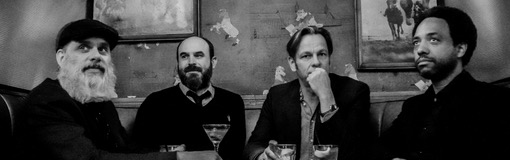
Everything you hear here arrives courtesy of Paul Desjarlais, who is not merely the singer and songwriter but in fact the only member of the “band” Pseudonym—which is, come to think of it, quite the clever and effective stage name. “Maybe” is a track from Before The Monsters Came, the sixth album Desjarlais has recorded as Pseudonym, which was released in August. You can listen to it and buy it, digitally, via Bandcamp. MP3 via the artist.

Free and legal MP3: Chloe Mae

Dreamy, with a swing

“Falling” – Chloe Mae

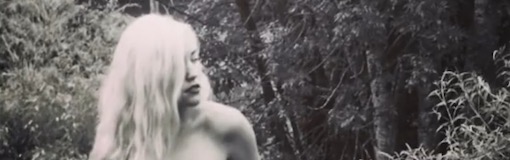
Its dreaminess tweaked with a bit of a swing, “Falling” is an engaging song that highlights Chloe Mae’s supple and subtly potent voice. I’m hooked at the start by the Sundays-eseque character of the verse, its bi-level, 6/8 melody quickly revealing Mae’s voice as one to be reckoned with (check out the high E she hits around 0:31, a wonderful bit of passing dissonance).

But it’s the chorus that slays me for good here, the way its simple two-note melody, describing a descending major third interval, is answered a half step up and an octave higher with wordless vocals now offering an ascending minor third interval straddling the original two notes. That’s what’s going on technically but what counts is how satisfying this sounds, turning the chorus’s unusual reticence, melodically (how many choruses repeat just two notes?), into its superpower.

Things get pleasantly psychedelic in the second half, synthesizers moving from background to foreground, lyrics repeating the phrase “Falling back to you” as a sort of mantra with a synthesizer countermelody below and higher-pitched synth noodles above. Everything wraps up in a tidy 3:10. I suggest repeated listens, to allow its charms to sink further in.

Chloe Mae is a singer/songwriter from Brisbane. “Falling” is her second single, released in August.

I stay here just the same

Eclectic Playlist Series 8.09 – Sept. 2021

With apologies to the ever under-valued piano, this month’s mix offers an inadvertent salute to rock’n’roll’s two quintessential instruments, the electric guitar and the synthesizer. I’m pretty sure the guitar wins this round (see Weezer, Bowie, Davies, Trynin, and, fiercest of all, that second to last track from the Motels), but it’s close. The enticing Canadian experimental popster Bernice gives us all sorts of electronic bips and twiddles (note, though, the analog piano winding its way in and out); the defunct Bay Area band Dealership offers warm, bell-like digital tones; and, wrapping things up, the mighty Toronto foursome Metric goes all fidgety-synth-poppy on us with the portentous but danceable “Cascades.” Guitars win but synths have the last word.

For the record, note that 13 of the 20 artists this month are making their first appearance on an EPS mix, and two songs this time around are songs formerly featured as MP3s here on Fingertips: the Dealership song “Forest,” and “The Sun Ain’t Shining No More,” from the Danish band Asteroid Galaxy Tour, whose most recent record dates to 2014; they are currently on hiatus.

“Monday Morning Rock” – Marshall Crenshaw (Field Day, 1983)
“Benny” – Allen LeRoy Hug (single, 2021)
“Dirty Work” – Steely Dan (Can’t Buy a Thrill, 1972)
“The Good Life” – Weezer (Pinkerton, 1996)
“Forest” – Dealership (Action/Adventure, 2004)
“Maybe” – The Chantels (single, 1957)
“The Next Day” – David Bowie (The Next Day, 2013)
“What Do Pretty Girls Do?” – Kirsty MacColl (Kite, 1989)
“One Track Mind” – The Knickerbockers (single, 1966)
“It’s Me, Robin” – Bernice (Eau de Bonjourno, 2021)
“The Sun Ain’t Shining No More” – The Asteroids Galaxy Tour (Around the Bend EP, 2009)
“About Her Eyes” – Jerry Jeff Walker (Five Years Gone, 1969)
“From the Lonely Afternoon” – Flora Purim (Carry On, 1979)
“I’m Not the Guy” – Dan Bern (Dan Bern, 1997)
“Cry Cry Cry” – Nicole Atkins (Mondo Amore, 2011)
“Imaginations Real” – Dave Davies (AFL1-3063, 1980)
“Better Than Nothing” – Jennifer Trynin (Cockamamie, 1994)
“Spark” – Over the Rhine (Drunkard’s Prayer, 2005)
“Dressing Up” – The Motels (The Motels, 1979)
“Cascades” – Metric (Pagans in Vegas, 2015)

Random notes:

* The singer/songwriter duo of Tennessee Kamanski and Sarah De La Isla, known together as Allen LeRoy Hug, are one of my favorite new acts of recent years. Featured in May for the mysteriously charming song “Saturnine Boy”, their more recent song “Benny” is another winner, highlighting the twosome’s elusive allure—the offbeat chords, the delayed but brilliant hooks, the fetching vocals, it’s all here, and wrapped up in less than three minutes. Captivating stuff for the discerning listener, and it’s the second song in so no excuse for not checking it out!

* Among the varied chronological destinations this month is year-end 1957, which is when the stone-cold early-rock’n’roll classic “Maybe,” by the Chantels, was released. The Chantels were one of the earliest female, all-Black vocal groups to have crossover national success. They were fronted by the classically-trained Arlene Smith, who not only sang but also wrote both words and music. (Not surprisingly, her co-songwriting credit for “Maybe” was never officially recognized.) A transitional song between straight-ahead doo wop and what would soon be known as the “girl group” sound, “Maybe” comes to us in 2021 as a visitor from another planet, and yet there’s something so foundational here that it cannot be denied, and well deserves being heard within a 21st-century sandwich, as happens here.

* My well-established love for the Kinks necessarily extends to the overlooked brother, Mr. Dave Davies, who can never get enough credit both for his archetypal guitar playing and his very occasional but incisive songwriting for the band. Whatever rough patches he and Ray have gone through relationally, it’s notable that neither brother has felt the need to do a whole lot of solo work over the years. Dave’s 1980 album AFL1-3063 remains an enjoyable glimpse of a bygone era, but sounds as sturdy as ever, what with all the guitars, and that inimitable Davies vocal style, related to Ray’s but not at all the same. (Note: the title was the album’s actual bar code; the cover showed the bar code displayed where his face should be. This was when bar codes were just starting to be slapped on everything. Don’t mess with Dave.)

* “Monday Morning Rock” presents us with a verse melody as muscular as it is humble, embedding itself in the ear with a casual, “you-mean-this-old-thing?” manner, but please let us bow down before its casual brilliance. It doesn’t sound like something someone had to write, so inviting and inevitable is its arc. I do apologize in advance if you have trouble getting it out of your head but there are many worse things that might be filling that space so I’m not really sorry at all.

* Jennifer Trynin had a brief alt-rock moment in the ’90s, appearing in the wake of Liz Phair’s world-shaking debut, with major labels competing with one another to sign her. But there was, as usual, no happy ending, just the usual narrative: the musician ends up with little of the money, the label loses interest when she doesn’t hit it big, moving on in search of the next big thing that almost never pans out. Trynin pretty much left the business after her critically well-regarded first LP and less well-regarded second LP (the one where the musician tries to make amends with the record company) go nowhere commercially. She was able to have something of the last word with a memoir she published in 2006 called Everything I’m Cracked Up To Be, which sounds like a good read. And she has apparently tip-toed back into performance in the 2010s, but no solo work at this point.

* For the uninitiated, this wonderful Steely Dan song is one of two that Donald Fagen did not sing lead on on the band’s debut album; the alternate lead singer at that point was a guy named David Palmer, who may have been suggested by the record label, perhaps due to Fagen’s lack of confidence at that point as a singer. (I am doing my best to sort through internet “facts.”) Palmer was last heard with the Dan on backing vocals on the second album, Countdown to Ecstasy. Fun (internet) fact: the Can’t Buy a Thrill was derived from the Bob Dylan song “It Takes a Lot to Laugh, It Takes a Train to Cry.”

* There is one unartful segue here this time, sorry to say. It happens sometimes: the songs go pretty well together but not how they specifically fit where the first ends and the second begins. I won’t mention it to draw any extra attention to it, but if you hear one that you think is pretty ugly, know that I know it too.

Free and legal MP3: Savannah Gardner

Hymn-like solemnity, down-home allure

“Heartbreak River” – Savannah Gardner

There’s a hymn-like solemnity to “Heartbreak River,” with its dignified pace, swelling vocals, and down-home vibe. There’s also something that cumulatively touches the soul here, although I’m not sure I can put my finger on exactly what it is. Gardner is a young singer/songwriter with an ache in her voice and a depth to her presence, so part of the song’s persuasiveness lies in her performance.

And me being a melody guy through and through, I’m also moved by the solidity of the tune itself, which has a steady majesty, and culminates in a resolution in the chorus as mighty and unshakable as they come: the first half (0:45-0:59) a thoroughgoing set-up for the second half, the second half (1:00-1:14) the unhurried and inevitable conclusion. You see the resting point coming from a mile away and it’s all the sweeter as a result.

As suits the song’s humble power, the arrangement feels easy and tasteful, grounded in simple piano playing, with intermittent violin countermelodies, the occasionally audible guitar lick, and the recurrent punctuation of layered backing vocals. These voices rise and fall with restrained drama (and perhaps a bit of vocal processing?; if so, I like the effect a lot), becoming increasingly central to the song’s complexion. The violin, for its part, hangs back a bit, curbing what might be a natural tendency in this sort of song to pour on the syrup; when it moves front and center for the short coda (3:24), it carries with it the heft and poignancy of a bygone time.

Savannah Gardner, born to British parents, was raised in California, but lives now in the Cotswolds. “Heartbreak River” is a single released back in May; her new single, “Take Me Home,” came out late last month; you can check it out via YouTube. Thanks to Savannah for the MP3.

Free and legal MP3: Magnum Dopus

Post-punk intimations

“Scratch & Dent Blonde” – Magnum Dopus

With a tight, scratchy post-punk rhythm and the rich baritone lead of vocalist Andrew McCarty, the Memphis quintet Magnum Dopus delivers an ear-catching homage to the so-called darkwave edge of ’80s new wave music. Adroit shifts between minor and major keys add to the song’s affecting, Depeche-Mode-y vibe. And while it’s definitely not just McCarty’s voice that makes the song, I do give his voice a lot of credit here. That’s quite a voice.

And yet the real hook, to my ears, is the wordless vocal accents that adorn the chorus (first heard at 1:00). The chorus opens with a sense of clearing, with the insistent scratch of the rhythm guitar abruptly dissipated and the melody easing off the double-time urgency of the verse. McCarty sings the titular phrase (it doesn’t sound much like the titular phrase but I’m assured that it is) and then we get the “oo-oo-oo-oo”s and I don’t know, there’s something in that aural maneuver that underpins the song’s potency. Whether it’s because the “oo-oo”s break the portentous trance a voice like his can induce or simply because the sound of those wordless syllables offers some sort of ineffable finishing touch that you didn’t know the song needed until you heard it, I’m convinced they are what transform the song from passingly good to something I’m now writing about here.

Oh and don’t miss the turbulent, neck-climbing guitar solo (2:31-2:48), which represents another kind of homage in a musical world that has largely devalued not just the guitar but the communal value of a soloist within an ensemble in favor of the relentless car-accident appeal of narcissistic TikTok virtuosity.

“Scratch & Dent Blonde” is the fourth of 10 tracks on Suburbanova, the band’s second full-length album, which was released last month. You can listen to and purchase it via Bandcamp.

Free and legal MP3: Alan Dweck

Stately authority, passionate restraint

“Before” – Alan Dweck

Simple, elegant, and powerful, “Before” is a walking-paced blues-based rocker that converts familiarity to strength through its stately authority. The song reveals itself at its own pace and is concise in its melodic offerings—which is polite way of saying the verse and the chorus are sung to pretty much the same tune–and yet not once does it seem to drag or bore.

Everything in “Before” arrives unruffled and inevitable—instrumental tracks laid down with offhand precision, the underlying beat betraying a subtle swing, and, at the center of attention, Dweck himself with his resonant voice, at once world-weary and hopeful, an underlying fire close to the surface but never fully burning through. Encapsulating the song’s atmosphere of passionate restraint is the lead guitar, content largely with simmering background flourishes. We get a brief solo at 1:42, and an extended one at 3:02, elegiac and resolute, shining with intention but still that sense of something being held back. I mean this in a good way; I am consistently a fan of restraint when it comes to both songwriting and performing, as it almost always speaks to a level of artistry out of range of the “more is more” and/or “look at me!” approach.

Dweck is a veteran musician based in London whose career has taken him around the world, playing for the art of it rather than the commerce—an assumption I’m making based on the fact that there is little in the way of a solid informational trail to follow online beyond the press release describing him as “a globe-trotting artist” who “has continued to move people throughout the years.” “Before” is a single released in August, without a lot of tangential explanation; whether an album is forthcoming is as yet unknown. Wherever he’s been and wherever he’s yet going, the man is well worth listening to in the here and now; don’t miss this one.

I just turned around

Eclectic Playlist Series 8.08 – August 2021

We move on; that’s what survivors do, and we are all survivors now because that’s all any of us lucky enough to be breathing in and out in some safe space or another ever are. To have to be focused on actual surviving is a state too close to not-surviving to register at the time as survival; the rest of us, however, not often concentrating on what it takes to draw each breath, neglect our survivor status with a teenager’s carelessness. But you and me and the person next to you and the one behind them, that’s what we are in the age of COVID-19 and the general idiotic mayhem surrounding us—we are (right now, in this present moment) survivors. If we tend to recognize this mostly in response to someone else’s passing, I suppose that’s only natural; one might, in fact, view grief in part as an expression of the displaced guilt of the survivor.

I’ve been thinking these thoughts in recent days because of the unexpected passing of Nanci Griffith, and I type them up in the aftermath of hearing about Charlie Watts. He was 80; she was 68. The rest of us, right now, survive. Music remains its own sort of immortal presence, recorded music in particular. This strikes me as another reason to be listening to music from our culture’s multifarious decades, which lends to your individual instance of humanity a breadth and depth that ongoing exposure to a limited range of musical expression can’t yield. And what do we have going for us, as survivors, if not our own individual depth? Which we ignore not at our own peril, exactly, but at a price that may yet be extracted from us in some excruciating moment in the future, however near or distant, when our own human fate, as it must be, is sealed. When your days as a survivor are over, how shallow a life do you want to have led? This has nothing to your career accomplishments or your impressive hobbies or how much money you’ve accumulated and everything to do with the connections you’ve made with other people, whether they are in your personal network or via their artistic expression, which links one consciousness to another over time and distance, and which, come to think of it, advantages music over other art forms for its logistical accessibility and focus on only our sense of hearing.

And if that’s not a long-winded and barely relevant introduction to this month’s mix, I don’t know what is. But you may find a few semi-relevant, interweaving themes running through these songs, and maybe even also an ear-catching segue or two. Chapter 8.08 now in the books:

“Canção de Novela” – Adriana Calcanhotto (Seleção Essencial Grandes Sucessos, 2010)
“Neighborhood #2 (Laika)” – Arcade Fire (Funeral, 2004)
“What Do You Hear In These Sounds” – Dar Williams (End of the Summer, 1997)
“Fallen” – Philip Rambow (Shooting Gallery, 1979)
“Another Day, Another Heartache” – The 5th Dimension (Up, Up and Away, 1967)
“Hard Way Home” – Brandi Carlile (Bear Creek, 2012)
“Going Down To Liverpool” – The Bangles (All Over the Place, 1984)
“Emergency Exit” – Beck (Guero, 2005)
“Wade in the Water” – Ramsey Lewis (Wade in the Water, 1966)
“Two By Two” – Nils Lofgren (Nils Lofgren, 1975)
“You’ll Never Be So Wrong” – Kim Wilde (Kim Wilde, 1981)
“The War in the Gulf Between Us” – Adrian Belew (Inner Revolution, 1992)
“Smile” – Lily Allen (Alright, Still, 2006)
“Complainte pour Ste-Catherine” – Kate & Anna McGarrigle (Kate & Anna McGarrigle, 1976)
“Survival” – Adult Mom (Momentary Lapse of Happily, 2015)
“I Was Made To Love Her” – Stevie Wonder (I Was Made To Love Her, 1967)
“Caution” – The Killers (Imploding the Mirage, 2020)
“Genius” – Warren Zevon (My Ride’s Here, 2002)
“When I Dream” – The Teardrop Explodes (Kilimanjaro, 1980)
“Across the Great Divide” – Nanci Griffith (Other Voices, Other Rooms, 1993)

Random notes:

* The loss of any favored musician comes as a blow but when death arrives at too-young an age it induces a particular jolt. Nanci Griffith was but 68 when she died, of causes yet to be announced. As talented a songwriter as she was, it was her album of cover songs, Other Voices, Other Rooms, that turned me from casual fan to much more attentive follower when it came out in 1993. She indeed had a magical way with covers; I’ll always remember seeing her take on the Beatles’ “Things We Said Today” in concert and being moved by the peculiar power a newly interpreted version of a familiar song can possess, given the right voice, arrangement, and artistic vision. (She never put that one on an album that I’m aware of, but here’s a roughly recorded live version.) Now then, you can read all sorts of tributes to her that have been posted in the last couple of weeks, and I’d encourage you to, but for my money the best thing to do right away is watch this meticulous compilation on YouTube of all of Nanci’s appearances on David Letterman’s shows (both Late Night and The Late Show). Dave’s ongoing, heartfelt appreciation of this masterly, somewhat offbeat singer/songwriter is touching beyond words, especially now.

* Kim Wilde is one of those artists whose worldwide success (10 million albums sold) never translated into much recognition in the U.S. (Wikipedia tells me that her 17 top-40 UK hits in the ’80s made her the most charted British female solo act of that decade.) And it’s not like she didn’t get a strong introduction here: “Kids in America” was a reasonable hit with quite a long shelf life. But despite the strength of the rest of her debut album she ended up pretty much of a one-hit wonder with those very same kids in America, getting little to no attention here for any of the 13 albums which followed, including the relatively recent Here Come the Aliens, released in 2018. “You’ll Never Be So Wrong” is a track dating back to the 1981 debut, and happens to have been written by her brother Ricky and her father, the early British rock’n’roller Marty Wilde, whose later version of the same song appeared on a ’90s retrospective album of his.

* I don’t know of many songs that are about therapy, but the Dar Williams song “What Do You Hear In These Sounds” definitely is, and contains this deep and delightful lyric: “And when I talk about therapy, I know what people think/ That it only makes you selfish and in love with your shrink/ But oh how I loved everybody else/ When I finally got to talk so much about myself.”

* Like most people. probably, I’ve long associated the 5th Dimension with their good-natured but somewhat cornball hits—“Up, Up and Away” being perhaps the epitome of both their success and their easy-listening inclination. But Questlove’s recent documentary, Summer Of Soul, about the long-forgotten but monumental Harlem Cultural Festival of 1969 gave me new eyes and ears through which to see and hear this pioneering singing group, and sent me off listening to tracks of theirs that didn’t turn into big hits; in the process I came across “Another Day, Another Heartache.” This was actually the second single released from their debut album, after their Mamas and the Papas cover “Go Where You Wanna Go.” The cover made it to #16, but “Another Day, Another Heartache” didn’t crack the top 40. Luckily for everyone, the record company persisted, trying another single from the album, the soon-to-be-ubiquitous title track. “Up, Up and Away” went to #7 in the US, and established the group as hitmakers for the next four or five years. Me, I kind of prefer their somewhat harder-rocking sound, and also really appreciated hearing thoughts and reminiscences from the group’s two main voices in the Questlove film, which is well worth seeing.

* Warren Zevon as a teenager was briefly mentored by Igor Stravinsky. You can occasionally hear the classical composer he never became showing through the seams of his rock’n’roll.

* Remember Lily Allen? In some ways, in retrospect, the first half or so of the ’00s seems like its own little world—definitely not the ’90s anymore, but before the iPhone, disguised as your best friend, intruded on our culture, our psyches, our general well-being. “Smile” comes to us from the edge of that transition, and somehow sounds like as much of a breath of fresh air now as it did then, if not more so. Allen herself has been through the invidious gauntlet we manage to reserve for young women who make a pop cultural impact; her musical life has been intermittently interrupted if not derailed by a variety of circumstances, some beyond her control, some not. She seems now to be focusing on her acting, and this month, coincidentally enough (I just noticed it while typing this), made her West End debut in the play 2:22 A Ghost Story.

* That guitar solo in “Caution”? It’s Lindsey Buckingham.

* Born in Montreal, and borrowing his stage name, phonetically, from the French poet, Philip Rambow had a historically interesting run in his early years as a musician in the ’70s, personally traversing the territory from pub rock to glam rock to new wave, working and/or cavorting with the likes of Brian Eno, Mick Ronson, Ellen Foley, and Kirsty MacColl, among others, along the way. (Side note for fellow Kirsty devotees: Rambow co-wrote her first UK hit, “There’s a Guy Works Down the Chip Shop Swears He’s Elvis,” and played on her debut album, Desperate Character.) “Fallen” was the lead single from the first of two solo albums he released during the new wave era, but it kind of has its own rollicking sound about it that doesn’t have that much to do with what was going on otherwise in 1979. Rambow ended up leaving the music business for a couple of decades, re-emerging to play at a Kirsty MacColl tribute concert following her tragic death in Mexico in 2000. His 2014 album Whatever Happened to Philip Rambow? is perhaps self-explanatory, and he appears since then to have re-started his musical career; 2020 saw the release of his latest album, Canadiana.

Free and legal MP3: The Color Forty Nine

Plaintive bilingual waltz, w/ horns

“What Would I Know? / ¿Yo Que Sé?” – The Color Forty Nine

A song with a recurring instrumental motif separate from the central melody is, to my ears, almost always a worthy enterprise. When that recurring instrumental motif is performed by a plaintive trumpet, as with “What Would I Know? / ¿Yo Que Sé?,” all the better. What I’m talking about specifically is the trumpet melody first heard in between the lyrics at 0:27, and which continues to ground the song in alluring melancholy the rest of the way. The horns—there is more than the one trumpet as we get going—have a beautiful Mexican vibe, reinforcing the song’s bilingual setting. The music, with its 3/4-time sway, lulls the ear while the English lyrics offer impressions and hints; this is one of those songs where you feel what’s going on at a level below concrete awareness. Which is to say I have no idea what the song is actually saying but that doesn’t seem to matter; I still get it.

The lyrics alternate between Spanish and English while the music alternates between major- and minor-key melodies. Every touch along the way seems ideal: the violin that weaves itself into the mix, the group vocals that bolster the chorus (which consists only of the song title, in both languages), the ongoing shifts in the horn charts, the false ending at 3:27, the subsequent coda. With its gentle folk-music sensibility and expressive craft, the song washes over the spirit, seeming to carry with it a sort of wisdom of the ages.

The Color Forty Nine is a San Diego-based quartet. The Spanish lyrics here are sung by guest vocalist Rubén Albarrán of the band Café Tacvba, from the suburbs of Mexico City. “What Would I Know? / ¿Yo Que Sé?” is a song from The Color Forty Nine’s second album, String Ladders, which was released last month.

Free and legal MP3: The Joy Formidable

Dream pop w/ a triplet-based swing

“Into The Blue” – The Joy Formidable

Thum-pi-da, THUM-pi-da, thum-pi-da, THUM-pi-da: The swinging, triplet-based backbeat that launches “Into the Blue,” offset by scratchy and thoughtful guitar arpeggios, evokes something deep and disregarded in the history of rock’n’roll. What I think we’re hearing here is the ghost of doo-wop, and while doo-wop has never been my thing (I’m old but I’m not quite that old!), it feels invigorating to hear in the context of a song so otherwise rooted in the 21st century.

Layered on top of the backbeat comes a marvelous mixture of light and shadow, melody and noise, liberation and complication. The song takes a terrific turn early on, at 1:08, when front woman Ritzy Bryan is displaced for a verse on vocals by bassist Rhydian Dafydd, who sings an alternate but related melody that strikes the ears as newly urgent. Even if—this again—it’s hard to tell exactly what’s going on in the lyrics, the introduction of the other person’s point of view in what sounds like a relationship-centric song intensifies the circumstances, adroitly signaling the communication issue the song seems to be about.

Through it all keep your ears on Bryan’s guitar work—the discrete notes she slips in here and there, the occasionally heard squeak of fingers on strings, and in particular how she sometimes just starts playing her own thing (example at 1:56) as a sort of combination counter-melody/counter-rhythm to the song’s determined drive forward.

The Joy Formidable is a trio founded in Wales, although Dafydd and Bryan have been living in Utah, of all places, in recent years. (The band’s third member is drummer Matthew James.) “Into The Blue” as a single has been out since March, but is soon to emerge as the title track to the fifth Joy Formidable album, arriving later this month. MP3 via KEXP. You can buy the album in a variety of formats on Bandcamp.

Free and legal MP3: Shadwick Wilde

Gentle pandemic ballad

“When All of This Is Over” – Shadwick Wilde

Strangely enough we have another song this month based on a triplet rhythm, in this case a deliberate acoustic ballad expressing an all too common yearning during the Great Lockdown, as we have long been daydreaming about the return of something resembling normalcy. The song came out back in April but seems, alas, ongoingly relevant.

And while earnest singer/songwriters with simple acoustic guitar licks often stray, in my opinion, into the maudlin and/or mundane (or both), there’s something affecting to me about the ambiance here; the sincerity is not over-delivered, and the music, enhanced with tasteful string arrangements, pushes forward with an air of enigmatic buoyancy despite the mournful tone. The tune is straightforward but well-built, while the lyrics hit that alluring middle ground between the literal and the figurative: while the listener clearly knows what he’s singing about, the pandemic is brought to the table only via mention of those things we might do again on the other side. This accomplishes two interrelated things: it makes the song about something larger than our current difficulties, and it nudges us towards a sense of hope through the struggle. And while the song lacks any obvious connection to the activism championed in her writings, there’s something here that reminds me of Rebecca Solnit’s view of hope: “Hope,” she says, “locates itself in the premises that we don’t know what will happen and that in the spaciousness of uncertainty is room to act.” I feel guided towards this spaciousness in Wilde’s reminder of the larger context of human existence; as he sings offhandedly near the end: “How lucky we are/To be orbiting this particular star/At this particular distance.”

Shadwick Wilde is a Kentucky-based singer/songwriter who is also founder in 2010 of the fluid musical collective Quiet Hollers, which has released three albums to date.