I wouldn’t want to make anyone nervous

Eclectic Playlist Series 2.02 – February 2015

EPS2-02

For a band or an artist to re-record in its entirety another band or artist’s album is a relatively unusual occurrence, and for the re-recording to emerge as its own work of art is even rarer. One of the best I’ve heard to date is the edgy, guitar-centric reinterpretation of the Steely Dan classic Aja done by the Canadian band The Darcys back in 2012. At the time, I featured the song “Josie” here on Fingertips, as it was the free and legal MP3. But “Home at Last” was always my favorite song on the album and the 21st-century redo is pretty brilliant. It’s actually one of three covers on this month’s playlist, the other two being Diana Krall’s simmering take on the Tom Waits song “Temptation,” and then (kind of a trick answer) Al Wilson’s “Show and Tell,” which itself was a huge hit at the time, far overshadowing the original recording, done only the previous year by Johnny Mathis, of all people. Favorite segue this time around pretty much has to be Alina Simone’s “Beautiful Machine” into that awesome Matthew Sweet song. Two songs in the same key can make for segue heaven under the right circumstances. Oh and I would be remiss this time if I didn’t give a hat tip to the retro awesomeness of the dustystevens music blog, which recently re-fired some dormant brain cells by re-introducing me to “The Sun Doesn’t Shine.” I love when that happens.

“Beyond Belief” – Elvis Costello & the Attractions (Imperial Bedroom, 1982)
“Words That I Employ” – Coach Said Not To (Coach Said Not To EP, 2005)
“Love In Action” – Utopia (Oops! Wrong Planet, 1977)
“The Sun Doesn’t Shine” – Beats International (Excursion on the Version, 1991)
“Holy City” – Joan As Police Woman (The Classic, 2014)
“Man Overboard” – Blondie (Blondie, 1976)
“Home At Last” – The Darcys (Aja, 2012)
“I’m Alright Now” – Soul X 2 (single, 1968)
“Man From China” – Vivabeat (single, 1979)
“Closer to Fine” – Indigo Girls (Indigo Girls, 1989)
“Beautiful Machine” – Alina Simone (Make Your Own Danger, 2011)
“Devil With the Green Eyes” – Matthew Sweet (Altered Beast, 1993)
“Temptation” – Diana Krall (The Girl in the Other Room, 2007)
“Somewhere They Can’t Find Me” – Simon & Garfunkel (Sounds of Silence, 1966)
“Read About It” – Midnight Oil (10,9,8,7,6,5,4,3,2,1, 1982)
“Lionsong” – Björk (Vulnicura, 2015)
“Juanita” – Rachel Smith (The Clearing, 2001)
“Wonderland” – Nils Lofgren (Wonderland, 1983)
“Show and Tell” – Al Wilson (single, 1973)
“Why” – Annie Lennox (Diva, 1992)

Free and legal MP3: Annalibera (slow-ish and soaring)

The song develops not by clearly going from A to B and back again but by gliding into separate but related segments.

Annalibera

“Black Cat White Cat” – Annalibera

Slow songs are tricky things. Songs that move “too slowly” (whatever that ends up meaning, or feeling like) can violate our sense of needing to get things done, or at least needing to feel like something is happening. And yet a slow song can also be delicious in its deliberation and restraint. But: what makes a slow song slow, anyway? A song can have a slow-moving beat but fast-moving melodies; a song can have a normally-paced beat but still feel slow.

“Black Cat White Cat” works both sides of this fence with aplomb, first establishing the prominence of an unhurried 1-2 beat and then contradicting that impression with first-verse lyrics that move largely in double-time. Soon, in what appears to be a kind of chorus (although seemingly wordless), the bass continues its deliberate, spread-out line but the guitar now rings out with a lead constructed of strung-together triplets (first heard at 0:52). Later the guitar fills space between languid lyrics with urgent oscillations of a different timbre (1:48 and following). That there is no obvious overall structure further contributes to the sense of slowness, I think. The song develops not by clearly going from A to B and back again but by gliding into separate but related segments. The faster-moving melody of the first verse never repeats; the thing I thought of as the wordless chorus disappears until the song’s final quarter (3:20), and there evolves into an indecipherable but dramatic interaction between skyscraping vocals and a truly foundational guitar riff.

Holding everything together are two related things: the interval-oriented melody, which floats us up and down the octave via archetypal arpeggios; and singer Anna Gebhardt’s soaring, searing voice, in which I hear rich echoes of the perennially underrated Tanya Donelly. (And if that comparison means anything to you, seriously, don’t miss this song.)

A native of rural Nebraska, Gebhardt studied voice at Drake University and stayed in Des Moines to start the trio Annalibera. “Black Cat White Cat” is a single from their forthcoming album, Nevermind I Love You, which is due in March via the Des Moines-based label Sump Pump Records. The band has one previous release, a three-song self-titled EP that came out in 2013. You can pre-order the new album (with a vinyl option) via Bandcamp.

photo credit: Bruce Bales

Free and legal MP3: Record/Start (crunchy, melodic, smartly-crafted)

“Rock From Afar” manages to funnel nostalgia through a contemporary filter, conjuring the past without wallowing in it.

Record/Start

“Rock From Afar” – Start/Record

Crunchy, melodic, smartly-crafted rock’n’roll, “Rock From Afar” is one of those rare one-man-band home recordings that sounds spacious and outgoing. (In that way it brings to mind the work of Devin Davis, for those with long Fingertips memories.) And while full of elusive homages to great moments in rock history, this song is likewise a rare bird for managing to funnel nostalgia through a contemporary filter: conjuring the past without wallowing in it, without losing the recognition that we live in the here and now and that that’s okay too.

So—stay with me on this one—I’m thinking now that what sounds like a catchy, well-paced song is actually much more than that. With “Rock From Afar,” Simon Cowan, doing business as Record/Start, offers us a much-needed (not to mention delightful) way out of the dead-end technophilia of the early 21st century. Enough with having to pretend there is nothing of value to be had from the past, enough with entrepreneurs and venture capitalists so smug and myopic that they can’t credit or recognize anything they didn’t invent or fund. Life existed before us and life (if we don’t go all Interstellar on ourselves) will go on after us and the smartest and most valuable (not to mention most fun) people are those who partake of the whole buffet. Use the past to inform the present and aim towards the future.

That’s what “Rock From Afar” does and it’s a breath of fresh air in a musical age suffocating from the addictive beats and compressed mightiness required to keep the kids dancing and the fingers clicking. Cowan finds a brisk pace and rich texture far removed from the stifling dictates of today’s pop, with guitars that bleed into a kind of 2015 Wall of Sound, and melodies that sweep you pretty close to power pop heaven. One of my favorite moments is the abrupt break for a “woo-oo-oo” vocal that happens at 2:41, because of how precisely this moment embodies the seamless melding of past and present: this kind of “woo-oo-oo” is pure Beach Boys, but Cowan augments it with an ear-popping 21st-century affect that Brian Wilson probably wishes he could have invented 50 years ago but most certainly did not.

Cowan fronted the Manchester band Carlis Star during the latter ’00s. Record/Start, a solo project, came into being in 2014. “Rock From Afar” has been bumping around the internet for a few weeks, in advance of its official double-sided single (on cassette) release next month, via Post/Pop Records. Thanks to Insomnia Radio for the MP3.

Free and legal MP3: Chelan (martial clarity meets windswept moodiness)

Often the acoustic and electronic are mixed in a song in blatant juxtaposition; here the analog and digital mingle with unnerving ease.

Chelan

“Pretend We Live Forever” – Chelan

We’ve got the snap-to-attention drumming on the one hand, and echoey industrial background washes on the other: martial clarity meets windswept moodiness. What’s not to like? And check out the sneaky way that swells of actual stringed instruments press their way into a sonic landscape that feels at once intimate and expansive. Often the acoustic and electronic are mixed in a song in blatant juxtaposition; here the analog and digital mingle with unnerving ease.

And then there’s the matter of how this thing, well…swings. Underneath the rat-a-tat snare is a deeper, swaying, gut-level beat, and this, I think, is what really nails “Pretend We Live Forever” together. (If you’ve got any desk-dancing inclinations, this song all but requires some kind of awkward-looking but satisfying upper-body gesticulations.) Another somewhat hidden strength here is singer Jennifer Grady’s voice, which has a lovely, limpid tone and is allowed to hit our ears with gratifying directness, even as a variety of layered effects swirl around her. But she’s also oddly easy to miss since so many songs that aim for the kind of ambiance we’ve got going here seem not too often interested in presenting a clear and unadulterated voice. Which kind of trains our ears not to hear. Which is another matter for another day.

Chelan is the duo of Jen Grady and Justin Hosford. She teaches music; he is a TV and film composer with a studio in the Mojave Desert, where they converge to write and record whenever they can. “Pretend We Live Forever” is a track from their forthcoming album Equal Under Pressure, to be released later this month. MP3 via Magnet Magazine.

Just when it seemed about hopeless

Eclectic Playlist Series 2.01 – January 2015

EPS2-01

Speaking of quality, welcome to another edition of the Eclectic Playlist Series, which aims entirely at a quality listening experience, regardless of either how many decades or how many sub-genres of music we have to explore to get there. I mean, seriously: do you really only like one kind of music?

Note that there have been 11 playlists in the Eclectic Playlist Series to date before this new one, running from December 2013 to December 2014, and up to this point, no artist has appeared twice. With the new year, the EPS officially resets: we are in series 2, and you will now begin to see (i.e., hear) some of the folks who have already made appearances. Specifically, here on EPS 2.01, we say hello again to one of my long-time and all-time favorites, Sam Phillips, who previously landed a song on playlist 1.07 (“This Is Not What I Thought”).

Note too that this may be the least “classic-rock-y” playlist in the history of the internet that still manages to feature Bob Dylan, The Rolling Stones, and the Moody Blues. The presence of Allen Tousaint, the Nerves, and Jessy Bell Smith, among others, helps. Plus Mick Jagger’s falsetto (and fine Arab charger). Did I help him carry his cross through town? Did I keep my ammunition under cover? Even so, they left me at the station, and down down down I went. But in the end, pressure makes diamonds, quality trumps quantity, and there is always more music to accompany us on this journey. See you next month.

“I Was in the House When the House Burned Down” – Warren Zevon (Life’ll Kill Ya, 2000)
“I’m Gonna Destroy That Boy” – The What Four (single, 1966)
“Escalator of Life” – Robert Hazard (Robert Hazard EP, 1982)
“Cruel Inventions” – Sam Phillips (Cruel Inventions, 1991)
“Cherry Tulips” – Headlights (Some Racing, Some Stopping, 2008)
“You and Me” – The Moody Blues (Seventh Sojourn, 1972)
“Tractor Rape Chain” – Guided By Voices (Bee Thousand, 1994)
“Go Back Home” – Allen Toussaint (single, 1965)
“Ways of Looking” – The Mynabirds (What We Lose in the Fire We Gain in the Flood, 2010)
“Open Your Heart” – The Human League (Dare, 1981)
“Delia” – Bob Dylan (World Gone Wrong, 1993)
“John Mouse” – Jesse Bell Smith (The Town, 2014)
“When You Find Out” – The Nerves (The Nerves EP, 1976)
“Off and Running” – Lesley Gore (My Town, My Guy & Me, 1966)
“Shiver” – Coldplay (Parachutes, 2000)
“Icarus” – White Hinterland (Kairos, 2010)
“Nothing But a Heartache” – The Flirtations (single, 1968)
“Nearly Lost You” – Screaming Trees (Sweet Oblivion, 1992)
“Emotional Rescue” – The Rolling Stones (Emotional Rescue, 1980)
“Pressure” – My Brightest Diamond (This Is My Hand, 2014)

Free and legal MP3: Rebekka Karijord

Rich, rhythmic, and passionate

Rebekka Karijord

“Use My Body While It’s Still Young” – Rebekka Karijord

“Use My Body While It’s Still Young” has a haunting richness to it that belies the edgy electronics that may first grab your ear. Some of this is a simple function of Karijord’s vivid mezzo, with its half-creamy, half-vehement tone; just about anything she might sing is likely to be rich and haunting.

But there’s something deep in the song that moves me as well, something timeless running through its urgent, 21st-century setting. To begin with, “Use My Body…” skillfully blends electronic rhythms with what sounds like organic percussion. That always helps. Note too how the steadfast, familiar sound of an old-school organ works its way to the center of a song characterized otherwise by jittery rhythms. But, perhaps most effective of all, there is way that the musical landscape, while pulsating with inventiveness, nevertheless roots itself in, of all things, the blues. Not that I am any kind of blues fan (at all), and not that this is in any actual sense a blues song (it isn’t), but if you listen attentively you may hear what I hear in both the chord progression (unfolding in a 12-bar verse) and in the primal passion on display.

Beyond the cumulatively entrancing music, the lyrics too bear consideration. It’s not your everyday pop song that addresses the fleeting vigor of youth. Then again, Rebekka Karijord is hardly your everyday pop singer—she is, instead, a Norway-born, Sweden-based composer/performer/writer who has written music for a variety of media, including film, theater, and dance; she has worked regularly as an actor as well. Meanwhile, as a singer/songwriter, she has recorded three albums. “Use My Body While It’s Still Young” is from her second album, We Become Ourselves, which was originally released overseas in 2012. Karijord is releasing a deluxe edition of the album for the United States next month, via her own label, Control Freak Kitten Records.

Free and legal MP3: Auditorium (dramatic vocal layers, acoustic setting)

As off-kilter as you might imagine a song entitled “My Grandfather Could Make the World Dance” would be. Also, bold and captivating.

Auditorium

“My Grandfather Could Make the World Dance” – Auditorium

The 2015 indie music scene is full of creative types who come from all sorts of idiosyncratic backgrounds. Even among his heterogeneous cohorts, however, Spencer Berger stands out for his unusual back story: from the ages of nine through 12, he was an opera singer, performing at the Metropolitan Opera with the likes of Luciano Pavarotti. And while you might not immediately guess “child opera singer” when “My Grandfather Could Make the World Dance” starts up, I’m pretty sure you can see that something muscular and expansive is going on here vocally, both in terms of Berger’s singular tone and his penchant for dramatic layering.

And so it turns out that this is as off-kilter as you might imagine a song entitled “My Grandfather Could Make the World Dance” would be; likewise is it bold and captivating. Berger’s penchant for stagy vocalizing is all the more convincing for its being matched, against expectation, with the simplest of accompaniments—acoustic guitars, a touch of piano, and a small helping of percussion is all that’s going on here, instrumentally. Musically, the song is dominated by descending melody lines, punctuated by intermittent yelping leaps; the overall effect is a kind of optimistic melancholy that helps give the whole thing the feel of a lonely suburban afternoon in 1972. I can’t pinpoint why but to me this seems quite clear.

Based in Los Angeles, Spencer Berger has been recording music as Auditorium since 2011, when his debut album, Be Brave, was released. (You can check that one out via Bandcamp.) “My Grandfather Could Make the World Dance” is a single released earlier this month. Thanks to Insomnia Radio for the link.

Free and legal MP3: Emma Swift

Brilliant, achy cover of a new wave nugget

Emma Swift

“Total Control” – Emma Swift

Australian singer/songwriter Emma Swift has transformed this new wave classic via the most delicate and deft mutation. The Motels tune still burns slowly, achingly. In place of the original’s rubbery, late-’70s itch Swift employs a torchy, old-style country setting, with exquisite pedal steel work and a slight but effective vocal twang.

We know we are in excellent hands from the opening notes: Swift creates an entirely new introduction for the song, composed of lovely, unresolved arpeggios, played on a silver-toned guitar. It couldn’t be more different than the dated, repetitive staccato of the original intro, which had its new-wave-y charms but always struck me as clunky. (It can be a fine line between a slow burn and lack of imagination.) And while there is likewise nothing wrong with Martha Davis’s vocals—okay they were a bit affected but that was her thing—Swift here really sings this baby, accessing all sorts of actual emotion in places where Davis was content to go for eccentricity.

That’s the thing about this cover that feels almost shockingly appealing: how deep and lived-in Swift makes a song that never previously seemed much more than a quirky curiosity. Some of this has to do with the subtle but superb arrangement; there does not appear to be one note in the background or foreground that isn’t being played for a purpose. Even something as seemingly minor as the decision to deliver the oddly climactic line “Stay in bed/Stay in sheets” with harmony vocals (Swift otherwise sings single-tracked the whole way through) becomes a moment rich with ineffable delight via some combination of know-how and hunch. In any case, I have only rarely heard such a satisfying reinterpretation.

Swift is a singer/songwriter from Sydney who spends half her year in Nashville. She also hosts an Americana-oriented radio show on the Australian station Double J. “Total Control” can be found on Swift’s debut release, a self-titled six-song EP, which you can listen to and/or purchase via Bandcamp. Thanks muchly to Cover Lay Down for the link. Joshua’s been running a genial covers-only music blog there for years and years; check it out at http://coverlaydown.com.

In defense of quality

Quality is real, quality is not measurable by engineers, and quality will long outshine the petty strivings of page-view millionaires and their Silicon Valley acolytes.


Imagine for a moment that you could only ever listen to the most popular music—only the top 10 songs, say, or the top 10 albums. Imagine as well that you could only read the books that were most popular, and that the only available movies to see were, again, the super popular ones. Food, too, is limited in this scenario to only the most popular items. Even your activities: imagine for a moment you can choose in your spare time to do only one of, say, ten most popular leisure pursuits.

I am assuming this thought experiment is starting to sound a bit like a nightmare. Even a person with happily mainstream tastes veers regularly from liking and doing only very-popular things; everybody’s got a number of at least somewhat off-the-beaten-path favorites of some kind. This is why the accumulated preferences of a large population never coincide precisely with any one individual’s tastes. And they’re not supposed to: top 10 charts of various kinds are inherently interesting as information, but are not intended as strict behavioral control.

At least, not so far.

The web is working hard to change this—in particular, companies run by web entrepreneurs who so worship the God of Page Views as to drain life of qualitative meaning entirely. It’s all about quantity, all about getting the most people to click a link or like or follow. These are entrepreneurs such as Emerson Spartz, recently profiled in The New Yorker, who was there quoted as saying, “The ultimate barometer of quality is: if it gets shared, it’s quality.”

This is patently absurd. It doesn’t require that much history or independent thinking to realize that popularity and quality are not only not always aligned but often enough misaligned. Things that are popular are not always of high quality and things of high quality are not always popular. This is a truth as old as civilization, and it is not changed by a home-schooled 27-year-old who seeks page views for a living.

And then there is this truth, perhaps too subtle for Spartz and his fast-moving, screen-focused peers: that sometimes a thing of quality takes time to be seen, understood, and recognized. Schubert would not have ended up on any “most popular” list in his lifetime. Nor the Velvet Underground while they were still around. Or recall, if you would, the way The Shawshank Redemption was received upon release versus the way it is regarded today.

Despite the gaping hole in their understanding of human culture and human nature, this new generation of web entrepreneurs are the ones taken seriously in our benighted digital culture—the ones offered the microphones at TED conferences, followed on Twitter, and generally glorified as shining examples of 21st-century success. The lonely few of us who focus our attention on quality rather than quantity are not merely ignored, we may as well not exist when it comes to the so-called “real world” of commerce and (ooh, that word) innovation.

And while much of the squawking about Spartz after the article came out had to do with how his click-bait web sites purportedly spell the end of serious journalism online, that part of the hubbub seems to me somewhat overblown. Serious journalism has never been all that popular, and it’s unlikely that junk sites like Dose are specifically exacerbating the problem. To me the more serious concern is the Orwellian implication here—if publicly acclaimed web leaders can willfully present quantity as quality, what else are they dissembling and misrepresenting for their own ends?

In the New Yorker article and elsewhere, Spartz speaks without hesitation of his fascination with “virality.” His career to date as a web-site entrepreneur has seen him devoting endless energy and data-crunching power to refine again and again his understanding of what causes something to become rapidly and monstrously popular online. The endgame, not surprisingly, is the increasing employment of sub-rational enticements to promote an all but addict-like response from unwitting visitors: use this wording and not that wording, this photo and not that photo, place the headline here and not there, and so forth.

Users caught up in this kind of virality vortex have left the concept of quality just as far behind as have the web sites they visit. Quality by nature is a response of the thinking and feeling being, not a robotic reflex; even if arising in an instantaneous sensation, the recognition of quality springs from the depths of open-hearted intuition, not reptilian-brain instinct. At least those entrepreneurs baiting users into meaningless clicking have the gratification of profit tied up in this awful game; visitors, however, are left after the fact with little but the emotional equivalent of a junk-food coma. What did I just spent all this time doing? And why?

Thankfully, short-sighted hucksters share a common eventual fate: failure, and ridicule. And mark my word, history shall prove these virality chasers to be laughing-stocks, as much for their risible inability to mature beyond a toddler-like sense of greed and entitlement as for their blindness to their own human hearts. They hide behind currently acceptable jargon (innovation! disruption!), incapable of recognizing the painfully familiar and unimaginative nature of their actual endeavor. As Leon Wiseltier wrote recently in the New York Times, “there is nothing innovative about pandering for the sake of a profit.”

Quality is real, quality is not measurable by engineers, and quality will long outshine the petty strivings of page-view millionaires and their Silicon Valley acolytes. If you have a moral compass, you understand the existence and the importance of quality, so right away this gives you a hand-hold on what people who belittle the importance of quality are like—rudderless human beings, blinded by power of one kind or another, and just as likely to do harm as good in the world. Steer clear of these people and for god’s sake avoid their web sites.

Free and legal MP3: The Sharp Things

Lovely, urgent, and deep

Sharp Things

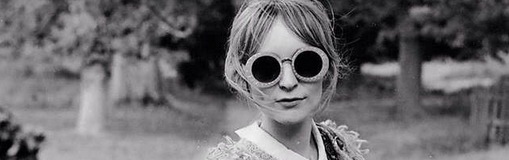
“Everything Breaks” – The Sharp Things

“Everything Breaks” manages the uncommon trick of being both lovely and urgent. Each of these aspects, as it turns out, seems to hinge primarily on the song’s consistent—and subtly edgy—alteration between minor and major keys. We hear it right away in the crisp, ringing piano intro, and the minor/major shifting is only deepened and underlined by the addition of vocals. There’s a breathlessness to the proceedings, a sense that the song just has to burst out as is and be done.

And then too there’s the way the song unfolds lyrically as an elegiac litany of facts, descriptions, and/or circumstances, creating a kind of beauty-meets-tragedy atmosphere, even if it is difficult to apprehend exactly what is being sung about and why. With its graceful confluence of lyrical and melodic portent, “Everything Breaks” grabs the ear so quickly and securely that we feel grounded without even a chorus to provide its steadying influence.

The Sharp Things, previously featured on Fingertips in November 2013, are an expanding and contracting NYC ensemble, active since the ’90s, and currently in a nine-piece phase. “Everything Breaks” is the lead track on Adventurer’s Inn, released earlier this month. This album, the band’s sixth, turned out to be a personally notable and heartbreaking effort for front man Perry Serpa, as it is the last album the Sharp Things were able to record with drummer and band co-founder Steven Gonzalez, Serpa’s best friend since childhood. Gonzalez died in September from complications related to a lifelong struggle with cystic fibrosis.

Thanks to the band for the MP3.