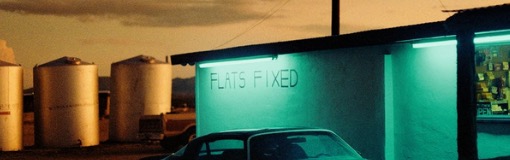
Who needs a hug? (Eclectic Playlist Series 5.07 – Sept. 2018)

Fingertips is on hiatus for a little while longer but the Eclectic Playlist Series forges on, offering up a “Summer’s Over” playlist aimed to help you find a little bit of solace in a world gone wrong and wronger. We’ve got indie rock and classic rock, rocksteady and R&B, instrumentals and vocal duets, folk rock from the distant past and indie pop from the immediate present, and then some. Some random notes:

* Thanks to George from Between Two Islands for the opening track. I love the Bird and the Bee but had overlooked this song until hearing it in one of his inimitable playlists.

* Yet again illustrated here is the inscrutable difference between a hit and a miss from the classic Soul years—I mean, Diane Lewis, “Keep a Hold on Me”: shouldn’t this have been blasting out of car radios across the country?

* “The Devil Wears a Suit” sounds even more portentous now than when I featured it on Fingertips back in 2012. Kate Miller-Heidke is a force of nature, far more appreciated in her native Australia than here. (Answer to her musical question: We all do. We all need a hug.)

* “Anastasia” was a FM radio staple, at a certain sort of FM radio station, back in the day. You don’t hear much (i.e., anything) of Elliott Murphy these days but he’s been recording albums all these years, his latest in 2013. He’s had a career as a writer too, has been living in Paris for decades, and in 2015 had a documentary released about him. Lots of characters like Murphy have slipped through the cracks of our click-oriented culture, people you have to slow down to get into and appreciate.

* RIP Aretha. I sure hope she’s right, that we are, indeed, at long last, running out of fools. The country can’t survive much longer with so many of them in charge.

Full playlist below the widget.

“Witch” – The Bird and the Bee (Ray Guns Are Not Just The Future, 2009)
“Knocked Down, Made Small (Treated Like a Rubber Ball)” – Was (Not Was) (Born to Laugh at Tornadoes, 1983)
“Keep a Hold on Me” – Diane Lewis (single, 1968)
“Graffiti” – CHVRCHES (Love Is Dead, 2018)
“Island in the Sun” – The Paragons (single, 1967)
“Did You Miss Me” – Lindsay Buckingham (Gift of Screws, 2008)
“The Blacksmith” – Steeleye Span (Hark! The Village Wait, 1970)
“Orchids” – Monster Rally (Return to Paradise, 2013)
“I’ll Do Anything” – Doris Troy (single, 1966)
“Song Against Sex” – Neutral Milk Hotel (On Avery Island, 1996)
“Prime Time” – The Tubes (Remote Control, 1979)
“The Devil Wears a Suit” – Kate Miller-Heidke (Nightflight, 2012)
“Too Fast For You” – The Church (Too Fast For You EP, 1981)
“A Hard Day’s Night” – Sonny Curtis (Beatle Hits Flamenco Guitar Style, 1964)
“Frank Sinatra” – Cake (Fashion Nugget, 1996)
“Anastasia” – Elliott Murphy (Just a Story From America, 1977)
“Runnin’ Out of Fools” – Aretha Franklin (Runnin’ Out of Fools, 1964)
“Come Cryin’ to Me” – The Jayhawks (Back Roads and Abandoned Motels, 2018)
“No Guilt” – The Waitresses (Wasn’t Tomorrow Wonderful?, 1982)
“Walk Away” – James Gang (Thirds, 1971)

The foggy web of destiny (Eclectic Playlist Series 5.06 – Summer 2018)

Yes, Fingertips is on hiatus. But here’s a playlist, which I had started previously, and just seemed to want to be released into the world. It’s suitably eclectic, as always, and manages to feature 16 artists, of 20, that have not previously been playlisted here, even as we are now in the middle of the fifth year of playlists. Some random notes:

* There are two 2018 songs on the list, from two albums that are likely to be among my favorites this year—Beach House’s aptly-titled 7, and the Arctic Monkeys’ strange but endearing Tranquility Base Hotel & Casino.

* There are two old songs I’ve only recently discovered:

1) The Northern Soul-reclaimed gem “Please Stay,” from a Chicago group called The Ivories (in its original pressing on tiny Despenza Records, the band was identified simply as “Ivorys”), another song that demonstrates the fine fine line between a huge hit and an ignored piece of vinyl.

2) The gorgeous Dylan song “Born in Time,” in a version that is far more successful, to my ears, than the one that was originally released, in 1990, on his puzzling Under the Red Sky album. This notably altered 1989 incarnation was recorded for the much more successful Oh Mercy LP, but left off it because, well, Dylan routinely left off some really good songs. That’s how he rolled. You can find it on the terrific Tell-Tale Signs compilation.

* Yes, that’s Twiggy, the model. The 1960s were known, among many other things, as an era when anyone who was famous for pretty much anything would eventually end up in a recording studio making an album. Occasionally the end result was a pleasant surprise, as this one is.

* Ian Hunter recently turned 79 and is still out there recording top-notch music. This one is from back in his relatively youth—he was 36 at the time, and had just left Mott the Hoople. The band petered out quickly without him; his solo career has been full of strong but overlooked albums, including 2016’s Fingers Crossed.

* Peter Case is one of those guys who will sometimes receive the ambivalent compliment of being a “songwriter’s songwriter.” I’m not always sure what that means but in his case it rings true, and in any event “Hidden Love” is one of my favorite songs ever.

Reminder: all songs on each Eclectic Playlist Series mix (including, now, this one) have been accumulated into a master mix on Spotify (minus the songs that Spotify doesn’t have); the link to that is:

https://open.spotify.com/user/fingertipsmusic/playlist/2EOYzqn90RRM8HB5R95ED3?si=UYBQKHApThKdKklxo_CdTw

Full playlist below the widget.

“Dark Spring” – Beach House (7, 2018)
“Once It Was Alright Now (Farmer Joe)” – Laura Nyro (Eli and the Thirteenth Confession, 1968)
“Black and White” – The dB’s (Stands for Decibels, 1981)
“Slimcea Girl” – Mono (Formica Blues, 1998)
“Floating Vibes” – Surfer Blood (Astro Coast, 2009)
“Yachting Type” – The Yachts (Yachts, 1979)
“Please Stay” – The Ivories (single, 1966)
“Tranquility Base Hotel & Casino” – Arctic Monkeys (Tranquility Base Hotel & Casino, 2018)
“If I Had a Boat” – Lyle Lovett (Pontiac, 1988)
“Girl Anachronism” – The Dresden Dolls (The Dresden Dolls, 2004)
“When I Think of You” – Twiggy (single, 1967)
“Once Bitten Twice Shy” – Ian Hunter (Ian Hunter, 1975)
“World Made” – Land of Talk (Life After Youth, 2017)
“Mockingbirds” – Grant Lee Buffalo (Mighty Joe Moon, 1994)
“Born in Time” – Bob Dylan (recorded 1989, Oh Mercy sessions; released 2008, Tell-Tale Signs: The Bootleg Series, Vol. 8)
“Apache” – The Shadows (single, 1960)
“Heard It All Before” – Emiliana Torrini (Me and Armini, 2008)
“Someone’s Looking At You” – The Boomtown Rats (The Fine Art of Surfacing, 1979) *
“Never Broken” – Cassandra Wilson (Traveling Miles, 1999)
“Hidden Love” – Peter Case (The Man With The Blue Post-Modern Fragmented
Neo-Traditionalist Guitar
, 1989)

See you in September

Fingertips will be on hiatus until September.

And with one previous post spotlighting perennial Fingertips favorite Neko Case and a song from her terrific new album, Fingertips will now be taking a hiatus from MP3 reviews until September. Whether the reviews start back up at that point I actually don’t know. That is some of what I will be pondering these next few months. Part of me is happy with all the work I’ve done here over the past 15 years, all the worthy artists whose songs I have closely examined and offered as legal downloads; and by June 2018 another part of me wonders whether this particular effort has at last run its course. Music changes, technology changes, with (alas) no rational or humane actor steering things. The web has enabled both our better angels and our tireless devils. I’m on the side of the angels but it’s exhausting and often discouraging work.

I imagine I will continue to post playlists because it’s kind of my personal art form—I feel compelled towards expression in that medium regardless of who may or may not be paying attention. And the intermittent essays may continue as well. We’ll see how it all shakes out after some time off.

Thanks to all of you who are out there, paying attention. The world needs not merely attention but attention pointed in a helpful and hopeful direction. Keep the faith, stay in touch, and place yourself whenever possible in the path of beauty. Now and always, it’s our last best chance.

Free and legal MP3: Neko Case (enigmatic brilliance)

Neko Case is a riddle wrapped in a mystery inside of a voice.

Neko Case

“Hell-On” – Neko Case

Neko Case is a riddle wrapped in a mystery inside of a voice. The more confident she has grown as a songwriter and singer over the years, the less clear her intentions, the more obscure her references, the more involuted her song structures. There is no explaining “Hell-On,” the title track to her new album, unless you are somehow blessed with an intuitive understanding of lines like this:

Just at sorrow’s waterline
I drape you on tomorrow’s plate
Ferrous, metal marrow spilling
Not yours but mine
I’m an agent of the natural world

Say what? But: keep listening. You won’t understand it any better but you might grow to understand that understanding is besides the point. Case is indeed an agent of the natural world, otherwise known as a force of nature, and there is something in her haunted melodies and cryptic utterances that command not merely respect but something approaching exaltation. “Hell-On” begins like an oddball Waitsian waltz, tip-toes through an unremitting series of puzzling declarations before shifting time signature and tone at 1:52 and again at 2:24 before finding its way back to 3/4 time at 2:54 for a finish that matches the deliberately sung, vaguely off-kilter opening section. You listen once and you have little idea where you are or what she’s doing. Any sense it begins to acquire with repeated listens is sub-rational at best. She seems so determined in her opacity that she swallows the title phrase of the song beyond recognition (the lyrics at this point [3:27] go: “Nature can’t amend its ways/Boils hell-on and then replays”)—as a listener, then, your not knowing what she’s talking about is compounded by your not even apprehending the sounds she’s making.

A lesser artist might lose me here. (Alas, we live in a world dominated by lesser artists.) Neko is the real thing. I haven’t yet had the chance to listen to the entire album but what I’ve heard so far has wowed me; I’m pretty sure this is not nearly the best song on the album, but it’s the available free and legal MP3 (via KEXP) and you should still have it. Then go on to Bandcamp and listen to the entire album. Furthermore: please consider the radical act of buying the actual album for actual money (it’s only $8), in support of actual music.

Rescuing classic rock (a playlist)

Is it too late? Has classic rock been bludgeoned to death, far beyond any hope of recovery?

When it comes to the music itself that’s clearly not true—there remains a trove of worthy rock’n’roll that was made in the generation that spanned 1965 (or so) to 1985 (or so). But the genre we employ to refer to much of the music from that era—i.e., classic rock—has twice now gone through the market-driven ringer of over-simplification and reduction, to its great detriment, and ours. By 2018 the genre of classic rock has become not just moribund (hell, the genre is dead by definition) but horribly, fatally uninteresting. Personally speaking, if I never again hear any song that is closely associated with the central core of the classic rock library (I’m looking at you, “Won’t Get Fooled Again” and “Jumpin’ Jack Flash”), I will be quite satisfied. (Well, okay, I still kind of like “Layla,” but I would, I’d be okay without it.)

I understand that music evolves. And that, as music evolves, the songs of the past retreat, becoming all but irrelevant to the musical wants and needs of succeeding generations. This is not the problem. If classic rock were simply being ignored, the music could still be accessed by anyone curious enough to explore things a bit. The problem is that classic rock has instead been shrunken and packaged into something that it never was in the first place. And the genre has gone through this diminution process two different times over the years, leaving the music funneled into a tiresome library that is a miserable shell of its former self (or shelf, for that matter).

As with any good capitalist story, things got interesting for rock’n’roll when it started making money. Rock came of age as an artistic medium in the late ’60s, was let loose on the FM radio dial in an unfettered manner beginning in the early ’70s, and had its first golden age right then and there. That was pretty much of an organic and symbiotic process: FM radio promoted rock music as a worthy avenue of musical expression precisely as the quality of the output increased interest in the new FM stations that were playing it—so-called “progressive” radio stations that were willfully blending a freewheeling variety of contemporary sounds: there was prog rock but also folk rock; there was glam rock and likewise southern rock; there was psychedelia and (yet to be named but extant) power pop and a certain amount of British Invasion pop; and then there was music that blended well into the mix even as it arrived from seemingly external genres such as blues, R&B, funk, soul, and jazz. And then of course there was the music that seemed all but genre-free for being at the foundation of rock’n’roll culture: the Beatles, the Stones, the Who, Led Zeppelin.

As the listening audience grew, the ad sales grew. And as the ad sales grew, economics inevitably began to dictate the aesthetics. On-air talent could no longer be trusted to create a profitable product. And once consultants were brought in to focus a station’s musical offerings on lowest-common-denominator appeal, the expansive playlists of free-form radio were chiseled into the restrictive format known as Album-Oriented Rock (AOR), which began in the early ’80s and took over the FM dial for a few persuasive years. AOR stations retained a generic core of music that “rocked,” reinforced by newer music that rocked both a bit harder and with minimal personality—thus the rise, in the ’80s, of bands like REO Speedwagon and Styx, Journey and Kansas. Ironically, each of these bands began in an authentic effort to make music for progressive radio, where they rarely were embraced. Their songs tested great in focus groups, however, and as they became staples of AOR radio, whatever individual charisma each band might have had was buffed to a faceless shine. All the more regrettable, these bands spawned replica ensembles (cf. Loverboy, Night Ranger, White Lion, etc.) whose musical specifics were vacuumed into the hard-rocking miasma that had overwhelmed rock’n’roll radio and in so doing laid the seeds for what was all too soon to be known as classic rock.

Because, yes, classic rock as a radio format began in this mid-’80s moment, as a new-wave-turned-New-Romantic-induced round of synth pop was, thanks to MTV, becoming mainstream. There remained a Middle-American audience that still craved its guitar rock, and that’s what classic rock radio stations were happy to churn out for the next two decades or so. Along the way, alternative rock came along (never mind hip-hop, a whole prodigious line of discussion), spawning new radio formats while simultaneously hardening classic rock into more and more of a museum piece. And that’s where it remained through to the 2010s: a radio format with an increasingly older audience, somehow satisfied listening to the same few hundred songs, over and over and over, hosted by DJs who, if they actually remembered what progressive radio sounded like, probably tried not to.

As streaming took over music distribution here in last five or six years, classic rock became another genre for playlists to cover, but all too often the end results were reductions of reductions: the limited landscape of classic rock radio either winnowed down further or—worse—expanded without nuance or prowess by amateur playlist makers who cut and paste randomly from their own personal favorite artists and albums. These playlists tend to be hard-rock-oriented, with an occasional nod to prog rock, and in any case pretty much never display the artistic and musical breadth that classic rock actually has to offer.

And so, now, the question: can classic rock be rescued from this ignoble fate? As much as I’d love to think otherwise, I’d say the answer is no, probably not in any immediate or widespread way. It’s just like this: if a significant and vocal plurality of the population gets steered away from reasonable discourse and an understanding of what facts are, those of us who know better are not going to penetrate their bubble of ignorance. Same on the musical front, where bubbles of ignorance are perpetuated by the technologists currently in charge of musical distribution. The best we can do is seek out and identify those souls operating from a place of aesthetic merit and authenticity, and offer encouragement and support. That philosophy underlies my efforts to find the musicians I feature on Fingertips, and I can only hope that I myself occasionally land, however serendipitously, on someone’s screen—someone willing to give an ear to my humble efforts at music curation in a world where much louder and tech-oriented voices tend to prevail.

So if classic rock is to be rescued at all, it will be like this, through small, artisanal undertakings such as my recently posted Spotify playlist, called “Classic Rock You Aren’t Tired Of” (see link below). It’s a work in progress, and has begun with 176 songs by 176 different artists. Eventually I aim to populate the list further with multiple songs by certain key bands. But if you’ve read this far, perhaps you’d be willing to give it a listen in whatever form it’s in right now. One thing I can guarantee is that this playlist is far more representative of the music on which classic rock radio was based, even if the format quickly betrayed its own origins. Whether you’ve heard a lot of this or very little of it I think you may be in for a treat. (Insider tip: be sure to shuffle the playlist for best effect!)

Finally found the proof

Eclectic Playlist Series 5.05 – May 2018

This playlist was already designed and being built via GarageBand when word came in that Philip Roth had died. Amy Rigby’s sardonic tribute to him, via an imagined email the author sent to Bob Dylan on the occasion of Dylan’s winning the Nobel Prize for Literature, is now all the more poignant. Roth never won that award, a fact decried by many for many years. (I love the subtle touch of the email addresses: Roth’s is on Gmail, Dylan’s AOL.)

More poignancy: finally getting to hear Prince’s original version of the song he wrote that Sinéad O’Connor made famous. To my ears, O’Connor’s remains the gold standard, but Prince is no slouch here. Word has it he wrote the song in 15 minutes.

While we’re on the subject of covers, Juliana Hatfield is apparently an unironic superfan of Olivia Newton-John. Not all of the songs she’s constructed a tribute album out of are brilliant but you can’t deny the passion she brings to it, and this one, “A Little More Love,” is fabulous.

And while on the subject of brilliance, “Tightrope” just never gets old. Let’s hear it for ELO, too long shunned when they should have been celebrated.

As for Martha Jean Love, I have no idea who she is and neither, it seems, does the internet. Her two singles have been coveted rarities in the Northern Soul community for quite a while; “Don’t Want You To Leave Me” was, of course, the b-side, as is the Northern Soul inclination. YouTube makes such songs less difficult to hear than they used to be, but the vinyl remains valuable—I notice a near mint single selling currently via Discogs for $87.

Full playlist below the widget.

“Beware of Darkness” – George Harrison (All Things Must Pass, 1970)
“Army of Clay” – Belly (Dove, 2018)
“Nothing Compares 2 U” – Prince (unreleased single, 1984)
“Le Chat Du Café Des Artistes” – Charlotte Gainsbourg (IRM, 2009)
“Happy” – Mitski (Puberty 2, 2016)
“Tightrope” – Electric Light Orchestra (A New World Record, 1978)
“I Try” – Macy Gray (On How Life Is, 1999)
“Sentimental Walk” – Vladimir Cosma (Diva: Original Soundtrack, 1981)
“Today” – Jefferson Airplane (Surrealistic Pillow, 1967)
“Waiting For My Friends” – De Novo Dahl (De Novo Dahl EP, 2003)
“A Little More Love” – Juliana Hatfield (Juliana Hatfield Sings Olivia Newton-John, 2018)
“Going in Circles” – The Friends of Distinction (Grazin’, 1969)
“Modern Love” – Peter Gabriel (Peter Gabriel, 1977)
“From philiproth@gmail.com to rzimmerman@aol.com” – Amy Rigby (The Old Guys, 2018)
“Mimi On the Beach” – Jane Siberry (No Borders Here, 1984)
“Place Out There” – Ass Ponys (Electric Rock Music, 1994)
“Hunter” – Dido (No Angel, 2001)
“It’s Her Factory” – Gang of Four (Yellow EP, 1979)
“Don’t Want You To Leave Me” – Martha Jean Love (b-side, 1964)
“The King Is Half-Undressed” – Jellyfish (Bellybutton, 1992)

Free and legal MP3: Laura Veirs

Lovely, warm, and rhythmic

Laura Veirs

“Everybody Needs You” – Laura Veirs

A Fingertips favorite from the earliest days, Portland-based Laura Veirs has been making wonderful, left-of-center singer/songwriter music since the dawn of the 21st century—since 1999, in fact, to be accurate. Probably most well-known in the wider world for her collaboration with Neko Case and k.d. lang on the 2016 album case/lang/veirs, Veirs held her own there with two powerhouse singers, because what she may lack in vocal brawn she more than makes up for with warmhearted presence.

“Everybody Needs You,” the second track on Veirs’ new album, The Lookout, springs to a rhythmic 4/4 groove, with a melody that feels at once syncopated and steady, lyrics a series of separated declarations over a starry, organic-sounding blend of acoustic and electronic sounds. Her voice is so friendly and nonchalant that you may not end up noticing that what she’s saying makes no sense that I can discern—that is, I can make out the words, most of them, but they don’t add up to something understandable. But, in a weird way, this somehow renders the song’s central, repeated message all the more poignant: “Everybody needs you”—no matter who you are or what you think you’re up to or whether we even understand you or not.

The Lookout is Veirs’ tenth solo album, including one of children’s songs. It was once again produced by Tucker Martine, who happens also to be her husband. If you’re not sure where to start when it comes to her many offerings, allow me to suggest 2010’s July Flame or 2004’s Carbon Glacier.

MP3 via KEXP.

Free and legal MP3: Thyla (incisive, guitar-fueled)

“Blame” comes instantly alive via chunky guitar and bass interplay and front woman Millie Duthie’s way with a scattershot melody.

Thyla

“Blame” – Thyla

A burst of incisive, guitar-fueled rock’n’roll that takes various generations of harsh but melodic British rock (think Buzzcocks via Elastica) and funnels it into two minutes and fifty-six seconds of up-to-date SoundCloud streaming. “Blame” comes instantly alive via chunky guitar and bass interplay and front woman Millie Duthie’s way with a scattershot melody. The song keeps arriving and arriving, everything stitched ultimately together by the restrained but terrific guitar work that pushes melody through the cracks of Duthie’s assertive vocals.

Another thing to listen for: the bass solo, which the song clears itself out for at 1:28. And then best of all the guitar line that begins in the background and how it moves itself further into the front of the mix as the song develops, climaxing from 2:18 onward with a siren-like onslaught.

And look. Sometimes I get disheartened by the vacuousness of the songs that arrive in my inbox in all their beat-driven, viral-seeking glory (i.e., horror). You can’t make worthy music if you don’t know worthy music; even supposed subversives like the Sex Pistols and the New York Dolls had knowledgeable musicians in the band, even if they wanted you to think otherwise. And so a band like Thyla comes along and lights up my day—not because I require new music to sound like pre-existing music but because I do require music to be made with spirit and a greater purpose than a desire to accumulate Facebook likes. End of soapbox.

Thyla is a four-piece band from Brighton (UK). They formed in 2016 and are unsigned. “Blame” is their sixth single.

Free and legal MP3: Tracey Thorn (elegant electronic anthem)

What really renders this so potent is the gorgeous depth of the sound—a deft mix of a deep, subtly languorous disco beat, incisive percussive twizzles, and Thorn’s honeyed alto, arguably more commanding than ever.

Tracey Thorn

“Sister” – Tracey Thorn

Effortlessly brilliant, from the groove to the arrangement to the dusky authority of Tracey Thorn’s voice, “Sister” is as elegant and urgent an electronic anthem as you’re likely to hear this year (this decade?; ever?). That she even needs to write this here in 2018 is ridiculous, which she admits herself in the lyrics (“Oh, what year is it/Still arguing the same shit”), and yet with all the knuckleheads—real and fake—out there arguing in favor of white male supremacy, well, here she is, fighting (also from the lyrics) “like a girl,” which I take to be a powerful thing indeed.

And what really renders this so potent is the gorgeous depth of the sound—a deft mix of a subtly languorous disco beat, incisive percussive twizzles, and Thorn’s honeyed alto, arguably more commanding than ever. (One of many glorious vocal moments in this song comes right after the first “fight like a girl” line, where she first exhales the word “girl” into two syllables and then at 1:09 stretches the word with an extra sigh that penetrates the soul.)

Be warned that this is a long one, some eight-plus minutes, the last three or so committed to extending the groove rather than the content of the song. But none of it is mindless; there are shifts in sounds and effects, and a maintenance of the song’s nuanced tension that keeps my ear and mind engaged all the way through.

“Sister” is literally the centerpiece of Record, Thorn’s latest album—the fifth of nine songs, each a one-word title, mirroring the all but ironic simplicity of the album name itself. Record was released in March on Merge Records, and is her fourth post-Everything But The Girl solo release, her first since the wonderful 2012 Christmas album Tinsel and Lights. MP3 via KEXP. Thorn was previously featured on Fingertips in March 2010.

Bursting bubbles: the problem with playlists

As many of you may know, I regularly wax lyrical (or try to) about the benefits of musical diversity, especially when it comes to playlists. Hearing music from different decades and genres mixed intelligently together feels inspiring, entertaining, and rewarding to me, in some inscrutable and wonderful way.

The 21st century, however, doesn’t seem to agree. I mean, look around: we are in the Age of the Playlist, according to all accounts, but what kinds of playlists are we given? Sonically homogeneous ones, as far as I can see. Even Spotify’s lauded “Discover Weekly” playlists, ostensibly tailored to each listener’s individual tastes, while an improvement over mindless lists of predictable hits, are not terribly wide-ranging. And then there are the many and varied “mood” playlists around and about the internet, which seem to be populated almost exclusively with songs from the 21st century, and even then primarily from the last five or six years. There is no reason a playlist called “Rainy Day” should be built with songs only from the 2010s but on Spotify it is.

Rest assured: we have both the technical capacity and the intellectual curiosity to handle a much less reductive and more thoughtful musical landscape. And yet the powers that be at our mainstream music services seem not to care about being either less reductive or more thoughtful. It’s no doubt easier to offer formulaic playlists, and if people are clicking on and listening to such things, which they are, there becomes no financial motivation to fiddle with the model.

But like some out-of-sync Lorax, arriving not to speak for the trees but for the forest itself, I arrive to insist that this kind of musical segregation, as a default presentation, is not only unfortunate but maybe even harmful, culturally speaking. I mean, it’s okay (of course!) that EDM playlists and ’90s playlists and such exist—but I would like to help you see that it’s not okay that these playlists that separate songs into like-sounding silos are the default means by which people are encouraged to listen to music here in 2018.

Now then, I’ve long recognized this as an aesthetic/artistic problem: people should ideally be given more opportunity for diverse listening, I’ve insisted, if only because it’s fun and interesting and good for the spirit. Likewise, I’ve long since understood the problem to have sprung largely from technological and financial circumstances, in that segregated playlists featuring one genre or one decade are easier to automate than sensitively curated playlists that mix everything up. In this way, the segregated playlist is another side effect of our having handed control of music distribution over to the technologists.

But lately I’ve wondered whether there’s more going on here than a failure of taste, sensibility, or technology. In the face of wider cultural circumstances that have unfolded in recent years and have been coming to a noticeable, unhappy, and protracted climax since, oh, November 2016, I’ve begun to consider whether there isn’t some larger misfortune on display via the seemingly innocent problem of overly homogenized playlists.

Impenetrable filter bubbles

After all, thoughtful people have here in the 2010s come to identify the affliction of so-called “filter bubbles”—the damaging societal effects that can unspool from individuals being exposed only to a narrow range of information (and, often, misinformation), an idea introduced by the activist Eli Pariser in a widely-viewed 2011 Ted Talk. And yet in 2011 I’m not sure even Pariser anticipated the social poison that filter bubbles would release into our collective atmosphere, the harm that has come to us when large groups of people not only stay isolated among those others whose opinions validate theirs, but even worse, only read news stories they “agree with”—as if news stories, ideally reporting on facts, were something with which one can in fact “agree” or “disagree.” (Reminder: they are not.)

But in our filter-bubbled society facts have become confused with feelings, and as people with similar feelings communicate exclusively with one another, these feelings supplant facts as social currency.

This is not a helpful cultural trend. The current occupant of the Oval Office won the election because of feelings, not facts. Because there are no facts in the world that could justify the result. He is historically unqualified and temperamentally unsuited to the job in which he has, seemingly to his own befuddlement, found himself. Remember too that whatever Russia might or might not have done to sway our impressionable electorate, such folks were only swayable to begin with because they inhabit their impenetrable filter bubbles, and continue from there to insist that provable facts are “fake” merely because they don’t like them. If people could range farther and wider away from their known universes of interests and beliefs, it would be harder to convince them that all sorts of evidence-free ideas are somehow truer than actual truth, and/or to convince them that there is somehow no such thing as truth in the first place.

Okay: so you’ve noticed that I’ve strayed beyond the essay’s original intent. Let me attempt to gather things back together. A homogeneous playlist, drawing only from its own limited reference point, is its own kind of filter bubble. Just as in a healthy society, citizens have open minds and are ever curious to understand what is actually going on in the world around them, so, it seems to me, in a healthy musical landscape, listeners would be curious and open-minded enough to enjoy playlists that don’t go in one prescribed and predictable direction.

I understand that I’m not presenting a flawless analogy here. No doubt there are people who enjoy a range of music even as they are often just listening to one genre at a time. You might listen to a vintage hip-hop playlist now, and then switch over to a 21st-century indie rock playlist, or whatever. But I will still suggest that there may be something that shrinks rather than expands a world view when experiencing music as existing in discrete silos of sound rather than in a larger, interwoven universe.

The appropriately-named Pandora, a streaming-service pioneer, was in my mind a major culprit in the story of how the internet promoted compartmentalized listening environments. The way into Pandora as a listener is to identify an artist, song, or genre as a seed for a “station” that is then created for you on the spot. Suppose you enter “Juliana Hatfield.” You’ll get, first, a Juliana Hatfield song. Then you’ll get a song by a different artist—Liz Phair, say—along with an explanatory note, if you want it, that tells you that this next song was chosen because it shares a specific series of musical qualities with the previous song. Things proceed from there, with the operative idea that you are going to continue to want songs as much like each other as possible. You can go on to create as many different “stations” as you want, each micro-targeted towards the sound of the original seed. Along the way you can give a song a “thumbs up” or a “thumbs down,” to help “train” Pandora even further towards delivering music as much like what you are hoping to hear as possible—provided that what you are hoping to hear each time is a song very much like the previous one.

Pandora has always been so proud of their human-generated capacity to analyze music into component parts and make connections between artists and songs based on these analytics that they seem never to have contemplated the idea that people might actually be entertained by a stream of music that offers the unexpected as an ongoing rule. Nor, of course, have they contemplated the longer-term cultural effects of operating a popular service that encourages uncurious listening. It’s weird, because all the streaming music services, Pandora among them, make a big deal about introducing listeners to new music. But they have strong-armed the meaning of the word “new” into such a constrained box—“We’ll play you new music that sounds exactly like music you already know!”—that we maybe need a different word for it.

Homogenized playlists and their discontents

I should note that Pandora’s approach was partially born out of the licensing idiosyncrasies built into the world wide web that separate the idea of a fully on-demand streaming platform from what is considered to be “internet radio.” A fully on-demand system, where a listener can pick out what he or she wants to listen to on a song-by-song basis, is a more expensive and complicated proposition online than a radio model. In line with Silicon Valley’s tendency to present bugs as features, this was the main reason Pandora gives you the opportunity to create a Juliana Hatfield “station” rather than actually let you listen to a Juliana Hatfield album.

By now of course it’s not just the algorithms producing the homogenized playlist environment in which we are mired. There are plenty of human curators who at this point are doing little more than imitating the robots, with the addition, maybe, of finding lesser-known new songs to throw into mixes that fit right in with the established aural palette.

For casual listeners seeking amenable background music, the idea of a stream that aims above all to provide aural consistency may be just the thing. Likewise there of course are occasions and moods that seem well-suited to a single genre or musical ambiance. What I am questioning is the single-genre and/or single-mood playlist as more or less the internet’s default mode. And, circling in on the principle point, I am wondering whether this may slowly be having as deleterious an effect on musical culture as information-based filter bubbles are having on our culture more generally.

Think about this: rock’n’roll came of age as an artistic musical medium precisely when music was most freely presented: when FM disc jockeys in the early- to mid-’70s were unleashed to present their playlists (called radio shows back then) with no guiding principles other than their own taste and expertise. Many artists and styles of music were mixed together, and listeners willingly came along for the ride. Not every song was a winner, not everything from back then is worth revisiting now, but the free-ranging canvas on which the DJs painted was an environment that gave space and validation to everyone from Joni Mitchell to Yes to the Velvet Underground to Stevie Wonder to Roxy Music to Randy Newman and so much more. As a listener you may not have been in love with every song a DJ was playing. But there was no “skip” button, and not often a lot of other interesting listening options. You stayed with it. Your mind was not trained at that point to be quite so judgmental, so in need of immediate gratification that you couldn’t sit through one song that you didn’t know and maybe didn’t immediately like. And this too: you stayed with it because you trusted the human being who was putting the show together.

So three mutually reinforcing phenomena were fostered back then: artistic exploration by musicians, intuitive and idiosyncratic playlist creation by DJs, and open-minded listening by music fans. This sounds to me like the opposite of what single-genre playlists might be fostering, over time, in artists, curators, and listeners alike. Expecting little more than one type of music from your playlists seems like another minor but symbolic way we shut down the capacity to be reached by external reference points.

In fact, I’ll go as far as to hypothesize that had the constraints of today’s musical landscape been in place back then, little of what we now know of as classic music might even exist. You don’t get to “classic” via algorithms that focus on formula; you do not find artistic breakthroughs through the relentless application of RIYL. To funnel music ongoingly into pre-established sonic silos is not only to encourage listeners to seek and be satisfied with the overly familiar but to render jarring and/or foreign any music that does not glide soothingly into place from the previous song.

Return to eclecticism?

So, we have found out the hard way that people who are too dedicated to their own information bubbles tend towards an adversarial sort of “other-ing” when encountering people who have different opinions or orientations. In the worst cases, when his or her information bubble itself is dominated by evidence-free ranting, a person can lose track of reality altogether, all the while thinking he or she is the smart one. What, therefore, I have to wonder, will be the long-term effects of music listeners who grow accustomed to hearing music cordoned off by style and sound?

The answer is probably nothing as serious as what’s going on politically, if only because the stakes are not as high. Another mitigating factor is how readily available musical diversity remains, even for those who listen genre by genre. You don’t find a New York Times story on the Fox News web site, but you will find pop and country and hip-hop and rock and jazz playlists all available on your streaming service of choice.

This is certainly better than the complete isolation we’ve gotten with information filter bubbles. But I also think that expecting listeners to actively decide to go explore an unknown genre is expecting a lot. As such, the detrimental effects of genre segregation—whether they be artistic or social or some combination of the two—may not become clear for quite a while. I don’t anticipate that this would mean that one day people who like one kind of music will be unilaterally angry at people who like a different kind of music. But I do believe that brains that receive homogenized input, of any kind, are brains that do not over time develop the elasticity that characterizes our best and brightest citizens.

But I hold out hope, if cautiously. In the early days of digital music, I sensed a bracing spirit of curiosity in the air, as music from a wide variety of eras was abruptly available to one and all. There was a cultural moment or two when it seemed normal for high school kids in the mid-’00s to be listening to Led Zeppelin and The Who, for instance, because it was now so easy to hear anything from any time, anything you might be curious about.

If eclecticism didn’t take root for long at that point—if, instead, a literal Pandora’s box of genre- and decade-focused listening has become the norm—there remains much promise latent in the accumulated force of recorded music. The President and his partisan zealots can walk around pretending that facts don’t exist but the music industry really has no motivation to pretend that wide varieties of music don’t exist. As such, at some point, I’d like to believe the platforms will catch up to the reality that an amazing amount of recorded music is out there and available, in greater variety than ever, and that the best way to put it on display is, at least sometimes, to mix it all together. Not all music from all genres is great, by any means, but there is enough that is great to keep you listening for years and years. What creates cultural vitality is the widespread ability to appreciate an inclusive spectrum of artistic output. I mean, if the progressive-radio DJs of the ’70s created wonderful, idiosyncratic mixes with just 15 or 20 years of rock’n’roll at their disposal, think of the eclectic adventures to be had with 40 more years of music and so many new genres to choose from.

Look, people: the robots aren’t going to save us here. It’s going to take human beings, one by one, looking up from their screens long enough to picture a wider world than they can imagine, and realize that it’s up to them to find their way in it. And maybe, just maybe, the mundane act of expanding one’s world view just that little bit of enough to encompass an unpredictable playlist can for some be a small step in the larger process of remembering that we are all connected, and not just when we look alike or sound alike.