It was 20 years ago today

With equal parts optimism and naivete (sometimes but not always the same thing), Fingertips was launched 20 years ago this month. Because of some format and template changes over the years, some of the earliest posts are no longer available, but the extra curious can find an archive featuring the very first, very tentative posts (from May and June 2003) here, via the Wayback Machine.

That’s a long time, 20 years. Needless to say, the world has changed. Facebook didn’t exist in 2003; neither did iPhones, or Twitter; the phrase “social media” had been tossed around for about a decade at that point but it was not a mainstream coinage (in fact, it was still not quite clear what it meant). “The Apprentice” had yet to rear its poisonous head; little did we realize where that would lead us.

One thing that did exist in 2003, with increasing prominence, was the music blog. Fingertips wasn’t the first, but I was in the early mix; Fluxblog, self-identified as the first MP3 blog, had launched in 2002, as had the indomitable Largehearted Boy, and a handful of others, most of whom are long gone.

The original mission here was straightforward, if offbeat: there amidst the internet’s piracy party of the ’00s, Fingertips featured only free and legal downloads. What a concept! The early posts, which came weekly, were merely a sentence or two; I think my initial intention was to be a clearinghouse more than a review compendium. “Hey,” I was saying, “do you realize that there’s a bunch of really good, free music available legally?” “And hey,” I guess I was also saying, “maybe everyone can stop stealing so much music?” As noted: optimistic, naive.

Within a few months, the songs were each receiving a paragraph, and my fuller purpose was becoming clear: I wanted not only to alert people to the existence of high-quality free and legal downloads, I wanted to write about why any given song was so good, in as concrete a way as possible. This was based on a long-standing pet peeve of mine: music reviews that don’t talk much, if at all, about what the music actually sounds like. To this day, many album reviews focus disconcertingly on lyrics. This has bothered me for two reasons. First, it downplays the aural reality of the recording; second, it overlooks the fact that not every listener necessarily tunes in to the lyrics when they listen to music. I’m describing myself here, and I assume I’m not alone. In any case: if a song was only supposed to be considered for its lyrics there would be no need for there to be music in the first place.

The stream of warm impermanence

As such, the reviews here increasingly began to focus on distinct aspects of a song’s sound, often pointing to specific moments, via the time clock readily visible on your MP3 player of choice. Longtime visitors may dimly remember that there was also a fair amount of other content on the site in those early years, including guides to where you might find artistically satisfying free and legal MP3s in various locations around the web. I did album reviews for a while too. The weekly newsletter was launched relatively early on, and every so often way back when there would be a contest to give away stuff I was receiving. (Yes, record companies used to have actual physical things to send to the likes of me.) By year-end 2007 the song reviews had expanded into two or three paragraphs, and I had gotten it into my head to post essays every so often about some digital-music-related topic or another.

Eventually, the weekliness broke down. (I’m surprised in retrospect it lasted as long as it did.) Likewise lost in the first half of the ’10s was all extraneous content (except the essays, as you can see); in the 2014-2015 time frame, the reviews became a monthly occurrence, along with the playlists, which began in that same era.

And that’s been the model ever since, complete with intermittent self-questioning about why I continue to do this and who is paying any attention. Some things just don’t change.

As for the music itself, the description on the home page still stands: “Fingertips seeks out 21st-century music with heart and spirit, grounded in one sort of rock’n’roll lineage or another but with feet planted solidly in the here and now.” Fingertips was launched during rock music’s one last burst of cultural semi-relevance–the indie rock boom of the early ’00s. While other blogs grounded in similar ideas at the time have since ventured into different soundscapes, aiming to ride the wave of whatever’s most popular, I’ve stayed focused on that “rock’n’roll lineage” idea because it’s the music I know the most about and feel most connected to. As long as there are still people making it (which apparently there are) and some handful of people still interested in listening to it (ditto), that’s the music you’ll hear here. But only the really good stuff.

So. Here we are in 2023, in a culture (world?) that feels to be both slowly and quickly coming apart at the seams. And I don’t know about you but I most certainly am not getting any younger–I was already the “old guy” among the early music bloggers, some of whom only now are moving through the age I was back then. Which is to say there are all sorts of reasons for me to wonder, even if I am continuing, which apparently I am, how much longer this ship will keep sailing.

I walk along darkened corridors

But sail on it does for now. Having long ago abandoned the idea of attracting a large audience, I have in recent years learned to embrace the “boutique” nature of this endeavor. If my dreams of earning a useful income this way proved to be idle fantasy, what I’ve realized over the years is that a small audience is, in important ways, a more real audience than a super-large one. I can absorb and be grateful for every single person who finds their way here; and you can be sure that each of you is appreciated for your (excellent) taste far more than you could ever be appreciated or even perceived as an individual by any company or publication running a site with thousands or millions of visits, clicks, likes, whatever. You are not a real person there but you are a real person here. And maybe that means less and less in the dawning age of generative AI. But it’s meaningful to me; it’s really why I’m still here, 20 years and counting.

Perhaps the most important consequence of Fingertips’ persistence as a boutique music site, a one-man band as it were, is the site’s lack of the sorts of pernicious features long since accepted as normal most everywhere else online. The content is not only free but free of the strings usually attached to free web content; and say what you might about the underwhelming site design, there is, here, none of the mendacious tricks employed by most other sites to force you to scroll or make extra clicks simply to read what you came to read or listen to what you came to listen to. And of course no distracting ads. I am operating as a human being respectful of other human beings and ever hopeful of connecting to those with similarly humanistic inclinations. (This is needless to say an algorithm- and AI-free zone.)

These past 20 years have seen technology reach fascinating new heights and disconcerting new depths. The same might be said for the country where I was born and where I am based. (Short version: we had Obama, we had the next guy.) Fingertips has mostly operated as something of an innocent bystander, occasionally aiming to be a quiet voice of reason in a world dominated by loud and unreasonable entities, be they people, avatars, billionaires, websites, corporations, what have you.

And, a voice ever advocating for quality in this quantity-crazed world of ours. Whether the creation of a mainstream artist or a band with a relative handful of followers, each song featured here is a song of notable quality. I stand by every one of them, regardless of the views or clicks or likes they have received either here or anywhere else. Think of it: how many web sites can you name that have quality as their one and only content guideline? I understand the problem: to offer this attribute in the digital realm in which we socio-culturally exist requires a rejection of the capitalism on which we base pretty much everything we do. I am in the relatively luxurious life position of not requiring income from this enterprise (although donations do help!). Most of the icky features sprayed up and down and across the web are the direct result of the need and/or desire for profit. So none of them are here.

My ultimate hope is that I have created something of a digital oasis: an online location where you can forget about what makes more tentacled online experiences either overwhelming or off-putting or both. It was a conscious decision from the outset to keep “community” features to a minimum and by now that makes Fingertips a refreshingly quiet corner of a very noisy medium. You can come here to read about and/or listen to good music, and think your own thoughts, and feel your own feelings. Once you remember that web sites encourage active comment sections not because they care about your input but to increase their engagement metrics, it kind of takes the bloom off that particular rose. In any case, I think we as a culture have grown by a number of factors a little too concerned with having and expressing opinions. It’s okay just to read; it’s okay just to listen.

To anyone reading this, your presence and attention is truly appreciated. I don’t know where we end up on this idiosyncratic ride but I know that there will be a lot of worthwhile music to listen to, still, as the path yet unfolds. Stay strong and be a good human, because that is one thing the robots can never be.

Let the brass bands play

Eclectic Playlist Series 10.4 – April 2023

We’ll launch this month’s mix with one of rock’n’roll’s all-time great singles and then take the usual trip through decades and genres to land, ultimately, in a pretty-much genre-less 21st-century instrumental inspired by the poetry of e.e. cummings. You know, just another run-of-the-mill internet playlist. Stick around for the whole ride and you’ll hear power pop, classic R&B, Americana, some pre-Beatles rock’n’roll from an unexpected source, a couple of generations of indie rock, and maybe something in there qualifying around the edges as classic rock too. There are even a couple of bonafide hit singles in here this time. Note that I have nothing against hits, they just have to be good, not merely popular, and there is no arguing the all-time quality of “Reach Out I’ll Be There,” however familiar (to some) it might be. Head to the widget below the playlist to listen, and head down below the widget if you’re interested in a smattering of background notes about what you’re listening to.

Here’s what you’ll hear:

1. “Going Underground” – The Jam (single, 1980)
2. “Hunter” – Jess Williamson (Time Ain’t Accidental, 2023)
3. “Daphne” – Squeeze (Ridiculous, 1995)
4. “I Just Don’t Understand” – Ann-Margret (On The Way Up, 1962)
5. “I Can’t Stay Long” – Ultravox (Systems of Romance, 1978)
6. “Learn to Say No” – Lydia Loveless (Indestructible Machine, 2011)
7. “Captain” – Shapes of Race Cars (Apocalypse Hurts EP, 2004)
8. “Sing Me a Love Song” – The Glories (single, 1967)
9. “Dorina” – Dada (Puzzle, 1992)
10. “It Doesn’t Matter Anymore” – Linda Ronstadt (Heart Like a Wheel, 1974)
11. “Holding On” – Body Type (single, 2023)
12. “Heaven” – The Walkmen (Heaven, 2012)
13. “Reach Out I’ll Be There” – The Four Tops (single, 1966; Reach Out, 1967)
14. “In a Manner of Speaking” – Martin Gore (Counterfeit EP, 1989)
15. “Come and Hold Me” – Fanny (Fanny, 1970)
16. “Ghost of York” – As Tall As Lions (As Tall As Lions, 2006)
17. “John I Love You” – Sinéad O’Connor (Universal Mother, 1994)
18. “Magnolia Blues” – Adia Victoria (A Southern Gothic, 2021)
19. “You Pay Your Money and You Take Your Chance” – Bruce Cockburn (Inner City Front, 1981)
20. “the rain is a handsome animal” – Tin Hat (the rain is a handsome animal, 2012)

Smattering of background information:

* Yes I do consider “Going Underground” to be one of rock’s all-time best singles; in my own peculiar world I’d rank it in the top 10 if not top 5. Adding to its powerful charm is the fact that it was a single through and through, never placed on an album (except of course on after-the-fact compilations). The Jam, like the Beatles before them, were inclined to release songs as stand-alone singles, which in retrospect seems at once urgent and romantic. “Going Underground,” released in March 1980, appeared while the trio were at the height of their powers, in the middle of a three-album run of exceptional quality; it went to #1 in the UK and solidified their huge rock-star status there–a condition never close to being realized here in the US. Engaging from the offbeat, staccato intro through to its fading bass note, the song is solidly built musically and confident lyrically, with its signature flip-flop: a pre-chorus that asserts, first, that “the public gets what the public wants” but, the second time, that “the public wants what the public gets.” That’s about as subtle and incisive an indictment of capitalism as you’re going to get in a pop song. Curiously, “Going Underground” was originally intended as the B-side to a song called “Dreams of Children,” but the single apparently got misprinted as a double A side. Radio programmers gravitated to the catchier and more forceful “Going Underground,” as did the UK public.

* No you’re not missing anything: “Heaven” by the Walkmen does not have the word “heaven” in the lyrics. And it’s even the title track to their 2012 album, which turned out to be the band’s last–so far. After a long hiatus the group has reunited for some live performances in New York City. Stay tuned.

* Ridiculous, from 1995, was once upon a time considered a late-career release for the intermittently brilliant British band Squeeze; whoever anticipated that they’d be releasing albums 20-plus years later? (They had three in the 2010s, most recently 2017’s The Knowledge; and in 2022 came an EP with one new song, two re-recorded older songs, and three live recordings.) While not as widely heard as their late-’70s/early-’80s LPs, Ridiculous was a strong effort, with a handful of memorable songs, including this quirky bit of relationship observation. Don’t miss the signature Tilbrook/Difford octave harmonies in the chorus. And while few here in the US, these days, are likely to have any idea who Nana Mouskouri is, the Greek singer (and, at one point, politician) had a hugely successful international career for decades. And for a long stretch there, even people who probably never heard her sing knew her name and her enduring look: the severe, middle-parted dark hair and those large, dark-framed, rectangular eyeglasses. You basically never saw popular singers with glasses back in the day, and mostly still don’t. Leave it to Glenn and Chris to work her so vividly into a song lyric.

* The Glories remain a soul group from the ’60s with an uncommonly small internet footprint. It doesn’t help that their name is rather too generic for search engines; you’re as likely to come up with references to the movie The Glorias and/or a batch of religious literature as anything about this elusive but terrific trio. They can be found neither on Wikipedia nor, for all intents and purposes, on Allmusic. But the compilation Soul Legend that someone or another released in 2011, apparently only digitally, is the place to go to hear pretty much everything the group recorded during their short, commercially negligible, but aesthetically powerful run.

* Dave Gahan gets all sorts of well-deserved credit for the deep distinctive voice with which he has fronted Depeche Mode for decades on end. But bandmate and principal songwriter Martin Gore brings some decent pipes to the table as well when he occasionally steps up to lead vocals for the band. He has released a handful of solo recordings over the years, opting either for covering other people’s songs or penning atmospheric electronic music without vocals. Here he finds the spacious dark ballad hiding within Tuxedomoon’s prickly composition from earlier that decade. Fifteen years later, Nouvelle Vague gave it a bittersweet bossa nova twist and that’s the one that really hit (60 million Spotify streams and counting).

* Sinéad O’Connor has one of rock’s most indelible singing voices, and this tender but intense song off her somewhat disregarded Universal Mother album shows it off brilliantly. Spiritually and psychologically complex, she has for decades presented as someone neither critics nor the mainstream public quite know what to do with; her career has in any case ricocheted through any number of controversies. But that voice. And let’s not overlook her capacity for writing some mighty tunes. Last year she announced her retirement from the music industry. And yet (there’s always more with her) this year she surfaced with a new version of “The Skye Boat Song,” which has been the theme song for the show Outlander; O’Connor’s impressive version will be heard during the upcoming seventh season of that popular TV series.

* Fanny was the first all-female band to release a major-label album, and while they experienced a certain amount of commercial and critical success in the early to middle ’70s, they somehow never really stuck in terms of widespread legacy or long-term industry recognition. I say “somehow”; I mean flagrant sexism. They were serious and talented musicians, and yet of course had to keep resisting record-company executives who wanted them to play up their sex appeal. They worked with producers Richard Perry and Todd Rundgren; they toured around the world, opening for big-name bands like Jethro Tull and Humble Pie. Even as they faded quickly from our mainstream cultural memory, they did inspire later generations of female rock’n’rollers, including the Runaways, the Go-Go’s, and the Bangles. The band has received a new round of overdue attention here in the 21st century. A long-awaited reunion is in the works, which will include at least one live performance and a new major-label album.

* The song “Captain” by the LA-based band Shapes of Race Cars was one of Fingertips’ early precious finds, a song that convinced me there were unrecognized treasures floating out there on the internet if only one had the patience and wherewithal to track them down. The song, a first-rate power pop gem, appeared originally on their debut EP in 2004, and re-appeared in a revamped and shortened version on their first full-length release, 2006’s Power. The band released one more album in 2010 and seemed to fade away–until resurfacing during the pandemic with their 2020 single “Say Yeah.” Oh and perhaps there are one or two longstanding Fingertips visitors among you who remember that “Captain” was one of 13 songs featured on the one and only CD project produced here, the elusive Fingertips: Unwebbed disc, released late in 2006. I may still have a few copies if anyone is curious these many years later!

* While Midge-Ure-era Ultravox and John-Foxx-era Ultravox both have their charms, I think that Systems of Romance functions as a really satisfying transitional work. (Note that both Systems, from 1978, Foxx’s last with the band, and the first Ure-fronted album, 1980’s Vienna, were produced by Conny Plank, most well-known for his work with Kraftwerk.) In Systems you can pretty much hear where things are heading, even as the band was as yet trafficking in spiky electronics more than achy, synth-driven melodrama. Not that there’s anything wrong with that. In any case, check out “I Can’t Stay Long,” which is the exact kind of lost classic these playlists exist to uncover and highlight.

“Flash of Light” – Tugboat Captain

Short and expansive, with bassoon

“Flash of Light” – Tugboat Captain

“Flash of Light” may be the most expansive, fully-developed two-minute song I’ve ever heard. It unfolds without any sense of hurry: fully 43 seconds of the two minutes operates as the introduction; there is, additionally, an instrumental break, an engaging structure, and a sophisticated sense of melody. At the same time, there is no chorus, which is one sly way to shorten a song. The imagistic lyrics are haiku-like in their brevity and allusiveness, hinting at unexplored depths with impressive conciseness–another way of creating an impression of something weightier than the time clock might seem to indicate.

Let’s get back to that drawn-out introduction. I’m not often a fan of long intros, and initially looked askance at the unusual intro/body-of-song ratio. But this one launches with a pleasing mixture of mystery and urgency: first, an in-the-distance keyboard pounding around some synth squiggles in a sort of pre-introduction; this swells at 0:21 into a more dramatic soundscape, a siren-like electric guitar now reinforcing the pounding motif; and everything now engaging the ear so thoroughly that the pull-the-plug ending at 0:42 feels momentarily disconcerting. But this drop is its own kind of wonderful, the song collapsing on the third beat of a measure idiosyncratically expanded to 6/4 as the singing starts. This might better be framed as a new, 2/4 measure, which adds emphasis to a melody otherwise being offered on the downbeat. In any case, what a melody it is, brought to melancholy life via the wistful tones of front man Alexander Sokolow, punctuated by some Beatlesque chord changes (cf. 0:46-0:48). Also, there’s a bassoon in here somewhere. The band has a bassoon player.

And hm–I risk explicating out of proportion to the song’s succinctness don’t I? It’ll only take two minutes of your time to investigate so go do. And maybe you’ll figure out on your own the location of “the first ever four-part bassoon drop in the indie-rock genre,” as noted by the band on their Bandcamp page. They take their bassooning seriously.

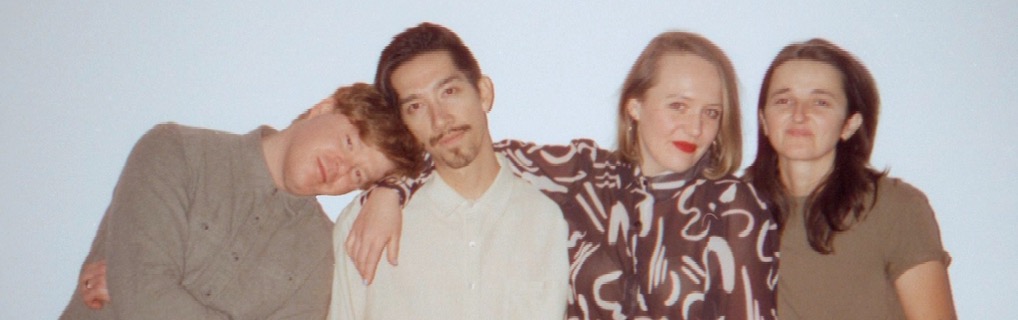
Tugboat Captain is a four-piece from London. “Flash of Light” is a single released in January. A second single, “Deep Sea Diving,” was released in mid-March. The band’s debut album, Rut, appeared in 2020. You can check everything out on Bandcamp.

“So Hard to Tell” – Debby Friday

Quasi-psychedelic electronic ballad

“So Hard to Tell” – Debby Friday

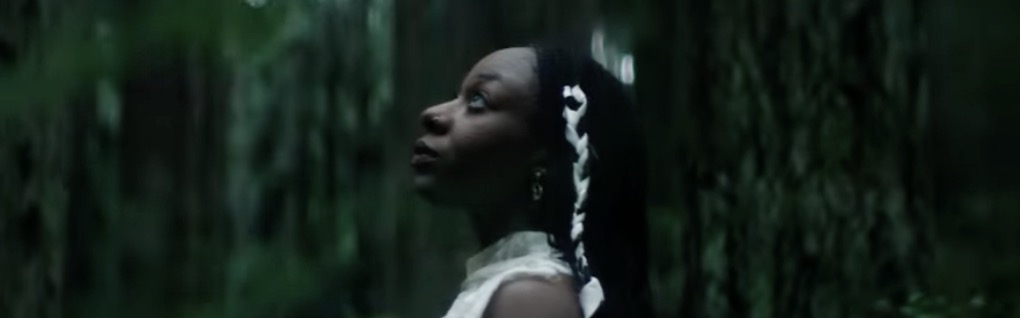
After hitting the Canadian music scene a few years ago with glitchy, club-oriented bangers (her first two EPs were entitled Death Drive and Bitchpunk, for what it’s worth), the Nigeria-born, Montreal-raised DJ-turned-musician Debby Friday unveils a gentler side with this single from her new album, Good Luck.

An electronic ballad with distorted backing vocals and washes of reverberant sound, “So Hard to Tell” centers on a soothing, circular melody that induced Friday to find a previously unutilized singing style; she usually hits the mic with a lower, speaking-voice-like register. This song finds her addressing and advising her younger self, which invited the vulnerable vocal–although she has said she was initially surprised by the sound coming out of her mouth here. There’s still some underlying glitch in the air, which to my ears is part of the appeal, as is the swirly, quasi-psychedelic atmosphere in general. It’s a hypnotic dream of a song, with a sturdy core but a tender spirit.

MP3 via KEXP. Good Luck came out March 24 on Sub Pop; the rest of the record is a good bit more forceful. You can check it out, and buy it (digital, vinyl, CD), via Bandcamp.

“Slow Passage” – Thomas Charlie Pedersen

Upbeat melancholia

“Slow Passage” – Thomas Charlie Pedersen

Here’s another song that packs a lot of presence into a relatively short package. Like many people alert to life’s bittersweet qualities, I’m partial to minor-key compositions, so I’m on board here from the song’s opening arpeggios; syncopated finger picking adds to the appealing vibe of upbeat melancholia. Thomas Charlie Pedersen’s forthright vocal style recalls something intangible about rock’n’roll records from the late ’60s or early ’70s, and this elusive nostalgia, too, feeds the song’s bittersweet complexion.

The song’s aural impact, in fact, is strong enough to do what many great rock songs do, which is render lyrical specifics unnecessary: the sound of the words is not only enough but in its own way more necessary than intelligible meaning. I’m never sure if this aligns with a musician’s intention or not but I enjoy songs like this in which you can easily enough discern individual words and short phrases but can’t decipher the bigger picture lyrically speaking. This forces the listener away from concrete analysis and into a looser state of attentiveness, in which the song might more easily induce an emotional rather than an intellectual response.

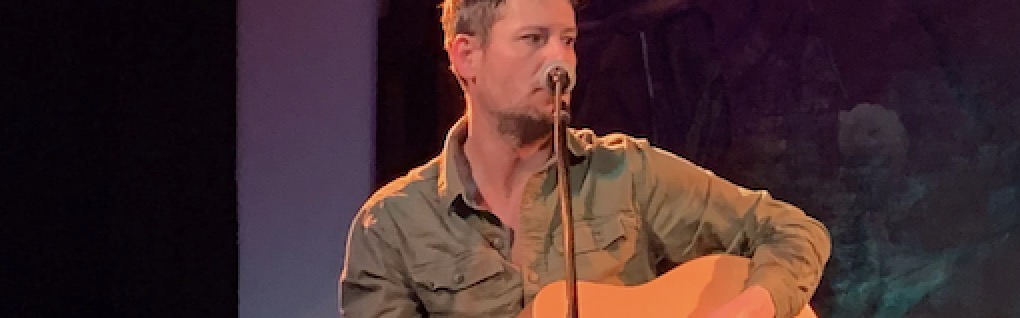
Thomas Charlie Pedersen is a Danish musician who showed up last year on Fingertips as half of the sibling duo Vinyl Floor. “Slow Passage” is the third of 15 tracks on the album Employees Must Wash Their Hands, set for release next week. This will be Pedersen’s third solo album; Vinyl Floor, meanwhile, have five full-length releases to date. You can check out Pedersen’s previous albums on Spotify; the new one will be up there on April 14.

MP3 via the artist.

“FOMO” – Small Million

Misty grandeur

“FOMO” – Small Million

Indie pop with a misty grandeur, “FOMO” manages to drift and insist at the same time. The trick here is the double-time melody: while the song ambles to a steady beat, rendered all the more deliberate by sustained bass notes, whether synthesized or otherwise, the verse melody comes at us in a twice-as-fast flow. The subtle ache in Malachi Graham’s voice echoes the emotion baked into the title, while a touch of reverb reinforces the sense of empowered solitude the song appears to be exploring. With the chorus (first heard at 0:44) the song spreads back out, luxuriating in the unhurried vibe of the foundational rhythm, with countermelodic backing vocals loosely layered underneath.

Graham’s voice is in a fact a highlight, its airy tone underpinned by something steely, which she keeps largely but not entirely under wraps. To hear what I’m talking about, check out the pent-up surge in her delivery of the line “So what’s it like at the end of the line” (0:41-0:43). That’s a voice to be reckoned with. And unlike the song reviewed previously, “FOMO” does appear to be more directly about something, even as the words, in Graham’s handling, do often dance just out of the reach of comprehension. (For those less comfortable in living with the mystery, the lyrics are available here.)

Note how the introduction’s stately synth riff retreats so delicately that you don’t really notice its presence below subsequent choruses, only to return at 2:10 for an emphatic 12-second recapitulation. With just a restrained bass line as accompaniment, this solo of sorts retroactively illuminates how mindfully arranged the entire song has been; however lush the overall feeling, there aren’t actually a lot of moving parts in play. Less, as the modernist architects used to assert, often is more.

Small Million is a Portland-based band that recently expanded from a duo to a foursome. They have released two EPs to date, in 2016 and 2018, and two singles in 2019. They have re-emerged this year with two singles so far, and an LP slated for release later this year. Check everything out on Bandcamp.

But I took my chances

Eclectic Playlist Series 10.03 – March 2023

So we’re going through another stretch of time during which, among other disconcerting things, AI is receiving a lot of renewed attention. It looks serious this time, huh? Robotic programs creating content on demand that appears to mimic human output, generated by appropriating existing material (with or without permission), launched off the capacity to crunch data at a superhuman level with no awareness of human context, and utilizing truly off-putting amounts of energy in the process. What could possibly go wrong?

I will tiptoe past the many and varied moral, psychological, sociological, and technological issues posed by this brave new world we’ve stumbled into and shoot right to the overlooked heart of the matter. Which is: do we as human beings care to be communicated to by machines? Of course we already are, all the time. There’s Siri, there’s Alexa, there are those robotic voices that answer customer service calls. An algorithm, likewise, is robotic communication; the songs that Spotify has “chosen” for you, that’s a machine doing the choosing. These new AI bots, however, offer a new level of machine communication because in these cases what the machine spits out isn’t just a list of recommended objects or preprogrammed sound bites but written words or graphic images or music that didn’t previously exist, and that may look and/or sound like something a living breathing human being might produce.

That a living breathing human being did not produce these things is, in fact, a profound difference. For template-oriented writing and commercial graphics this is not necessarily a big deal (except of course for people who may lose jobs in the process). But for anything resembling a creative effort the difference as I see it is chasm-like. My personal bottom line is: if a human being, with a depth of consciousness, a network of personal and familial relationships, and (important) awareness of their own mortality is writing a book or a song or painting a picture or doing any other variety of artistic endeavor, there’s a good reason to look and/or listen. This is one consciousness reaching out to another. That’s what art exists to do. If a machine–with no capacity to understand what it’s communicating, no depth of consciousness, no organic existence in our inter-relational world–is “creating” something, I have little interest in what it’s “saying.”

All of this is a (very) roundabout way of noting that these monthly playlists are the conscious effort of one human being reaching out to any other human being who finds their way here. Even if AI could assemble this exact list of 20 songs in the same order (ha! I dare it), this would not be the same experience. Or, correction: to the casual listener, I suppose it would be the same–same songs, same order, what’s the difference? But to an attentive music lover, how can this be the same? Doesn’t it matter that the songs are selected by a human being with a history, an idiosyncratic knowledge of the music being presented, an intuitive sense of what fits together, and a heartfelt interest in connecting with other similarly-minded humans? If we’ve gotten to the point where surface is all that matters, then we have surrendered an important part of our own humanity, which is our depth. I suppose another word for this is “soul,” which is precisely what AI lacks and will never acquire simply through the prodigious capacity to crunch data. (For a more developed series of thoughts on the matter, I’ll refer you to an essay I wrote three years ago entitled “Yeah, but is it art?”.)

And look: no doubt AI has the capacity to stimulate genuine human creativity based on what it produces; this may well lead to fruitful expression rooted in human effort and sensitivity. But chatbot output, of the kind the internet is currently marveling over, while fascinating at a surface level, is just extra noise as far as I’m concerned–and as such another excellent reminder to limit my screen time and make ongoing efforts to interact with the physical world and, even if online, actual individual humans.

End of soapbox. Note that this is the second playlist released in March, as I aim to be back on track numerically speaking, after February eluded me. As always, the widget for listening is below the list of songs. If you are not a robot and are interested in some extra notes about this month’s assortment, scroll down past the widget.

Here’s what you’ll hear:

1. “In France They Kiss on Main Street” – Joni Mitchell (The Hissing of Summer Lawns, 1975)
2. “Cash Machine” – Hard-Fi (Stars on CCTV, 2004)
3. “Sharp Words” – Original Mirrors (Original Mirrors, 1980)
4. “The Pins” – Sara Radle (Same Sun Shines, 2012)
5. “The Love I Saw in You Was Just a Mirage” – Smokey Robinson and the Miracles (Make It Happen, 1967)
6. “You’re in a Bad Way” – Saint Etienne (So Tough, 1993)
7. “Last Train Home” – Pat Metheny Group (Still Life (Talking), 1987)
8. “The Runner” – Allison Russell (Outside Child, 2021)
9. “Paris 1919” – John Cale (Paris 1919, 1973)
10. “You’re Not Alone” – People and Stars (People and Stars EP, 2016)
11. “Look Outside” – Broadcast (The Noise Made By People, 2000)
12. “Heartbeats Accelerating” – Kate and Anna McGarrigle (Heartbeats Accelerating, 1990)
13. “Souvenir” – Orchestral Manoeuvres in the Dark (Architecture & Morality, 1981)
14. “LA Rain” – The Mynabirds (What We Lose in the Fire We Gain in the Flood, 2010)
15. “Expressway to Your Heart” – The Soul Survivors (Absolute Torch and Twang, 1989)
16. “Bag of Hammers” – Thao & The Get Down Stay Down (We Brave Bee Stings and All, 2008)
17. “Pay As You Go” – Wayne Shorter (Second Genesis, 1960/1974)
18. “Drown” – Son Volt (Trace, 1995)
19. “Grand Central Station, March 18, 1977” – Steve Forbert (Alive on Arrival, 1978)
20. “The Worst is Done” – Weyes Blood (And in the Darkness, Hearts Aglow, 2022)

The fine print:

* It’s 46 years nearly to the day from the slice of time captured in Steve Forbert’s poignant “Grand Central Station, March 18, 1977,” found on his mighty debut album, 1978’s Alive on Arrival. However long-ago a moment he is chronicling via song here, the cool and somewhat comforting thing is that his light-footed descriptions sound all but timeless: there’s nothing in the scene he paints from a day spent busking in Grand Central that couldn’t describe the same scene these many years later. Sure, there are prominent contemporary specifics he couldn’t have written about–notably, the phone-scrollers and ear-bud-talkers–but by and large Grand Central was and is Grand Central, recognizably so to this day and beyond.

* I’m still waiting, hopefully, for another album from Laura Berhenn, who does musical business as The Mynabirds. Her 2010 debut, What We Lose in the Fire We Gain in the Flood, remains a retro-fueled joy from start to finish; her most recent release, 2017’s Be Here Now was another strong effort, with more of an ’80s than a ’60s flair in this case. Long-time Fingertips visitors may recall any one or another of the four times the Mynabirds have been featured in the MP3 section here (see Artist Index for details); Berhenn has also been tapped twice previously for inclusion in a playlist. While I know that the real-life LA rains have caused no minor amount of havoc and distress this year, the rain also had at least a bit of a bright side vis-à-vis the area’s long-standing drought. Berhenn’s song seems well pitched between tragedy and detachment, with its plaintive swing and matter-of-fact fortitude.

* Here’s another chance for you to be reminded of the glory of Allison Russell’s 2021 debut album, the painful yet triumphant Outside Child. No offense (necessarily) meant to 14-year-old TikTokkers (or to AI robots, for that matter), but the output of a mature, life-experienced artist is music coming to us from another, much weightier plane of existence and authenticity than the attention-seeking twaddle craved by audiences trained by now not to know any better, or even care. More than ever it’s up to you and me to acknowledge and honor the difference–to remember that even here in the inferno live some who “are not inferno,” as per old friend Italo Calvino, and to salute and encourage them.

* The short-lived British new wave band Original Mirrors laid down some indelible tracks before dissolving due to commercial disinterest. Personally I’m not sure why a song like “Sharp Words” didn’t become a new wave classic, along with their incisive cover of the Supremes’ oddly psychedelic tune “Reflections.” You can check out their self-titled debut album on Spotify; the one follow-up, Heart Twango and Raw Beat, has no digital existence. At the end of the day, the most notable thing about Original Mirrors is probably that it was co-founded by Ian Broudie, who later went on to some bit of fame and fortune as mastermind behind the Lightning Seeds. His co-founder was Steve Allen, a semi-known quantity back in the day as front man for the somewhat influential art rockers Deaf School.

* Speaking of which, the new wave era introduced me firsthand to the delightful quirks and charms of the British pop charts. The idea that a loping, melodic, synth-filled song such as “Souvenir” could be a smash hit in the UK in 1981 (it peaked there at #3) delighted me. The US charts from that same time frame had some half-decent stuff and some (let’s just say) fluff, but nothing that sounded like OMD. The band would not hit the top 10 in the US until 1986, with the smoother, poppier “If You Leave,” a song launched to the big time by its prominent use in the popular movie Pretty in Pink.

* This playlist’s seemingly inevitable memorial entrant comes from saxophonist and composer Wayne Shorter, who died this month at age 89. While his jazz pedigree is impeccable, with early-career experience with both Art Blakey’s Jazz Messengers and the Miles Davis Quintet, he is probably best known to rock’n’roll fans as founder of the celebrated fusion band Weather Report, and soon after for playing extensively with Joni Mitchell, appearing on all 10 studio albums she released between 1977 and 2002. Another rock-fan highlight: Shorter’s memorable tenor sax solo three-quarters of the way through the Steely Dan epic “Aja.” “Pay As You Go” is a short, spiffy track from the second solo album Shorter recorded, in 1960. For whatever reason, the album, Second Genesis, was not released until 1974. Note that I don’t listen to jazz as aficionados seem to; I’m not tracking the sounds and tones of the instrumentalists or the explicit manner of their interactions. I hear energetic playing and an engaging (and concise!) tune and I’m happy.

Maybe I can make it better

Eclectic Playlist Series 10.2 – March 2023

I know not everyone has time to listen to a 20-song playlist, especially when said playlist is comprised of a certain amount of unfamiliar music. But I do hope that those of you who have the inclination to start at least occasionally find the stamina to finish. This doesn’t mean you have to do it all in one sitting! But look: my playlists are not albums front-loaded with hit singles, quickly to peter out after that. I believe in every one of the 20 songs that populate each list, which means that songs that land near the bottom aren’t there because they are somehow weaker or less appealing than the first few songs. But I see the stats and I see that listening lengths tend not (at all) to be the full length of the playlist. This is the internet, people are flitty, I get it. But I’m often sad to see what great songs people are missing out on just because they weren’t among the first few.

Take this month, for instance. Anyone who bugs out before the final stretch will miss, among other excellent things, the short but distinctive David Bowie track “So She,” mysteriously left off the standard version of 2013’s The Next Day; rather, it ended up one of four songs added to the “deluxe” version of the album. To this day, however, it is not to be found on Spotify; remember the mantra about streaming: use it but don’t rely on it!

As always, the widget for listening is below the playlist. The extra curious can scroll further and find extra notes about some of what you’ll be hearing.

On to the music:

1. “Glorious” – A. Graham and the Moment Band (This Tyrant is Free, 2004)
2. “Things We Said Today” – The Beatles (A Hard Day’s Night, 1964)
3. “Instrumental Introduction/Don’t Look Down” – Lindsey Buckingham (Out of the Cradle, 1992)
4. “Sweetheart” – Jennah Barry (Young Men, 2012)
5. “If Looks Could Kill” – Camera Obscura (Let’s Get Out of This Country, 2006)
6. “Livin’ in Love” – Sheila Anthony (b-side, 1970)
7. “Can’t Get Used to Losing You” – The English Beat (What Is Beat?, 1983)
8. “Diamantes” – Carla Morrison (El Renacimiento, 2022)
9. “Nevermind” – Leonard Cohen (Popular Problems, 2014)
10. “Rome (Wasn’t Built in a Day)” – Sam Cooke (Ain’t That Good News, 1964)
11. “Anniversary Song” – Cowboy Junkies (Pale Sun, Crescent Moon, 1993)
12. “Icarus” – Paul Winter Consort (Icarus, 1972)
13. “Always” – Tom Verlaine (Dreamtime, 1981)
14. “Don’t Go Breaking My Heart” – Burt Bacharach (Burt Bacharach – Hit Maker!, 1965)
15. “Walkin’ In and Out of Your Arms” – k.d. lang (Absolute Torch and Twang, 1989)
16. “Stop Pretending” – Deep Sea Diver (single, 2020)
17. “So She” – David Bowie (The Next Day [deluxe], 2013)
18. “American Heartbeat” – Duncan Browne (Streets of Fire, 1979)
19. “It’s In Our Hands” – Björk (Greatest Hits, 2002)
20. “Magnificent Bird” – Gabriel Kahane (Magnificent Bird, 2022)

The fine print:

* Back in Fingertips’ formative years, I used to keep a running “Top 10” of favorite songs from the recent months of postings. I remember “Glorious” as riding at #1 on that list for a good while. These many years later, it remains as user-friendly and good-natured a song as it sounded to me back in the day. I long since lost track of front man Andy Graham but a quick poke around the intertubes informs me that he is still out there singing and recording in his user-friendly, good-natured style. He now calls his ensemble A. Graham and the Worlds of Fun; their album, Rides, came out in November. Check it out on Bandcamp. The album includes a new recording of “Glorious,” identified “Glorious 22.”

* An original Buttercup Records pressing of Sheila Anthony’s 1970 single “Woman to Woman,” the b-side of which is “Livin’ in Love,” is currently selling on Discogs for £325.00. Several re-issues, from 1975, are somewhat cheaper. The previously obscure track has become a Northern Soul standard but remains virtually unknown outside of that well-intentioned but somewhat fetishy scene. As for Anthony herself, I can find nothing online with even a hint of her history or biography. I guess the song, which is wonderful, will have to suffice.

* Duncan Browne had a few different musical incarnations in his cancer-shortened career. On the scene first in the late ’60s as a baroque folkie, he emerged in the mid-’70s as half of the would-be glam-rock-ish duo Metro, only then to find his most compelling voice as a solo act with two fine late-’70s albums. However excellent, neither album sold very well, and Browne in the ’80s ventured into the somewhat more remunerative field of TV and movie scoring. The sad ending came in 1993; Browne was just 46. I featured the haunting title track to his 1978 album The Wild Places on EPS 4.05 in May 2017. “American Heartbeat” is a standout track from 1979’s Streets of Fire.

* Björk’s singular, unearthly vocals are in full command of “It’s In Our Hands,” a song that showed up on her 2002 Greatest Hits LP without previously appearing on any release of hers. Sonically it lands in an awesome sweet spot: a near-ideal blend of her commanding Homogenic sound and the quieter, glitchier world of Vespertine. Her subsequent albums have gotten at once more complex and more abstract–not necessarily a bad thing but also not necessarily music that’s easy to absorb without careful and repeated listens. Sometimes the ear just needs simple and accessible to get through the day. But being a little weird at the same time is usually a bonus.

* When last we heard from the Mexican singer/songwriter Carla Morrison (see EPS 4.07), she was touring in the aftermath of two Grammy-nominated albums, which were her first two full-length releases, coming in 2012 and 2015. A lot has changed since then. By the end of 2017, she had burnt out from writing and performing and was battling depression. She moved to Paris in 2019 and started to find new inspiration, moving her music in a more overtly pop-oriented direction, while lyrically confronting her mental health battles. A new wave of depression descended in 2021 after losing her father to COVID. But she has since emerged and finished her first album in five years, El Renacimiento (which can be translated as “The Rebirth”), which came out in the spring of 2022. My ears are not often attuned to what passes for pop in the 2020s but when it emerges from a musician with deeper roots and musical chops I take it more seriously.

* Is Leonard Cohen a downer or what? But an incisive and formidable downer to be sure. I did however feel compelled to shut the door on old Leonard with an immediate shot of Sam Cooke. The songs don’t quite match up but I wanted a quick change of pace so that’s where we ended up.

* Two memorials wove their way, back to back, into this month’s mix. First up is Tom Verlaine, who left us in January at the age of 73. He’s most well-known for co-founding the seminal NYC band Television in the 1970s. (And call me thick but I just the other day realized the connection between the band name and Verlaine’s initials.) Influential and iconoclastic, Verlaine released nine solo albums after Television’s initial breakup, in 1978, but only two after 1992 (the year Television reunited; they never officially broke up again but never recorded again either). It’s not clear exactly how he passed the final few decades of his life, but a hint comes from his answer to the New York Times when asked, in 2006, to summarize his life. He replied, “Struggling not to have a professional career.” I can relate.

* The second “in memoriam” entry is of course the Burt Bacharach song. Bacharach, 94, died last month and the outpouring of appreciation was potent and well-deserved. If you’re curious, you can read a lot more about him all over the internet at this point. I can’t help but recall from my distant youth his snazzy, harmonically astute ’60s hits, often for Dionne Warwick, but what drew me towards him as an adult was the collaboration album he did with Elvis Costello in 1998, Painted From Memory–an album that has only grown in stature over the years. (It’s a bit of a masterpiece.) “Don’t Go Breaking My Heart” is an early Bacharach nugget, at once lazily sophisticated and over in a blink. This was another case in which I judged the somewhat mismatched segue as worth it for the overall effect. By the way, the vocals here were handled by a British trio called The Breakaways, considered top-flight session vocalists at the time; they worked with Petula Clark, Dusty Springfield, and (yes) Jimi Hendrix, among others. They were uncredited on the Bacharach song.

* But hey if you want a nice segue check out #19 into #20. That works pretty well.

“Sunday” – Winter

You can’t resist

“Sunday” – Winter

About as dreamy as dream pop gets, “Sunday” begins all gossamer and twinkle, with desultory guitar chords and piano plinkings and, eventually, singer/songwriter Samira Winter singing languidly about something that’s in your head that you can’t resist. And then goes on to set the same lyrics to a brisk backbeat and yes it is hard to resist, that juxtaposition of happy rhythm and melancholy affect.

Because make no mistake: Winter, however airy the voice, isn’t singing about shiny happy people here. First there’s a reference to “years of trauma”; then we get the chorus: Where’s the truth?/It’s slipping loose/Getting abused/So confused. And yet, right after that comes a prominently articulated guitar melody, warm and low-registered. Then there’s that light-hearted instrumental after the second iteration of the chorus (3:17), a bubbling up of space-age synthesizers that augments the song’s shimmer even as Winter closes the tune out on the repeated lyric “So confused,” spun out via a series of layered harmonies marked by unresolved chords. A final touch: more of those lackadaisical piano tinkles that we heard in the introduction. Is the confusion referenced by the lyrics mirrored in the happy/sad mixed signals delivered by the songwriting? Or is this just dream pop being dream pop, in which the glistening soundscape is often contradicted by lyrics that may be disaffected, hallucinatory, or tenaciously indecipherable (cf. Twins, Cocteau)? Could be both. Me I’m chalking the whole thing up as an homage to Harriet Wheeler and her seminal semi-dream-poppy band the Sundays. I’m probably wrong about that but any time I get to write about the Sundays I’m happy.

Samira Winter was born and raised in Brazil and moved to the U.S. to go to college. Winter began as a duo in 2012, evolved into a band a few years later, and depopulated into a solo project for Winter herself by the time of the 2019 album Hazy. “Sunday” is a track from the album What Kind of Blue Are You?, the sixth full-length attributed to Winter. It’s a nice listen end to end.

MP3 via KEXP.

“Jennifer Valentine” – Field School

Fuzzy and melodic

“Jennifer Valentine” – Field School

Power pop is never too far below the surface here on Fingertips, and early-ish 2023 gives us another wistful/tuneful bit of the same, this time of the fuzzy/lo-fi variety. “Jennifer Valentine” is a song exquisitely in tune with itself, telling an archetypal story of unrequited love with the powerfully shy tenderness of an introverted teen-ager. Power pop is the perfect vehicle, as the genre all but aches with innocent, unrealized passion, with its characteristically sweet, succinct melodies, often tinged in minor keys, forever hinting at the despair that lurks below desire.

This representative power-pop vibe hinges frequently, if not always, upon a vocalist with some bit of sugar mixed with the melancholy (or melancholy mixed with the sugar, depending on the individual circumstance). On “Jennifer Valentine” it embodies via the awkward combination of hesitancy and assertion in singer/songwriter Charles Bert’s reedy, mixed-down delivery. That opening salvo about how the singer wrote the name of his beloved “a thousand times” is quintessentially middle-school (you need a handy notebook and pen, after all), as are the progressively grandiose sentiments the song expresses: the singer goes from “Your name should be up in lights/Above the city burning bright” to “Electromagnets realign/Whenever you were walking by.”

And let’s not overlook the flawless choice of name here, with its sing-song-y dual dactyls and guileless imagery; what after all is more innocent and passive-assertive than sending a valentine to someone you have a crush on? This song is a valentine to a Valentine.

Field School is the pandemic-induced solo project launched by Bert during lockdown; its initial output consisted of three five-song cassettes, which were eventually released as digital EPs in 2022. Bert has otherwise been a member of the Seattle-based band Math and Physics Club since 2004. “Jennifer Valentine” was originally on the Hey Satellite EP, released in April 2022; it reappears on the full-length When Summer Comes album, from November 2022, which collects recordings from the original cassettes onto one album. MP3 via KEXP.

(And hey if you are a power pop fan you might want to go back and check out my Power Pop playlists on Spotify, which aim to unite both classic and contemporary power pop into one seamless listen. You’ll see there that I enjoy stretching the genre a bit to get beyond the usual suspects: while every song on these mixes features sparklingly catchy, power-pop-infused melodies, not every song is going to be found on standard power pop playlists. (Which is just as well because a lot of standard power pop playlists are just plain off base. Don’t get me started.) Anyway: Volume 1 is here; you can look for Volumes 2 and 3 once you’re there. Note a news flash: the original studio recording of “Starry Eyes,” as seminal a power pop song as there is, is no longer available on Spotify. This should tell you all you need to know about the efficacy and stability of streaming if you’re a committed music fan. Use it but don’t count on it!)