One day I will learn to shine

Eclectlc Playlist Series 11.04 – May 2024

With the Eclectic Playlist Series now in its 11th year (!), I still aim to populate each mix with a good number of artists who have yet to appear on a prior list. I shoot for seven or eight new artists every time; this month there are 12. Sometimes artists new to an EPS mix are people I’ve previously featured with an MP3 review (as, for instance, Becca Richardson this month, among others). Other times a debut artist here is someone relatively new to the music scene (Jenny Owen Youngs this time, as an example). Another category can be a seemingly random band from the past with a song I happen to feel like plugging into the mix; the British post-new-wave band Haircut 100 qualifies this time around. A long-ago figure from the jazz world can become another first-timer (see Gil Mellé, below). One last interesting (and less common) category is the massive pop star who sneaks in with a song that somehow fits into the EPS flow more than what they usually put out (enter, here, Beyoncé).

Unrelated reminder: for an overview of (almost) all songs featured to date in an EPS mix, you can check out the master EPS playlist that I update on Spotify every month. As I have noted in the past, Spotify does not host every song I place on every list–typically it’s missing one or two songs every couple of months (this month, for instance, “Once You Know” is missing). But there are at last count nearly 1,900 songs on the playlist. You don’t get the contexts of the original mixes with this master list, but you do get many hours of entertaining listening out of the deal–the equivalent of a very quirky radio station, without any announcers.

As for this month, here are the goods:

1. “Fallout” – Yo La Tengo (This Stupid World, 2023)
2. “A Bird in the Hand (Is Worth Two in the Bush)” – The Velvelettes (single, 1965)
3. “Nothing To Be Done” – The Pastels (Sittin’ Pretty, 1989)
4. “Free Ride” – Nick Drake (Pink Moon, 1972)
5. “Once You Know” – Le Reno Amps (LP, 2004)
6. “If I Were You” – k.d. lang (All You Can Eat, 1995)
7. “Alliigator Tears” – Beyoncé (Cowboy Carter, 2024)
8. “Etc” – Francis and the Lights (single, 2013)
9. “Ode to Billie Joe” – Sinéad O’Connor (The Help Album, 1995)
10. “Favourite Shirts (Boy Meets Girl)” – Haircut 100 (Pelican West, 1982)
11. “Under Capricorn” – Gil Mellé (New Faces – New Sounds: Gil Mellé Quintet/Sextet, 1953)
12. “Avalanche” – Jenny Owen Youngs (Avalanche, 2023)
13. “On Top of the World” – Cheap Trick (Heaven Tonight, 1978)
14. “Mathematics” – Cherry Ghost (Thirst For Romance, 2007)
15. “Wanted” – Becca Richardson (We Are Gathered Here, 2017)
16. “It’s Wonderful” – The Rascals (Once Upon a Dream, 1968)
17. “Take Me As I Am” – October Project (October Project, 1996)
18. “Everybody Loves the Sunshine” – Roy Ayers Ubiquity (Everybody Loves the Sunshine , 1976)
19. “The Bike” – Amy Correia (Carnival Love, 2000)
20. “Stop Hurting People” – Pete Townshend (All The Best Cowboys Have Chinese Eyes, 1982)

Stray commentary:

* If “A Bird in the Hand (Is Worth Two in the Bush)” sounds a little familiar–sounds, perhaps, a bit like “I Heard It Through the Grapevine”–that’s because the two songs were both co-written by the Motown songwriter/producer Norman Whitfield. And this song came out first. If you think about it, the songs are similar not only in sound but in subject matter: in each case, the lead singer is saying “I love you more than that new person who says they love you.” The Velvelettes were yet another high-quality Motown singing group that seem to have deserved wider success than they ultimately achieved. Their best-known song, in retrospect, was “He Was Really Sayin’ Somethin’,” which was a minor hit for them in 1964, and a bigger hit for the group Bananarama (re-titled as “Saying Something”) in 1982. The Velvelettes started as a quintet, and later performed as both a quartet and a trio. After dissolving at some point in the 1970s, the group was re-assembled in the 1980s and intermittently toured into the 2000s.

* Le Reno Amps was a good-natured, They-Might-Be-Giants-adjacent duo from Scotland, active between 2004 and 2011. They are not, as noted, to be found on Spotify, but you can discover their appealing, slightly skewed, DIY-ish pop on Bandcamp. (And, you can buy any of their albums there on a name-your-price basis.) An example of their general approach to things: the band’s name was devised as an acronym of the bandmates’ two surnames (Maple and Nero), with an added “s.” I featured “Once You Know” here back in 2005, and retain a soft spot for this one.

* Gil Mellé was an interesting cat. As a 19-year-old baritone saxophonist he was signed to Blue Note Records–the first white musician on that storied label’s roster. At the same time he was a visual artist, who created covers not only for his own albums but for albums by Miles Davis, Sonny Rollins, and Thelonious Monk. After recording a series of albums between 1953 and 1957, he abandoned jazz performance for a long and busy career as a composer for film and TV; he wrote some 125 scores in all, including work for Ironside, Night Gallery, and Columbo. He was known in particular for being a pioneer in the use of electronic music in film and TV scores, building his own synthesizers and, by some accounts, the world’s first drum machine. Later in his career he returned his focus to visual art, working in the ’90s with computers to create widely-acclaimed digital paintings. He died in Malibu in 2004.

* For the uninitiated (which includes me), that is not a typo in the Beyoncé song title. All song titles on Cowboy Carter that have words with the letter “i” in them are spelled with double “i”s; the song titles are, furthermore, capitalized on the album, so each “i” looks like this: “II.” This is an inside reference to the fact that the superstar singer/songwriter considers this album to be “Act II” in a three-act sequence, which began with 2022’s Renaissance. Cowboy Carter presents a lot to sort through, and while not much of it has clicked with me so far, I felt drawn to “Alliigator Tears” right away, so here it is.

* As if we needed more evidence of the late Sinéad O’Connor’s majesty as a singer, give a listen to her commanding take on the Bobbie Gentry chestnut “Ode to Billie Joe.” O’Connor’s use of her breath as part of her vocal tone is all but heartbreaking. And don’t miss the choice she makes on the word “spring” about 45 seconds before the end. Big props here too to the minimal, eerie arrangement, which keeps a flowing, menacing undercurrent throughout. The song can be found on The Help Album, which was released in 1995 as a fundraiser for a charity called War Child, which provides assistance to people in war zones around the world. The artists featured on the album were all British or Irish, and included Paul McCartney, Radiohead, Oasis, Blur, and Paul Weller.

* As a single, “It’s Wonderful” was initially credited to the Young Rascals, but the band was about to officially become, simply, the Rascals by the time Once Upon a Dream came out. If remembered at all here in the history-challenged 21st century, the band has been pretty much reduced to their R&B-flavored hit singles “Good Lovin’,” “People Got to Be Free,” and “I’ve Been Lonely Too Long.” But as the Rascals evolved through the later ’60s they had more complex aspirations. Front man Felix Cavaliere was quoted in an interview at the time referring to Once Upon a Dream as “Sgt. Pepper-ish”; clearly the band was aiming for a previously unattained sophistication in the music and general presentation. The album was marked by some between-song effects and a number of tracks that flow together without pause–you’ll hear some of that both before and after “It’s Wonderful” if you listen carefully. I’m not sure how successful the whole thing is–it’s no Pet Sounds–but it is a worthy artifact of the time.


“You Know What You’re Doing” – Orbis Max and Tim Izzard

Smartly crafted, accomplished pop rock

“You Know What You’re Doing” – Orbix Max and Tim Izzard

This is a community service announcement to remind you that there are plenty of interesting and accomplished people doing interesting and accomplished things, online, that do not attract the attention of the viral-infatuated masses and/or clickbait-oriented websites. I would venture to say that some if not most of these people may be entirely satisfied avoiding the harsh glare of virality. At least, I hope they are. Me, I remain maddened as ever by our collective penchant for assessing worth via instant popularity. And I grow increasingly intrigued by talented souls plying their trade in the relative dark.

Take Orbis Max, a so-called “internet recording collective” that, as it turns out, long predates the internet. Launched as a regular, in-person band in California back in the 1970s, Orbis Max band members drifted into different locations over time, but re-formed once the internet made recording separately from a distance a viable option. The band retains two original members, has four ongoing bandmates, while also working collaboratively with a rotating cast of outside musicians as the spirit moves. And no, they are not setting the world on fire in terms of streams and views. But they put together something like “You Know What You’re Doing” and yes, it’s clear from the opening guitar riff, jaunty and melodic, that Orbis Max themselves know what they’re doing. The melody, with its well-placed minor chords, shimmers with an early-rock’n’roll nostalgia even as it sounds fetching in the here and now. Dw Dunphy’s vocals are at once sturdy and vulnerable, with the tone of a classic rocker wandering into vaguely unknown territory.

And what a smartly crafted song, the construction of which includes, by my estimation, not merely a robust bridge (in these bridge-deprived times) but a bridge that arrives early in the song, where the second verse might otherwise be. At this point, on the words “Even now” (1:08), the voices become layered, gang-vocal style, with an unexpected but congruous whiff of Springsteen in the mix. (Dunphy is based in Monmouth County, New Jersey; could be something in the water.) The early bridge, if that’s what it is, is in any case, aurally, part of the song’s ongoing sense of continuing development; listen in particular to the intermittent sprinkles of lead guitar (including an incisive coda) and to the changing nature of the backing vocals.

“You Know What You’re Doing” was co-written by guitarist Don Baake and guest musician Tim Izzard, who is based in the UK. Recurring core Orbis Max members are currently located in Texas, California, and the aforementioned New Jersey; other regulars are located in North Carolina, Arizona, and Liverpool, among other places. Dunphy is new to the band in the scheme of things, having joined in 2022, following a long stint as a singer/songwriter/one-man-band. “You Know What You’re Doing,” was released as a single at the end of March. A new single was just released on May 1, entitled “Fields,” which you can check out on Bandcamp. Thanks to the band for the MP3.

“Blue Tuesday” – Francis of Delirium

Propulsive and vulnerable

“Blue Tuesday” – Francis of Delirium

How is it that some singer/songwriters sing about their personal angsts and it comes across as kind of small and whiny while other singer/songwriters sing, as well, about their personal angsts and it soars into something weighty and inspiring? It’s a mystery. And obviously my personal perspective on any given musician is just my own, and often at odds with cultural consensus. But Jana Bahrich, who fronts the project Francis of Delirium, strikes me as the real deal. Nothing small and whiny about what she does.

From the ringing guitar and pulsing backbeat of the intro, “Blue Tuesday” propels us forward with itchy resolve. We are pushed directly into the middle of a story via the opening line’s unusual kickoff: “And it starts in the back of a cab.” This demonstrates the kind of stout assurance that supports the song beginning to end–an assurance perhaps best epitomized by the audacious slant rhyme upon which the chorus pivots:

It’s a blue Tuesday
I could use babe some of us

In another setting, in someone else’s hands, this (sort of) near rhyme might seem an awkward blunder; here it feels sly and subversive. She’s kind of daring you to call her on it and not caring if you do. Throughout, the 22-year-old Bahrich sings with a tone alternating between airy and grounded, between vulnerable and assertive. You buy what she’s selling; the underlying bash and drive leaves you almost no choice. This a concise song both musically and lyrically, with a seemingly straightforward meaning: the narrator is feeling down and desires her partner’s presence as a balm. But being down often leads to passive indecision, while in this case, the singer knows what she wants and asks for it, not something everyone has the presence of mind to do. She offers a second slant rhyme in the process, in the second half of the chorus: “It’s a blue Tuesday/I could use babe some of your touch.” It’s an even slantier slant, matching two syllables (“your touch”) against one in the previous line (“us”), so the lyrics scan differently too, with Bahrich hesitating on the second word, landing it on the backbeat of the next measure, sweeping us back into the song’s adamant flow.

Based in Luxembourg, Francis of Delirium was previously featured on Fingertips in April 2022. “Blue Tuesday” is a track from the outfit’s excellent debut album Lighthouse, which was released in March. I like by the way that the song is the fifth track on the album–another move, in a world of side-one, cut-one singles, that speaks to Bahrich’s underlying confidence. MP3 via KEXP.

(A sad side note: KEXP’s “Song of the Day” feature, which has fed Fingertips a significant number of free and legal MP3s over the years, has been discontinued. The MP3s they’ve uploaded still seem to be online at this point, but it’s unclear how long that will last.)

“Jacket” – Sam Evian

Affable, McCartney-like tunefulness

“Jacket” – Sam Evian

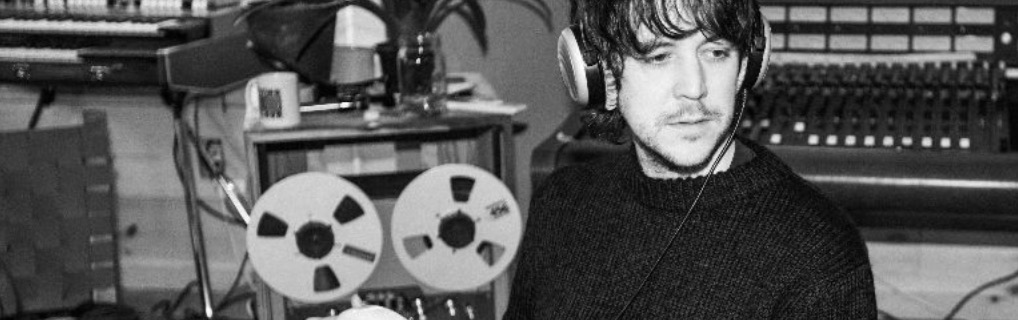
“Jacket” has an affable tunefulness about it, with a loose-limbed, Ram-like vibe bespeaking on the one hand singer/songwriter/producer Sam Evian’s long-standing adoration of the Beatles, and on the other the fact that he recorded this latest album in his idyllic-sounding studio in the Catskills, in a renovated barn, live on vintage tape–“No headphones, no playback, minimal overdubs or bleed,” in his words. The guitar sounds are straight out of the 1970s, as is the perky, midtempo, Nilsson-esque melody, with its easy-going wanderings up and down the scale.

Structure-wise, the song has a sneaky convolution to it, with a verse and chorus that sound somewhat but not precisely alike; it’s especially easy to get disoriented when a song starts with the chorus, as this one appears to. Bonus bewilderment points here for removing the first line of the chorus after one iteration, thereafter replacing it with a cheerful set of female-voiced “La-la-la”s. Lyrically this is one of those songs where the words are at once legible and incomprehensible: you can read along with the song and still have little sense of what’s transpiring. And then, in the middle, a verse pops as meaningful, even though it has no apparent relation to anything previously sung:

I trace it back and find a twisted memory
A loose end coming back to haunt me, it’s getting older and older
You know our trouble has a way of finding more
Like we were soldiers in a war so long ago

First off, he traces what back, exactly? We don’t know, pushed as we abruptly are into the middle of a thought without any context. Listen next to how perfectly “A loose end coming back to haunt me” scans with the music; it’s the parade of iambs in the lyrics that does it–except for the “it’s getting older and older” addendum, all the lines here offer perfect one-TWO stresses. The words glide effortlessly, all but forcing our attention to the stanza’s gloomy conclusion, contradictorily presented with the song’s ongoing peppiness. I’m not sure what it all adds up to–by the way, there’s not a single mention of a jacket–but it keeps me listening, and re-listening. Perhaps the song is being sung to an old jacket? Or by one?

Plunge, Evian’s fourth album, came out in March, and is the first he’s released on his own label, Flying Cloud Recordings. Collaborators on the album include El Kempner (Palehound, Bachelor), Adrianne Lenker (Big Thief), Sean Mullins, and Liam Kazar, among others. Meanwhile, Evian has for some years been an in-demand producer, having recorded albums with a wide variety of indie rock acts, including Widowspeak, Cass McCombs, Blonde Redhead, Cassandra Jenkins, Big Thief, and Hannah Cohen, who happens also to be Evian’s partner.