We tried but there was nothing we could do (Eclectic Playlist Series 6.09 – Sept. 2019)

I started this playlist more towards the beginning of this month, and had landed on opening with “Since You’re Gone,” only to bump within days into the sad news of Ric Ocasek’s passing. This was always one of my favorite, less-heralded Cars songs; in it, Ocasek sounded, to my ears, a bit more emotionally tender than the icier and/or more ironic tone he employed more generally, and to great effect I might add. Tenderer doesn’t necessarily makes the song better, but in this case the hint of poignancy strikes me as a sort of magic ingredient. And, randomly, I’ve always loved “I took the big vacation” as a wayward description of heartache and its aftermaths. The fact that Ocasek was indeed 75 was a bit disconcerting; he was the same generation as the first wave of classic rock stars, even as he did not fully emerge on the rock’n’roll scene for ten additional years or so. In retrospect his extra experience may well have been one of the secrets of the Cars’ success; they weren’t just another bunch of 20-something wannabes hopping on the new wave bandwagon—they were savvy musicians, helping to create the bandwagon in the first place. I’ve always felt the Cars to be underrated in the annals of rock music. The outpouring occasioned by Ocasek’s death was a sign that this music had more substance and style than his band was often given credit for.

A few random notes:

* I don’t know as much about reggae as I’d ultimately like to; my ears too often hear reggae songs generically, for lack of better awareness. But every now and then a reggae tune slays me melodically, and “Book of Rules” is one of those. I really have to go dive into the sub-genre known as rocksteady, because it’s starting to seem to me that the reggae songs I most enjoy are related to this sound. In any case, this one is so good; thanks to the mighty curators at Radio Paradise for introducing it to me.

* For all the critical fuss that was made about new wave style power pop in and around 1978 to 1981, this became one of those moments in music history where a few well-worn (but, don’t get me wrong, absolutely fantastic) songs stand in for the entire period. There’s “Starry Eyes,” there’s “Another Girl, Another Planet,” a few other chestnuts, and there’s your power pop. Of course there were more bands and more songs now partially lost to the ages, most, probably for good reason–just glomming onto a coveted sound doesn’t guarantee quality. One band perhaps not entirely deserving of its obscure fate was the London band The Keys. Although a major-label release, on A&M, produced by none other than Joe Jackson, this was never widely heard; coming near the end of the original vinyl age and never ending up released as a CD didn’t help. Neither did the colossally generic album cover. But “I Don’t Wanna Cry” does have the sound of a missed power pop classic. Now you don’t have to miss it.

* Tom Waits, man. Check out that chord progression on “And if you don’t want my love/Don’t make me stay.” Gorgeousness wrapped in sandpaper, which somehow makes it extra gorgeous.

* Most people know the late Robert Palmer, if at all, for his ’80s and ’90s output, both solo and with the briefly popular “supergroup,” The Power Station. But he had made a lot of music of quite a different ilk back in the ’70s, aiming at a sound that sprang eclectically from New Orleans-style funk and soul, with a dash of Caribbean influence as well. “Best of Both Worlds” epitomizes the breezy, sophisticated pop of his pre-MTV days. Simpler times, people, simpler times.

* I can’t decide if 2004, back when Fingertips was a year old, seems like only yesterday or forever ago. These days I’m leaning towards forever ago. In any case, Nellie McKay’s playful, variegated double-disc debut album, Get Away From Me, came out that year, on Columbia Records, to a good amount of critical acclaim and a certain amount of radio play back in that more innocent age. (Note the album’s sly rejoinder to Norah Jones’ blockbuster Come Away With Me.) “David” sounded charming back then and maybe even a bit more so now, if only for how unlikely it would be for someone to release something like this today. McKay proved to be too idiosyncratic and un-tameable for a major record label. She has released six albums since then, including three albums of cover songs. She’s been on Broadway, she is an outspoken advocate for human and animal rights, and is in general one of those folks not easily pigeonholed into one category. As none of us should be, if you think about it.

Full playlist below the widget.

“Since You’re Gone” – The Cars (Shake It Up, 1982)
“Wisteria” – Death and the Maiden (Wisteria, 2018)
“Book of Rules” – The Heptones (Book of Rules, 1973)
“Backdrifts” – Radiohead (Hail to the Thief, 2003)
“Little Bird” – Annie Lennox (Diva, 1992)
“Just Say You’re Wanted (and Needed) – Gwen Owens (single, 1966)
“Me and the Farmer” – The Housemartins (The People Who Grinned Themselves to Death, 1987)
“Best of Both Worlds” – Robert Palmer (Double Fun, 1978)
“Night in Tunisia” – Dizzy Gillespie (1946 recording)
“Patience of Angels” – Eddi Reader (Eddi Reader, 1994)
“Sing to Me” – Cumulus (Comfort World, 2018)
“Ordinary Joe” – Terry Callier (Occasional Rain, 1972)
“David” – Nellie McKay (Get Away From Me, 2004)
“I Don’t Wanna Cry” – The Keys (The Keys Album, 1981)
“Don’t You Care” – The Buckinghams (Time & Charges, 1967)
“Celebrity Skin” – Hole (Celebrity Skin, 1998)
“Back in the Crowd” – Tom Waits (Bad As Me, 2011)
“Without You” – Sasha Dobson (Modern Romance, 2006)
“Lovefool” – The Cardigans (First Band on the Moon, 1996)
“Ships in the Night” – Be Bop Deluxe (Sunburst Finish, 1976)
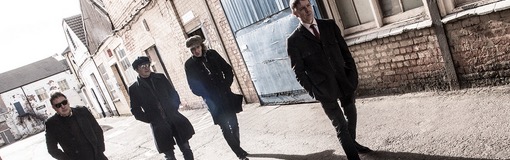
Free and legal MP3: Diesel Park West (classic sound, smartly crafted)

Want to know just how instantly assured and well-built “Pictures in the Hall” is? Check out the way that Diesel Park West employs a mere two-second, slashing guitar riff for an intro.

“Pictures in the Hall” – Diesel Park West

Well here’s a terrific song from a veteran band I had previously managed not to know about, despite a history dating back to the ’80s. There’s always a world of music out there awaiting discovery, and it’s not always going to come to you via algorithm.

Want to know just how instantly assured and well-built “Pictures in the Hall” is? Check out the way that Diesel Park West employs a mere two-second, slashing guitar riff for an intro; it harkens back to something the Who or the Kinks might have done in the British Invasion days, and leads to an equally classic-sounding sing-song verse. This, in turn, is the kind of thing bands tend to pound into oblivion, but these guys keep the song moving; at 0:18, the music shifts tonally into a chorus tinged with Kinks-ian melancholy, before ending with an exclamatory upturn (0:30-0:36).

A lot of ground has been covered in less than 40 seconds, at which point we head back to where we started. This time around notice the barreling guitar line down below that links the lyrics together (e.g. 0:44). It was there in the first verse as well, but now that we’re settled in it’s somehow more noticeable, as part of a general sense of mischief in the air, which is reinforced by a few other goings-on, including an early bridge section (at 1:12, before the song is even half over), an abrupt key change (1:46), and, throughout, by front man John Butler’s ever-so-slightly unrestrained vocal style. The last bit of fun comes in the guise of that original guitar lick, the aforemenioned one linking the verses together earlier, now reimagined as a repeating, melodramatic descent (e.g. 2:10). That didn’t need to happen but the end result is meatier for touches like that.

“Pictures in the Hall” is the first single from Diesel Park West’s forthcoming album, Let It Melt, to be released at the end of the week on Palo Santo Records. This is the Leicester-based band’s ninth album; three of its four members were in the lineup all the way back to the ’80s.

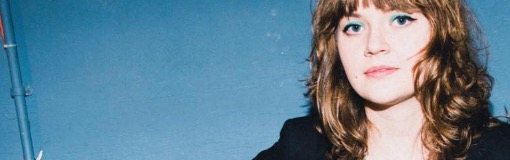
Free and legal MP3: Kate Davis (bass-led indie rock charmer)

Fittingly enough, “Open Heart” has its central aesthetic attribute hiding in plain sight: a bass guitar more or less playing lead.

“Open Heart” – Kate Davis

Fittingly enough, “Open Heart” has its central aesthetic attribute hiding in plain sight: a bass guitar more or less playing lead. Which makes sense when you are hip to Kate Davis’s unusual background: she came to the fore musically as a teenage bass prodigy. Jazz was her thing, but as it turned out she also played the internet pretty well—an impromptu, breezily recorded version of “All About That Bass,” with Davis singing and playing the upright bass, uploaded in 2014, now has more than 18 million views.

But the New York City-based Davis apparently had no interest in being painted into a corner of standards and retro recordings. As her personal tastes veered more and more towards indie rock bands such as Beach House and TV on the Radio, she eventually knew she had a whole other kind of music in her. “Open Heart” is a deft example of what can happen when someone with serious training and chops discovers the potential in the seemingly simplified landscape of a rock song. A surface listen may detect nothing obviously abnormal in “Open Heart,” but once you pay closer attention, you’ll realize, on the contrary, that there’s actually very little that is entirely normal here.

Davis singing over her lead-like bass playing is just the start of it. Then there’s what the bass is specifically doing, which entails a lot more fret work than a typical rock song necessitates. The lyrics, too, have a sort of surreal directness to them, as an imagined doctor’s visit, leading precipitously to a heart transplant, is conflated with a love gone astray, delivered in a deliciously matter-of-fact way (“Hold tight/Oh we’re taking your heart out now”). Musically, there is flawless movement from verse to pre-chorus to chorus; as “Open Heart” unfolds, Davis’s skill as a writer of melody and crafter of song becomes clearer and clearer. Notice in particular how the heartbeat pulse of the bass leads us effortlessly from the contemplative verse through to a chorus that opens in double time and concludes, over a wonderful chord progression, in half time—all without Davis seeming to break a sweat.

As for that heart-mimicking bass line, that turns out to be one of a number of adroit touches that feel satisfying and almost comic, in a musical way. Another is how the music extends and momentarily freezes—we might call it a sustain—at the end of the line “the injury you sustained” (2:02). There’s also how the recurring phrase “Deep breath” is articulated with more or less the opposite affect: more of a short gulp. I like too the removal of the omnipresent bass for the last iteration of the verse (starting at 2:22), which somehow creates a sensation of an angel passing through the hospital room, conferring the stark recognition that being alive involves accepting pain.

Davis’s career as an indie rocker was first launched with a high-profile credit she earned with Sharon Van Etten (they wrote “Seventeen” together); I’m anticipating a new level of acclaim when her debut album Trophy is released in November on Solitaire Recordings. “Open Heart” will be track two on the record; you can listen to three other songs in advance over on Bandcamp, and pre-order it there as well.

* * * * * *

And, even as Kate has moved past this, I’m offering up the Meghan Trainor cover because it’s really impressive. I love musicians who both know how to play their instruments and know how to perform—not always the same skill.

Free and legal MP3: Seazoo (energetic Welsh rock)

Launched off a satisfying, off-kilter progression of four crunchy guitar chords, “Throw It Up” is a friendly, non-stop slice of catchy-quirky indie rock, courtesy of an up-and-coming Welsh quintet.

“Throw It Up” – Seazoo

Launched off a satisfying, off-kilter progression of four crunchy guitar chords, “Throw It Up” is a friendly, non-stop slice of catchy-quirky indie rock, courtesy of an up-and-coming Welsh quintet.

Let’s start back with those guitar chords. First: guitars! Slashy, crunchy guitars. Such sound must be honored here in 2019. I love all sorts of instruments, and am fine with many and varied electronic devices, but I will unceasingly repudiate the extremist cultural rejection of the guitar as an instrument in popular music. And will therefore celebrate with a bit of extra oomph those musicians and bands that still find guitars attractive and useful. Me, I can’t help seeing the lack of guitar in today’s pop world as an admission that performative musical aptitude is no longer a contributing factor in songs that are fed into the Pop Industrial Complex. This is not a news flash, of course. And it’s not to say that there aren’t other talents involved in what emerges onto today’s Hot 100. But as an old-school music fan my ears respond to music that at some level sounds palpably related to individual human capacity, connecting the heart, body, and soul. Maybe that’s just me.

But hey—turns out this is only a semi-unrelated tangent. Although it’s hard to discern from listening to the song, “Throw It Up” was inspired by people front man Ben Trow has seen who are re-thinking their attachments to some of the 21st-century conveniences and technologies that we’ve been sold over the last decade or so. The song, he says, is “about making the decision to reject something in an attempt to improve well-being.”

“Throw It Up” in any case is a fast-paced smiler, enhanced by Trow’s plainspoken vocal style, which conveys a steady bemusement even as the song rushes by. And my paean to guitar work notwithstanding, I love as well the keyboard sounds that founding co-member Llinos Griffiths weaves in and around the general crunch—you’ll hear her in earnest starting around 0:58; the keyboards get emphasized further in the chorus, and then have a wonderful showcase during the instrumental break starting at 1:46, tracing out noodly, sonic pathways and nuances I can’t begin to find words to describe. Maybe even better are the skidding, sci-fi flares going up in the background around 2:08. Did I say this was a guitar song? Actually maybe not.

Online as of mid-August, “Throw It Up” is the first Seazoo release since their debut album, Trunks, in 2018—which by the way you should definitely check out on Bandcamp. Based in Wrexham, the band began as a duo, but radio play led to invitations to perform live, which led to Trow and Griffiths realizing they needed an actual band, which they now have. By all accounts they are currently finishing up a second album, which I hope you are now eagerly awaiting.