
“Soft Pedals” – Modern Skirts
Cushy and upbeat with a lounge-like gloss and an incomprehensible flow of lyrics (“Give me a knife and a merry-go-round”?), “Soft Pedals” is all smoothness and unruffled cool, combining crisp acoustic guitar rhythms, bell-like synth lines, chirpy electronics, and occasional bursts of layered harmonies. I’m not going to tell you what it’s all about because I have no idea, although I am picking up a vague scent of soft-core porn that floats around the pretty much impervious storyline. Let me know if that’s my imagination or not.
And let the record show that Modern Skirts, the Athens, Ga.-based foursome that has sculpted this mysteriously agreeable groove of a song, is not in any way a lounge band; they specialize, rather, in being eclectic, in a Fountains of Wayne kind of way. Had a different song from their album, All Of Us In Our Night, been chosen as the free and legal MP3, you’d be getting a completely different impression of the band right now. Singer Jay Gulley has a languid baritone that works in a variety of settings, although I do in particular like the breathy nonchalance he brings to the job here, along with the backing layers of vocals he provides for himself. I am particularly mystified about how he gets away with that “You got on top/I got on top” part (e.g. 2:05), flagrantly emphasizing the wrong syllable in the background harmonies, and yet making it sound so smooth and unflappable that you don’t even notice (except that I went ahead and pointed it out to you). He manages to make it sounder righter than the right way would’ve sounded. Now that’s smooth.
All Of Us In Our Night, the band’s second CD, will be self-released next month.
Free and legal MP3 from Sam Phillips (old-timey sound, bewitching voice, brilliant songwriting)
“Sister Rosetta Goes Before Us” – Sam Phillips
MP3 REMOVED
Sorry, gang, but in an unprecedented development here on Fingertips, a song I linked to that was originally identified without question as a free and legal MP3 turns out not to have been a free and legal MP3. The record label (we’re dealing of course with a big record label) was shocked–shocked–to find out that the company they hired to help market the album, a company well known for using free and legal MP3s with every artist they promote, was in fact planning to use an MP3 and not just a stream. So down it goes. And a Keith O.-style “worst person in the world” award goes out this week to Nonesuch Records and their lovely parent, Warner Brothers. Pleasure to do business with you.
Another rich slice of idiosyncratic marvelousness from Sam Phillips, “Sister Rosetta Goes Before Us” uses the real-life 20th-century gospel singer Sister Rosetta Tharpe (one of the first to make a career singing secular music) as a jumping-off point for an evocative song about love and loss and the latent power of the self, particularly when challenged. One of Sister Rosetta’s bigger hits was the song “Strange Things Happening Everyday”; Phillips begins her song with the line “Strange things are happening everyday” (and ah! that somewhat odd and bewitching voice of hers!) and takes us from there on a strange journey herself. The jaunty melody sounds like something from the ’30s, a bygone aura enhanced by the use of a Stroh violin (as played by Eric Gorfain), an early 20th-century contraption that has strings and a bow but uses a metal horn rather than a wooden body to amplify its oddly clarinet-ish sound.
It was on her 2001 album Fan Dance and then, more thoroughly, on 2004’s A Boot and a Shoe that Phillips first explored this old-fashioned musical landscape, although never succumbing to mere nostalgia. That’s really what has made the music so compelling, I think: she takes sounds from the ’20s and ’30s and gives them currency and vigor through the quality of the musicianship, the allure of her smoky-buzzy voice, and the casual brilliance of her songwriting. Listen to the ease with which “Sister Rosetta”‘s melody uses so many different notes in the scale, but listen too to how focused and down-to-earth her language is. “Though the sound of hope has left me again/I hear music up above:” fourteen words for just seventeen syllables, and all three two-syllable words have only five letters; and see how she yet hints at the ineffable core of life itself.
“Sister Rosetta Goes Before Us” was first recorded by Alison Krauss and Robert Plant on their 2007 CD Raising Sand; it’s sort of like Phillips covers her own song, since her version came second, showing up on Don’t Do Anything, which she released earlier this year on Nonesuch Records. A big shout-out goes to the fine folks at Toolshed for getting this one out there as a free and legal MP3.
British composer/arranger/pianist/vocalist Mark Northfield the subject of December’s Fingertips Q&A
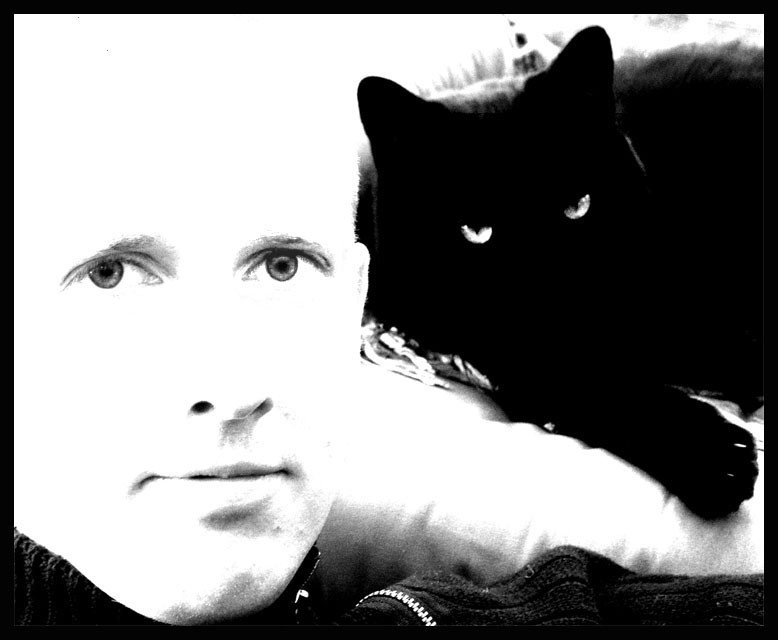 The latest installment of the Fingertips Q&A is now online, this one featuring British composer/arranger/pianist and sometime vocalist Mark Northfield. Northfield’s haunting song “Zero” (he did in fact sing on it) was featured on Fingertips back in July, and I must say the gent has more going for him than one spiffy song. His startlingly thoughtful responses to five questions about the current and future state of the music industry are well worth checking out if you’re interested in such things, or might be someday. Read the Q&A here, and find out more about Mark Northfield on his web site. The cat has no web site, to the best of my knowledge.
Free and legal MP3 from Amanda Palmer (Dresden Dolls’ singer goes solo, produced by Ben Folds)
“Astronaut” – Amanda Palmer
The smoky alto is back, likewise the melodramatic delivery and foreboding lyrics, but Amanda Palmer arrives this time without the Dresden Dolls, the self-proclaimed “Brechtian punk cabaret” duo of which she is half. The Dolls have a compelling sound, to be sure, but perhaps it was time to see what Palmer could do when freed of the band’s intriguing but restricted soundscape–an idea that so delighted Dresden Dolls’ fan Ben Folds that he actively sought the job of being Palmer’s producer for her solo debut.
And so the Foldsian piano pounding (by Palmer) that opens this, the album’s lead track, seems no accident, but neither does the Palmerian left turn the song takes after 20 seconds of it—with the strings still echoing off the soundboard, we dive into 40 seconds of brooding quiet, which announces that Palmer has not left her bravado in her “punk cabaret” kit bag. We lean in, we wonder exactly what she’s talking about (“Is it enough to have some love/Small enough to slip inside a book”), we get closer still and then bam, we get whacked on the head a second time, when the volume and beat return, at 1:02. “I am still not getting what I want,” she sings, a thematically charged line in Palmer’s oeuvre if ever there was one, as the song leaps back to life and soon picks up an unexpectedly welcoming bounce. When Palmer belts, her voice has this commanding way of sounding off-key and on the right note at the same time. She is in fact a very precise singer and writer; whether or not I get their meaning, her words are a rhythmic pleasure, scanning with a finesse not typically found in indie rock. And she even effects a musical climax based largely on the metric foot she employs, in the bridge that starts at 2:53, which sticks with a rat-a-tat trochaic meter (ONE-two, ONE-two, ONE-two etc.) until we are pretty much beaten into submission. It’s both an impressive display of lyrical discipline and a way of adding a driving anguish to the song below the level of consciousness.
The CD Who Killed Amanda Palmer was released earlier this fall on Roadrunner Records.
Free and legal MP3: Gramercy Arms (short, crisp, and anthemic)
“Automatic” – Gramercy Arms
Crisp and crunchy speak-singing verses alternate with a short, anthemic chorus with one word–“automatic”–sung in the background, while “It’s automatic” is spoken/sung in the foreground. Very very simple, but oddly compelling. How can some songs be annoyingly simple and other songs be compellingly simple? Let’s try to figure it out.
“Automatic” is short, to begin with (2:21). This is good either way—if a song is simply simple, there’s no reason to belabor the point; if the song is not as simple as it seems, working quickly will increase the complexity (less time spent repeating anything). “Automatic” has no introduction, which is generally good in a simple song, as introductions often tread water anyway. The speak-singing style used here by front man (and ex-Dambuilder) Dave Derby adds subtle complexity, since it registers as talking but he is in fact hitting specific notes. The first verse is eight measures, then we get the partially sung chorus, also eight measures, but it’s interestingly inside out, with the background singers singing first, before the lead singer speak/sings. Plus, the singing section is sing-along wonderful, like a tiny piece of power pop packed into another song altogether (note too that the word “automatic” turns out to be the completion of the last lyrical line in the verse; more hidden complexity). The second verse is six measures, a change that cannily jars the listener ever so slightly. Two more things nail this down for me: the instrumental break (starting at 0:54), which concisely fleshes out the two-chord riff of the verse in a sharp, yet multilayered way; and then, best of all, the bridge (1:19), eight measures of fuzzed-up melodic sweetness, capped by a burst of harmony that sounds like the Move just as they were turning into ELO, for you old-timers out there. Or Cheap Trick, for you not-quite-as-old-timers.
So this one, yeah, it works for me. “Automatic” is a song from the debut Gramercy Arms CD (and they don’t fool around; the whole thing is only 30 minutes long); it’s self-titled and was released on Cheap Lullaby Records in mid-November. Among the indie rock semi-celebrities helping on on the album were Matthew Caws from Nada Surf, Joan Wasser of Joan As Police Woman (who sings back-up on this song), and members of the Pernice Brothers and Guided By Voices, among others. And comedienne Sarah Silverman too, who apparently sings in addition to kvetches.
Free and legal MP3 from Matt Pond PA (beautifully written, guitar-driven indie pop)
“Our Braided Lives” – Matt Pond PA
It’s been a long time since we’ve heard from Matt Pond and company here on Fingertips. His band, purveyors of thoughtful, string-supported pop, was one of the site’s early stars; they were also one of the first 21st-century indie bands to find themselves playing for a mainstream TV audience, via placement on The O.C.. The band was actually formed back in the 20th century (1998), in Philadelphia; they have operated from Brooklyn since 2003, and have undergone a variety of lineup changes over the years.
“Our Braided Lives” is vintage MPPA—sweet but firm, wistful but forward-moving, with a deep-seated melodicism and nicely intertwining guitars. The two main melodies on display—one from the verse, one from the chorus–balance each other brilliantly: the melody in the verse feels like a thoughtful journey, hinging upon an unresolved moment (the line ending at 0:46, for the first example of it); the chorus melody, more focused, is one of those glorious, slightly melancholy descending lines, neatly balanced by a warm, ascending guitar. And check out this masterly bit of songwriting: both the verse and the chorus conclude with the same line, both melodically and lyrically, which surely contributes to the this solid sense of arrival the song evokes.
“Our Braided Lives” comes from the band’s new free EP, which is being called, plainly enough, The Freeep. The EP was self-released last week.
Free and legal MP3 from Denison Witmer (appealing singer/songwriter pop with a ’70s flair)
“Life Before Aesthetics” – Denison Witmer
Fleet-footed and amiable singer/songwriter pop with a dreamy ’70s patina. It’s a mellow toe-tapper–half Jackson Browne, half Sufjan Stevens–but it manages to vibrate with something extra that, to me, separates it from the kind of song that may come to mind when you think “mellow toe-tapper.” And what, precisely, is that something extra? Well. Let’s see. Hmm. He says “modern furniture” in the first line, but that’s probably not it.
Okay, here’s one thing: check out how the verse has two interrelated but distinct melodies. You can hear the first one beginning at 0:14, the second one at 0:29. The first part is a downward-trending melody, the second part leans upward, with two effects. First, Witmer gets to show us his impressive vocal range; singing sweetly and easily, he takes us from a low D to a high G without breaking a sweat. Second, this straightforward song now feels much more interesting and substantive. Witmer doesn’t provide us with a 16-measure melody–a rare animal indeed in the indie rock world–but he does offer two back-to-back, repeated eight-measure melodies, which is a deft way of adding complexity without overtaxing either the listener or the songwriter. And then the chorus delivers simplicity itself: a slower-moving resolving melody that consists primarily of two notes, describing harmony’s most basic interval, the third. The instrumental accompaniment maintains the faster rhythm of the verse, with the added texture of an organ playing a new countermelody. I’m going to go out on a limb and say that the song would not have succeeded as well as it does without that organ.
Denison Witmer, based in Lancaster, Pennsylvania, has been recording since 1995. “Life Before Aesthetics” is a song from his new CD, Carry the Weight, his eighth full-length studio album, released earlier this month by the Militia Group. MP3 courtesy of Insound.
Free and legal MP3 from My Brightest Diamond (charismatic cover of a famously covered oldie)
“Tainted Love” – My Brightest Diamond
Yes, it’s that song. Fingertips doesn’t traffic in covers very often–hardly ever, actually–but that’s not because I have anything against someone singing someone else’s song. It’s just hard, I think, in the end, to take the focus off the mere act of covering–hard, that is, to turn the new version into truly its own performance. The original is always the unspoken third person in the room between the performer and the listener. If the new version is a respectful homage, well, there it obviously is; if the cover, on the other hand, is an extreme re-working of the original, the distance between the two versions draws its own kind of attention to itself.
This problem is most easily overcome when the performer doing the covering has so much of his or her own magnetism that the song becomes merely another vehicle for it. Two-time Fingertips veteran Shara Worden, a musical force of nature recording as the entity My Brightest Diamond, qualifies without hesitation. Worden restores the drive of the Gloria Jones original, but instead of an early-’60s R&B stomp, she runs with a swirly, neo-disco ambiance that somehow manages to feel, also, pre-disco/retro–disco, perhaps, as imagined by the Jetsons, full at once of accidentally too-organic sounds (the drums sound very real) and early space-age bleeps and “futuristic” tones. Vocally, Worden is at her semi-operatic finest, singing with a husky, quavery restraint that makes it sound like she’s holding back even when she’s letting loose.
This new “Tainted Love” comes from the CD Guilt By Association Vol. 2, set for release on Engine Room Recordings in February, although it’s already available digitally via iTunes. You can check out a stream of the whole thing on the Engine Room web site. The CD is the second in a series which features cover versions of big pop hits, of the top 40 variety, by indie artists. MP3 via Pitchfork.
Free and legal MP3:The Layaways (polished garage rock)
“Keep It To Yourself” – the Layaways
Hey, all three songs this week are between 3:16 and 3:20 long. That’s an old-fashioned radio-friendly length for three songs you’re unlikely to hear on the radio. Last up, a nifty bit of polished garage rock, if such a concept isn’t an oxymoron. Launching off a sonorous, rubbery guitar line that, melodically, echoes the hook from the Kinks’ “David Watts,” “Keep It To Yourself” has the big-drums/big-chords bash and concise melodicism of some Nuggets-era–um–nugget, with a welcome helping of shoegaze drone. The song itself is pithy and unadorned, but the presentation is cool, full-bodied, and impeccably controlled–not a note or sound is out of place.
Taking nothing away from David Harrell’s understated, slightly processed vocals, I think his guitars are the stars here, presenting alternately as zipped-up-tight rhythm, circular synth-like lead lines, and droney dissonance. When the three sounds combine in the second half of the song, we definitely arrive in one of those “the whole is greater than the sum of its parts” places. It can’t be easy to make something this basically simple sound so fulfilling; it if were, everyone would do it.
You’ll find “Keep It To Yourself” on The Space Between, the band’s third full-length, which was self-released earlier this month by the Chicago-based trio. The album is for sale; you can also download all the songs as free MP3s on the band’s web site. Long-time Fingertips visitors may remember the Layaways as one of the bands featured on the late, great Fingertips compilation CD, Fingertips: Unwebbed. The rest of you, you should’ve been there.
Free and legal MP3: School of Seven Bells (resplendent Björk/Cocteau amalgam)
“Connjur” – School of Seven Bells
Buzzy and resplendent, “Connjur” is almost magically appealing, combining an earthy, decisive, Björk-y sort of electronica with airy, Cocteau Twins-like layers and harmonies and a touch of shoegaze swirl. Listen to the continual give-and-take between the yawning chasms of sound (distorting guitars?) at the bottom of the mix and the perky beat, with those sprightly vocals up on top—I love how that all works together somehow. I suspect that the way the melody is sung resolutely off the beat adds further to the music’s unearthly pull.
Unable to determine with any clarity what this song is about lyrically, I still feel a strong sense of its seriousness and its playfulness, and this is what moves me most of all. Rare is the work of art—whether music, poetry, prose, painting, sculpture, whatever—that combines the mystical and the fun, the deeply serious and the lighthearted. These guys seem to be after that sort of thing, and more power to them, says me.
School of Seven Bells is a Brooklyn-based trio composed of Ben Curtis, formerly of Secret Machines, and twins Alejandra and Claudia Dehaza, who both used to be in the band On!Air!Library!. They make their sound with two guitars and a bunch of electronics. “Connjur” (a great song title for the Google age) can be found on the group’s debut CD, Alpinisms, released at the end of October on the Ghostly International label. The album title comes from the 20th-century French writer René Daumal, himself a playful mystic. To Daumal, a student of Gurdjieff, “alpinism” was the art of climbing mountains (“in such a way as to face the greatest risks with the greatest prudence”), but mountains to Daumal were at once physical and metaphysical entities. His novel, Mount Analogue, is subtitled: “A Novel of Symbolically Authentic Non-Euclidean Adventures in Mountain Climbing,” and is about an expedition organized to seek and then climb a mountain that is, at the outset, asserted to be imaginary. That kind of story.
 Fingertips