You wouldn’t believe me if I said

Eclectic Playlist Series 7.07 – July 2020

Little did Natalie Laura Mering, doing musical business as Weyes Blood, realize what a wild time was yet in store when she released Titanic Rising last year. Or maybe she did: “Everyone’s broken now and no one knows just how/ We could have all gotten so far from truth.” I will spare you the rant that I wrote after this in my first draft, and move us right into the mix. Just note that it’s up to any of us who are trying to remain sane and well-informed and compassionate to continue to find the wherewithal to be a human being, and offer comfort and solace to others attempting the same bravura feat. Let music be an ongoing gift through these wild times.

The playlist:

“Slow Burn” – David Bowie (Heathen, 2002)
“Tired of Toein’ the Line” – Rocky Burnette (The Son of Rock’n’Roll, 1979)
“Glass Jar” – Tristen (Sneaker Waves, 2017)
“Think Too Hard” – Syd Straw (Surprise, 1989)
“Feeling Good” – Nina Simone (I Put A Spell On You, 1965)
“Sulky Girl” – Elvis Costello (Brutal Youth, 1994)
“Jaco” – Pat Metheny Group (Pat Metheny Group, 1978)
“Julia’s Call” – Lake Ruth (Birds of America, 2018)
“Mississippi” – Bob Dylan (Love and Theft, 2001)
“No New Tale To Tell” – Love and Rockets (Earth Sun Moon, 1987)
“Look The Other Way” – Lesley Gore (b-side, 1968)
“Wild Time” – Weyes Blood (Titanic Rising, 2019)
“Your Racist Friend” – They Might Be Giants (Flood, 1990)
“Read My Mind” – The Killers (Sam’s Town, 2006)
“Detroit or Buffalo” – Barbara Keith (Barbara Keith, 1972)
“Black Metallic” – Catherine Wheel (Ferment, 1992)
“Tesla Girls” – Orchestral Manoeuvres In The Dark (Junk Culture, 1988)
“Band of Gold” – Freda Payne (Band of Gold, 1970)
“I’m Not Getting Excited” – The Beths (Jump Rope Gazers, 2020)
“Night Train” – Oscar Peterson (Night Train, 1963)

Bonus explanatory notes below the widget…

* “Feeling Good,” rendered extraordinary by Nina Simone, is a song from the 1964 musical The Roar of the Greasepaint – The Smell of the Crowd, composed by Anthony Newley and Lesley Bricusse. Simone’s now-classic interpretation takes the song into a new place, and so richly that the source has been all but forgotten. (Newley’s own take, though, is actually quite good if differently nuanced [https://www.youtube.com/watch?v=aYF__H4PSUA], and exhibit A for anyone wondering who David Bowie’s biggest influences were.)

* Speaking of Mr. Bowie: of all the various “comebacks” of the great man’s career, one of the more overlooked is his return to form in the early ’00s, with the albums Heathen (2002) and Reality (2003). These accessible and high-quality releases followed 15 years of post-Let’s Dance albums dominated by experimentation and musical wandering that largely disappointed both critics and fans (the one exception being 1993’s underrated Black Tie White Noise). This time frame saw his veering off into the Tin Machine era, and culminated in three difficult to digest albums in the later ’90s that each found a smaller following than the last (ending with 1999’s oddly titled ‘hours…’). Heathen, conversely, sounded like a Bowie album for the ages, its melancholy grandeur aligning rather bleakly with our post-9/11 world. And yet, in all the career summaries emerging after his death in 2016, it seemed largely forgotten. I offer “Slow Burn” as a reminder of the album’s power, generated in part by Pete Townshend’s heroic guitar work. And now you can’t not hear Anthony Newley.

* There is oddly little information out there about the trio Lake Ruth, but I do know that I have a particular affinity for front woman Allison Brice’s vocals—she’s got that rounded, smoky tone that you don’t hear very often, and remains difficult to describe. Vocally, I am reminded of dear, departed Kirsty MacColl, which prompts immediate hearts here in Fingertipsland. The music is synthy but warm, and quite different from Brice’s work with the ’00s London-based sextet The Eighteenth Day of May (previously featured in a playlist this past November, in the before days.) This song comes from the band’s second full-length release, 2018’s Birds of America.

* “Your Racist Friend”: always, sadly, in season.

* Rocky Burnette, as per the title of his album, is in fact the son of early rock’n’roll star Johnny Burnette. This song is by and large Rocky’s only claim to fame to date, but it’s a fun one; what “Tired of Toein’ the Line” lacks in depth it makes up for in earnest glee and unrelenting hookiness. It was a top 10 hit in the U.S., and a number of other countries, back in 1980. Burnette is still out there somewhere, but not musically active since a spurt of new activity in the ’90s.

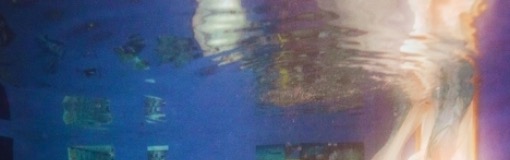
* One more note about Weyes Blood: check out the album cover when you have a chance—the scene was constructed and photographed under water, for real.

* While I continue to try to take in Bob Dylan’s latest ramblings (i.e., the intermittently compelling, extravagantly praised Rough and Rowdy Ways), I feel compelled to return to what to my ears was his last great album: Love and Theft. This too is tied to 9/11 (released that very day, in fact), but has otherwise little to do with that calamity, being instead a loose, often humorous, ongoingly offbeat collection of songs and performances. While this album introduced us to the shuffly, old-timey persona Dylan was unexpectedly morphing into, it also contained honest to goodness musical variety and lyrical sharpness. To this day I count “Mississippi” as his last masterpiece, a song that stands up to most anything in his ’60s and ’70s pantheon.

* Speaking of later compositions that belong in an artist’s pantheon, I will tip my hat here to the fierce and melodic “Sulky Girl,” a generally disregarded gem from Elvis Costello’s Brutal Youth album. The release was notable to us Elvis lovers for reuniting the Attractions for the first time since 1986; his long-time backing band, complete with personality kerfuffles, recorded together on five of the album’s 15 tracks. “Sulky Girl” is a standout, calling to mind the vehemence of his “angry young man” days tempered with the mature dynamism of his ongoing artistic evolution.

* And then we have “Band of Gold,” one of 20th-century top 40 radio’s shining moments, a song with such mysterious pull that its lyrical enigmas and/or unconventionality glide right by. Without listening too closely, you can read this as a standard tale of heartbreak. But the lyrics reveal a marriage in which the man, for unstated reasons, can’t perform sexually, and abandons his newlywed bride, leaving her frustrated and disappointed. Not the usual pop song fare in those days. Written by the mighty songwriting team of Holland-Dozier-Holland, the song was credited to two other names, for contractual reasons at the time. But it is one of their very best.
A chance to talk (Eclectic Playlist Series 7.06 – June 2020)

I’m not here to preach, but I am here to try to be a human being, however lost a mere human being has become in the chaotic sea of systems, policies, memes, propaganda, and brutality that characterizes life in 2020. First and foremost, at this consequential moment in time, I recognize, in my own humanity, many flaws and failings. (By the way, name one honorable and effective person in the history of civilization who claimed always to be the best, who could confront detractors only with insults. I’ll save you time: you can’t.) I recognize that for all my liberal ideals and progressive tendencies, I have lived a long adult life without deeply considering the lived experiences of people of color in America. I mean, I knew about it, and was in pain about it at some abstract level—but at another level, I can see that I simply went about my (privileged) day, unable and/or unwilling to let the uncomfortable reality sink in. Of course I’ll never know, experientially, what it’s like and what it’s been like to live as a person of color in this pseudo-democratic and deeply hypocritical country of ours. But here’s what I can do: I can put myself in the position of needing to learn, needing to have new conversations, needing to have new responses to this world we’re in, this congenitally damaged country that looks much better on paper than it does on the streets where we live.

But: there’s no doing this with a playlist. I won’t even pretend. The best I can do is offer a mix of songs this month, similar to my usual efforts, some of which you may find thoughtful and relevant to the present moment, others of which have no particular connection besides being intangibly part of the flow I put together as someone striving to observe and feel into this fateful hour. As I said, I’m not here to preach. I am simply here to say that we can and must do this together. I’ll let the musical current of this latest mix pull us eventually towards Rickie Lee Jones’ world-weary grace, in the elegiac “Running From Mercy”:

Oh sacred patience with my soul abide
There’s a rainbow above me that the storm clouds hide

Keep hope alive, through the darkness. It’s what humans do.

Full playlist and extra notes below the widget:

“Keep On Keeping On” – Curtis Mayfield (Roots, 1971)
“Praise Song For a New Day” – Suzzy & Maggie Roche (Zero Church, 2001)
“Everybody’s Gotta Learn Sometime” – The Korgis (Dumb Waiters, 1980)
“Cara de espejo” – Juana Molina (Halo, 2017)
“Love You To” – The Beatles (Revolver, 1966)
“Actor Out Of Work” – St. Vincent (Actor, 2009)
“Can’t Fight” – Lianne La Havas (single, 2020)
“Spinning Away” – Brian Eno & John Cale (Wrong Way Up, 1990)
“Smile” – Cristina (Sleep It Off, 1984)
“Try to Remember – The Fantasticks (featuring Jerry Orbach) (Original cast album, 1960)
“Baedeker” – Gabriel Kahane (Book of Travelers, 2013)
“Freedom Rider” – Traffic (John Barleycorn Must Die, 1970)
“Maiden Voyage” – Herbie Hancock (Maiden Voyage, 1965)
“The Charade” – D’Angelo and the Vanguard (Black Messiah, 2014)
“Held Down” – Laura Marling (Songs For Our Daughter, 2020)
“No Mermaid” – Sinéad Lohan (No Mermaid, 1998)
“Zero Hour” – Attention (single, 1983)
“Solace” – Scott Joplin/ Richard Zimmerman (Scott Joplin: His Greatest Hits, 1974 [1909 composition])
“Albert” – Ed Laurie (Meanwhile in the Park, 2006)
“Running From Mercy” – Rickie Lee Jones (Traffic From Paradise, 1993)

* This is the second song I’ve featured here from Gabriel Kahane’s ongoingly impressive Book of Travelers. It was released in the aftermath of one tragedy—the election of an historically ill-prepared and unprincipled man to the U.S. presidency (these are facts, not political statements)—and continues to fit the mood of the country, in its effort to find dignity in our individual stories, despite where we find ourselves collectively.

* From its origins in an unadorned Off-Broadway show, “Try To Remember” became a drippy standard covered by several zillion crooners and divas and wedding singers over the years. There’s a part of my ear that overlooks all that to remain charmed by the song’s plaintive melody and semi-miraculous chord changes. I keep hearing something elusive and profound in the simple progression in the verse—the movement from “When life was slow” to “and oh so mellow.” Extra points here for a chance to recall that the late great Jerry Orbach was far more than a network procedural fixture.

* “Zero Hour” from the NYC band Attention is a song with next to no internet trail. I discovered it via a Spanish blog offering a thrillingly exhaustive overview of semi-forgotten and entirely forgotten new wave songs, El ABC de la New Wave. I was mostly scanning the offerings for songs I used to know but have lost track of, but along the way I’ve unearthed a few gems I’d never heard before, including this one. According to Discogs, there was the “Zero Hour” single in 1983, a five-song “mini-album” in 1985, and that’s that. Given the generic nature of the band’s name, even if there’s some biographical information buried somewhere online, it’s not going to be easy to find; to make matters worse, another band named Attention has come along in the 21st century, so the earlier band is effectively a ghost.

* And then we have Zero Church, the album released by two of the three Roche sisters, originally slated for a 9/11/01 release, but delayed four months in the aftermath. It’s an unusual album; the origin story is too complicated to explain in a brief note, but the album’s exploration of complex social issues via prayers set to music seems as timely as ever.

* Laura Marling gets deeper and more astonishing with each album. And she’s only now 30. That she has been in a master’s program studying psychoanalysis for the last couple of years endears her to me all the more. Too many of today’s musicians seem so relentlessly one-dimensional, and all too ensnared in our culture of shallow digitalia. I’ll take a singer/songwriter working on her master’s degree over a YouTube sensation singing about his girlfriend every time.

* The trailblazing singer and writer Cristina Monet Zilkha, who performed simply as Cristina, died at the end of March of complications related to COVID-19; she was 64. A pioneer in a new musical realm combining punk attitude with pop sensibilities, Cristina has been retroactively credited with laying the groundwork for the mainstream success of a series of acclaimed pop stars, from Madonna through Lady Gaga. She was associated with the legendary “no wave” record label ZE Records, recording the label’s first-ever release. The song “Smile” was recorded for her second album, 1984’s Sleep It Off, but didn’t appear until a 2004 re-release, as a bonus track. Its sure-handed chops—you might almost call this power pop, with an edge—are due as much to Cristina’s vocal presence as to songwriters Don and David Was, whose band Was (Not Was) was originally signed to ZE Records.

* Lastly, I’m going to let D’Angelo speak for himself. That song came out six years ago.

Got any what? (Eclectic Playlist Series 7.05 – May 2020)

Months tick by. I hope you all are hanging in there, and trust that if you have the time and energy and life circumstances to be reading this right now, that you’re doing basically okay, which is to say better than many. But it’s still weird and stressful and surreal, all the more surreal because we’ve all kind of gotten used to the surreality: the people in masks, the deliveries, the not-gatherings, the endless Zoom-ing.

So here’s the latest playlist to accompany our collective dream state, which isn’t a dream at all, sadly. We open with an indescribably great track from the indescribably great new Waxahatchee album (a song with the all too appropriate title “Can’t Do Much”) and travel on from there: we’ve got classic rock nuggets, obscure garage rock, an all-time Northern Soul standard, and (wait for it) Wham!. Among others. We aim for joy, surrounded by a “chain of sorrow,” to use the indelible words of the late great John Prine. To belatedly join in the outpouring honoring his brilliant-humble memory and legacy, I found myself latching onto one of his strangest and most affecting songs, from a Bruised Orange album that came at the height of his powers. You can read about the back story elsewhere but I don’t think it’s necessary to enjoy its quiet grace. Full playlist below the widget.

“Can’t Do Much” – Waxahatchee (Saint Cloud, 2020)
“No Matter What” – Badfinger (No Dice, 1970)
“I Walked” – Sufjan Stevens (The Age of Adz, 2010)
“A New Love Today” – The Debutantes (single, 1966)
“You’ve Had Me Everywhere” – Of Montreal (UR Fun, 2020)
“Freedom” – Wham! (Make It Big, 1985)
“City Morning Song” – Sarah Shannon (City Morning Song, 2006)
“Eleventh Earl of Mar” – Genesis (Wind & Wuthering, 1977)
“Precious Little” – Eleanor McEvoy (What’s Following Me?, 1996)
“Charlie Don’t Surf” – The Clash (Sandinista!, 1980)
“He Will Break Your Heart” – Jerry Butler (single, 1960)
“Stay Alive” – Hollie Cook (Vessel of Love, 2014)
“Kiss Them For Me” – Siouxsie and the Banshees (Superstition, 1991)
“Sabu Visits the Twin Cities Alone” – John Prine (Bruised Orange, 1978)
“New Orleans Blues” – Tom McDermott & Lucia Micarelli (Treme: Music From The HBO Original Series, Season 1, 2010)
“(You) Got What I Need” – Freddie Scott (single, 1968)
“Put On Your Light” – Hezekiah Jones with Clare Callahan (Come To Our Pool Party, 2007)
“Das Model” – Kraftwerk (The Man-Machine, 1978)
“May Queen” – Liz Phair (Whip-Smart, 1994)
“See How We Are” – X (See How We Are, 1987)

More notes to note:

* To my ears the Of Montreal album UR Fun deserved a bit more attention than it seemed to get. There were any number of songs I might have selected, settling on one that just seemed to fit best into the playlist flow. I will take a side swipe at the perpetually imperious critic class, some of whom with tiring inevitability blind themselves with preconceptions and misperceptions, such as the Pitchfork critic who said that UR Fun “often sounds more like a patchwork of soft-boiled singles than an album with a cohesive narrative arc.” All of a sudden an album requires a “cohesive narrative arc”? The thing is musical, endearing, and, yes, fun. Give it a stream if you get a chance.

* While I hesitate to too readily turn each month’s playlist into an “in memoriam” segment, it’s hard to resist reaching into the catalog of a just-passed artist to remember and reflect and, sometimes, even to re-assess. So, me, I was never a big Kraftwerk fan back in the day. But as the decades passed it became clearer and clearer what a visionary band this was. Sometimes it seemed to me music to appreciate more than enjoy but a lot of great artists were far more tuned in to them and their accomplishments from the outset than I certainly was—their focus on repetitive rhythms often obscured their melodic sensibility, to my ears. With the death this month of the band’s co-founder Florian Schneider, I took some time to go back and check out some things I’d never properly listened to. This little pop number is from an album, The Man-Machine, that came out the same year as Bruised Orange. The ’70s were a wonderful thing, musically.

* I managed to overlook Liz Phair’s terrific Whip-Smart for many years. As in love as I became with her next one, Whitechocolatespaceegg, I finally tip-toed back into album number two and discovered lots of great things, including the little gem of a tune presented in this month’s mix. The way she sings the words “Got any what?” is so brilliant (listen to how she slightly delays, draws out, then snaps closed the word “what”) I had to bring extra attention to it here. What a fantastic, intuitive singer and songwriter she is; just about everything she’s done turns out to seem even better in retrospect, including her much-decried self-titled album in 2003. I am super excited about her upcoming album, Soberish, due for release some time later this year.

* I think I’m turning into a Siouxsie and the Banshees fan after all these years; in any case, their singles in particular are never anything but a welcome addition to a playlist.

* “New Orleans Blues” is a short, appealing instrumental found on the soundtrack to the great, semi-forgotten HBO show Treme, one of my favorite television programs of all time. (Everyone knows The Wire, another David Simon co-creation, but seems to ignore this one.) The violinist here, Lucia Micarelli, was also an actress in the show, which featured incredible music and a mix of real-life and fictional musician characters. Steve Earle had a regular role, playing a character, but (slight spoiler) don’t get too attached to him.

* Yes it’s Wham! Always loved this song and probably always will.

The green grass down below (Eclectic Playlist Series 7.04 – April 2020)

I didn’t plan it this way but I see now that this month’s playlist, reacting to the anxiety and insecurity of the current moment, has been populated by many familiar names. Good, solid ones they are: The Smiths, Emmylou Harris, U2; Björk, Depeche Mode, Fiona Apple. The Monkees, for crying out loud. The Zombies, the Cars. Led Zeppelin! The gang’s all here. Not that there aren’t a couple of curveballs too. And in any case, as always, few songs you’re likely to hear on any kind of radio station or playlist at this point, certainly not gathered in one place like this. Do the restrictive policies of mainstream radio stations make any sense at all? Or today’s playlist norms, for that matter? Life may actually end up being literally too short for mindless capitalist repetition, not to mention algorithmic blunders. Which is all to say: join the humans while you still can. Tell another human while you’re at it. Such great, accessible music out there, decades and decades of it, and at best it’s been consigned to playlist silos, and winnowed down to the usual suspects via the web’s mindless, click-based leveling impulse.

All that aside: just as I was finishing this mix, the awful news about Adam Schlesinger sprang onto the internet, further attacking our already beleaguered psyches with a gut-punch of targeted sadness. While I cannot claim expertise in all things Schlesinger—the guy was super-prolific, and worked in a wonderful variety of settings, with a wonderful array of collaborators —I have long since counted Fountains of Wayne among my all-time favorite bands. The lilting, literate dirge that closed the band’s final album provides an apt coda to this month’s playlist. I wish strength and fortitude to Adam’s family and friends following this inconceivable turn of events. Alas, I guess we are all going to need such attributes with us as we move slowly through the grim days that yet lie ahead. Lean on music as you can; it seems unusually able to provide solace. Stay safe and keep the faith….

Full playlist below the widget, and the widget is below the following random bits of explication:

* In among the name brands this month, don’t miss the 21st-century power pop gem that is “The Devil and the Jinn,” from the redoubtable Joe Pernice, and his most recent go-round as The Pernice Brothers, 2019’s Spread the Feeling. All I can say here is wow. And warn you that the song is likely to stick semi-permanently in your head.

* I feel that Portishead’s uncanny take on the old ABBA standard “SOS” went oddly unnoticed, at least here in the U.S. It was recorded for the British film High-Rise, directed by Ben Wheatley and starring Elisabeth Moss and Tom Hiddleston. The film, based on a J.G. Ballard novel, is billed as “dystopian,” which maybe you can ascertain from this version of what had previously been pop fluff. To date this is the last thing this mighty band has released.

* Björk’s Vespertine was released not long before 9/11, and, for me, its gentle, isolated soundscape seemed icily soothing in the uncertain weeks and months that followed. I go back to it here intentionally, given this new crisis, and the ongoing need to find solace and resilience where one can.

* “Cloudburst”: a bit of joy in the middle of it all. I love it when it’s not words but the music and performance itself that brings a smile to the face. We can still allow this to happen, and must.

* Oh and let me once again extol here the awesome talents of the Australian band Middle Kids, who make songs so well-built they all but bring happy tears to my eyes. After a brilliant debut album in 2018 they came back last year with an EP that was just as good. Please check them out if you haven’t yet.

* More tears prickle in the corner of the eyes, for me, at the sheer beauty of Emmylou Harris’s “Michelangelo,” which never fails to move me deeply, that combination of glorious melody and indelible voice. The iconic singer/songwriter turned 73 this month.

* And then just the sadness, as Fountains of Wayne close us out for the month. This piece in the Guardian is one of the best tributes I’ve seen so far.

“This Charming Man” – The Smiths (single, 1983)
“He Gets Me High” – Dum Dum Girls (He Gets Me High EP,2011)
“Friends of Mine” – The Zombies (Odessey and Oracle, 1967)
“It’s Not Up To You” – Björk (Vespertine, 2001)
“Enjoy the Silence” – Depeche Mode (Violator, 1990)
“The Devil and the Jinn” – Pernice Brothers (Spread the Feeling, 2019)
“As The Wind Blows” – Christina Rosenvinge (Frozen Pool, 2000)
“Out of the Blue” – Roxy Music (Country Life, 1974)
“Cloudburst” – Lambert Hendricks & Ross (The Hottest New Group in Jazz, 1960)
“SOS” – Portishead (single, 2015)
“Gimme Just Another Try” – Betty Wright (Wright Back At You, 1983)
“Love Is Only Sleeping” – The Monkees (Pisces, Aquarius, Capricorn & Jones, Ltd., 1967)
“Acrobat” – U2 (Achtung Baby, 1991)
“One Fine Summer Morning” – Evie Sands (Any Way That You Want Me, 1970)
“Needle” – Middle Kids (New Songs For Old Problems, 2019)
“Hots On For Nowhere” – Led Zeppelin (Presence, 1976)
“Michelangelo” – Emmylou Harris (Red Dirt Girl, 2000)
“Be My Baby” – The Cars (Panorama [outtake], 1980)
“Fast As You Can” – Fiona Apple (When The Pawn…, 1999)
“Cemetery Guns” – Fountains of Wayne (Sky Full of Holes, 2011)

Shifted out of place (Eclectic Playlist Series 7.03 – Mar 2020)

What a difference a month makes.

Music however remains something we can all access, and something that may be more necessary than ever. Music is about human connection (sorry, robots!), and operates across space and time–surely helpful treatment in the face of the disconcerting and unprecedented current circumstances. This month’s playlist wasn’t constructed with our abrupt new collective lifestyle in mind but it’s somewhat suggestible, from stalwart attempts to remain hopeful–cf. Lindsey Buckingham’s soaringly catchy “In My World” and Ian Dury’s evergreen, smile-inducing classic “Reasons to Be Cheerful, Part 3”–on through Pet Shop Boys timeless lament (complete with a star turn from Dusty Springfield) and Norah Jones’ plainspoken, open-ended final word this month. 

If you enjoy this sort of mixed-genre playlist, don’t forget there are dozens of similar (but different!) mixes available via my Mixcloud page.

Full playlist below the widget; widget below the following bonus explanatory notes:

* As ubiquitous as Dionne Farris was for a while there back in the ’90s, between her featured vocal on Arrested Development’s “Tennessee,” her big solo hit “I Know” in 1994, and a variety of high-profile soundtrack placements, she has had a very low 21st-century profile. It’s kind of great to hear the big hit again.

* Speaking of someone else with a history of laying low musically, Canadian singer/songwriter/activist Sarah Harmer released an album last month that was her first since 2010’s Oh Little Fire. I’m still absorbing the new one; here in the meantime is the terrific single that emerged from the last one.

* I am not often a fan of Baby Boomer musicians putting out new music after a long absence, and this album featuring Lindsey Buckingham and Christine McVie, from 2017, wasn’t stellar from top to bottom, but the song “In My World” is a wondrous thing that just didn’t really capture a lot of attention at the time. But any song is new that you haven’t heard before.

* Sam Phillips has long been among my uppermost favorite singer/songwriters, as much for her literate, borderline spiritual lyrics as for her musical inventiveness. On the Beatleseque Martinis & Bikinis album, produced by then-husband T Bone Burnett, “I Need Love” stands out to me as one of the best-ever Beatlesque songs because in my mind it’s one of the best-ever songs of any kind. Gorgeous, concise, mysterious, memorable.

* If you’re of a certain age and/or a fan of Americana music, I heartily recommend the new Robbie Robertson documentary, Once Were Brothers. Yes it is a history of the Band seen pretty much only through Robertson’s eyes, but what a compelling story, and what historic and evocative music. After enjoying the movie, I couldn’t resist throwing a Band song into the mix this month, and went with one of the deeper tracks, from their near-mythic debut album, Music From Big Pink.

“Genesis” – Jorma Kaukonen (Quah, 1974)
“Romance” – Great Aunt Ida (Nuclearize Me, 2011)
“Revenge” – Ministry (With Sympathy, 1983)
“One of These Days” – Jill Sobule (Pink Pearl, 2000)
“Mi Chiquita Quiere Bembé” – Tito Puente (Lo Mejor De Lo Mejor, 1958)
“I Found Out” – John Lennon (John Lennon/Plastic Ono Band, 1970)
“I Know” – Dionne Farris (Wild Seed – Wild Flower, 1994)
“In My World” – Buckingham/McVie (Lindsey Buckingham Christine McVie, 2017)
“Why” – Gina Villalobos (Rock ‘n’ Roll Pony, 2005)
“Reasons to Be Cheerful, Part 3” – Ian Dury & The Blockheads (single, 1979)
“Ferry Cross the Mersey” – Gerry & The Pacemakers (single, 1964)
“I Need Love” – Sam Phillips (Martinis & Bikinis, 1994)
“Take My Heart” – Kool & The Gang (Something Special, 1981)
“Captive” – Sarah Harmer (Oh Little Fire, 2010)
“We Can Talk” – The Band (Music From Big Pink, 1968)
“Never You Mind” – Semisonic (Feeling Strangely Fine, 1998)
“What Have I Done to Deserve This?” – Pet Shop Boys feat. Dusty Springfield (Actually, 1987)
“Good Girl” – Astrid Swan (Poverina, 2005)
“If They Left Us Alone Now” – Wool (Wool, 1969)
“Uh Oh” – Norah Jones (Begin Again, 2019)

I await the day (Eclectic Playlist Series 7.02 – February 2020)

While I will admit to not being the world’s biggest Who fan, I had not meant to leave them off of an Eclectic Playlist Series mix until this, the seventh year of our mutual adventures. And so they make a belated appearance with one of their earlier classics, when the band seemed nearly to be inventing power pop versus the brash, anthemic material they generated as Tommy led to Who’s Next led to Quadrophenia. Now that I think about it, I guess my playlists have in fact been resistant to including much in the way of recognizable classic rock, even as I always dip into the classic rock time frame, chronologically. What can I say?: I have a hard-wired distaste for songs that have been over-exposed and over-played, and most everything considered to be canon in the classic rock realm at this point qualifies. (Thus my effort to construct a playlist of “classic rock you aren’t tired of”: see “Rescuing Classic Rock,” posted back in June 2018). Anyway, here’s the Who, along with a fair number of artists, this month, you’ve likely heard of (Stevie Wonder, PJ Harvey, Miles Davis, New Order, Suzanne Vega, et al.). I think I needed some reassurance during these challenging times. Does democracy lead inexorably to cravenness and idiocy? Historians may some day sort that out; in the meantime, aural comfort food is, sometimes, the order of the day.

Notes for the extra curious:

* This is the second time I’ve opened a playlist with a Warren Zevon track, both of which, now, have been songs that were side-one/track-one offerings from the late great singer/songwriter. He was especially good at crafting songs with the ineffable introductory panache ideally characterizing an album’s first song. Probably half of the songs I’ve launched playlists here have themselves been side-one/track-ones. That said, I also do like hearing opening-track potential in songs buried deeper down on an album, turning them into opening statements. I guess I draw no conclusions.

* Accidental discovery while constructing this playlist: the song “It Would Be So Easy,” from Cassandra Wilson’s 2006 album Thunderbird, has incorrect lyrics posted, across the entire web. That is, every single lyrics site has the same lyrics posted for this song, and these lyrics are wrong—they’re for an entirely different song (which for no apparent reason is “I’ll Find a Way,” by Rachel Yamagata). It’s a bizarre enough mistake, but the fact that you’ll see these same wrong lyrics posted on every lyrics site in existence is not only aggravating, but disconcerting. Sure, let’s put the robots in charge. What could possibly go wrong?

* PJ Harvey released the album Let England Shake back in 2011, years before the country’s current challenges…or, maybe not.

* I’m not sure there’s ever been an artistically and commercially successful band as able as New Order to combine scintillating music with really ditzy lyrics. What they seem to have been able to do is take the well-established reality that rock lyrics, read on their own, can seem insipid, and just flaunt it. I mean: I’d tell the world and save my soul/But rain falls down and I feel cold/A cold that sleeps within my heart/It tears the Earth and sun apart  ?? And yet the song is sheer magic from start to finish. (Bonus: don’t miss the segue into “Doctor Monroe”: it’s an accidental keeper.)

* This web site’s namesake is the multi-track epic “Fingertips,” by They Might Be Giants, but I’ll take Emiliana Torrini’s very different song with the same name under my wing here too.

* Speaking of side-one/track-ones, “Look Around” opened the album Where I’m Coming From, which in 1971 became the first Stevie Wonder album that the artist (only 21 at the time) was able to produce without interference from Berry Gordy. This underrated album—unfavorably compared at the time to Marvin Gaye’s concurrently released What’s Going On, for its social consciousness—contains songs ranging from very good to classic, and even so merely hints at the brilliance soon to come in albums like Talking Book and Innervisions.

* Gone, tragically, now for nearly 20 years (!), Kirsty MacColl will always live on in my musical life. This Billy Bragg cover is definitive: she took a skeleton of a tune, layered it with harmonies, and even got Bragg himself to add a verse because she thought it was originally too short. And just to show that not all rock lyrics are insipid, is this awesome or what?:

Once upon a time at home
I sat beside the telephone
Waiting for someone to pull me through
When at last it didn’t ring, I knew it wasn’t you

Full playlist below the widget.

“Johnny Strikes up the Band” – Warren Zevon (Excitable Boy, 1978)
“If You Wanna” – The Vaccines (What Did You Expect From the Vaccines?, 2011)
“A New England” – Kirsty MacColl (single, 1984)
“So Sad About Us” – The Who (A Quick One, 1966)
“It Would Be So Easy” – Cassandra Wilson (Thunderbird, 2006)
“Fingertips” – Emiliana Torrini (Love in the Time of Science, 1999)
“To Cut a Long Story Short” – Spandau Ballet (Journeys to Glory, 1981)
“Let England Shake” – PJ Harvey (Let England Shake, 2011)
“You’re Gonna Miss Me” – Cletus Marland (single, 1965)
“All I Need is Everything” – Over the Rhine (Good Dog Bad Dog,1996)
“Windows” – Utopia (Oops! Wrong Planet, 1977)
“Carmine St.” – Kaki King (Everybody Loves You, 2003)
“Sunspots” – Julian Cope (single remix, 1984)
“River of Dirt” – Marisa Nadler (Little Hells, 2009)
“Look Around” – Stevie Wonder (Where I’m Coming From, 1971)
“World Before Columbus” – Suzanne Vega (Nine Objects of Desire, 1996)
“Shellshock” – New Order (single, 1986)
“Doctor Monroe” – Casey Dienel (Wind-Up Canary, 2006)
“Seven Steps to Heaven” – Miles Davis (Seven Steps to Heaven, 1963)
“Me at the Museum, You at the Wintergardens” – Tiny Ruins (Brightly Painted One, 2014)

Maybe I know that

Eclectic Playlist Series 7.01 – January 2020

Hey, this is exciting, or weird: for the first time since the Eclectic Playlist Series was launched in 2014, we now have, or very shortly will have, a new decade to represent in the playlists. I hadn’t thought about this until right now. As you probably know, the mixes here have always incorporated music from six decades, the ’60s through the ’10s, and have sometimes reached into seven, when the ’50s (or earlier) are intermittently sampled. But now, soon, I will be able to offer up playlists blending together music from eight different decades. That seems crazy. But fun! Let’s see the robots do that.

So, the new decade grabs the early headlines, but a more recurringly relevant fact here at the Eclectic Playlist Series is the new year, which yet again sets the artist roster back to zero. By which I mean: outside of mistakes (hey, it’s happened), no artist is featured more than once in an EPS mix in any given calendar year. Come January, everyone is available again. Even so, for those keeping score at home, you’ll note that 14 of the 20 artists featured in this month’s mix are brand new to the Eclectic Playlist Series, even now, as we launch a seventh year of these things. There’s so much good music that, by my reckoning, only four artists have had a song in a playlist in each of the first six years (and this quartet did not, somehow, include sure-fire favorites like Elvis Costello, They Might Be Giants, or Radiohead; trivia answer below). Moral of the story: there’s so much good music. Secondary moral: look how hijacked by the confluence of marketing and lowest-common-denominator tastes most music outlets are by comparison. Final moral: worshiping quantity without considerations of quality makes everyone grumpy without even knowing why. And remember, at the end of the day, the robots can only determine quantities. Because when all is said and done, a computer only knows the difference between zero and one. That’s why they’re making everyone grumpy.

A smattering of notes:

* The Late Show was a power pop band founded in the heart of new wave’s power pop era, right there in the heart of the U.S. (Indiana, to be specific). Their debut album, 1980’s Portable Pop, was something of a cult classic; “I Won’t Play the Clown” always struck my ear as the standout gem, but there are a bunch of superior power pop numbers on the album. I’d long considered the thing lost to the ages, but here are two unexpected postscripts: first, Portable Pop has been available on Bandcamp since 2012 (I only just noticed this); second, a more recent news flash is that the band in 2018 released its (very) long-awaited follow-up to Portable Pop, called Sha La La, which is also available on Bandcamp. I’m not inherently a huge fan of decades-after-the-fact band reunions but there’s no harm checking it out.

* Jenny Hval’s 2019 album The Practice of Love is a record thick with ambition, intellect, electronics, and, somehow, through it all, great warmth. The resplendent “Ashes to Ashes” may be the most accessible song (of hers, ever?) but the entire 35-minute work from the Norwegian avant-garde singer/songwriter is worth your directed attention.

* I am fascinated by the twisting history of pop standards from the pre-rock’n’roll era, especially as many of them illustrate how elusive the dividing line between pre-rock and rock actually was. “You Belong To Me” had its origins as a WWII love song (originally conceived as “Hurry Home To Me”), written by an amateur female songwriter in Louisville. Via her work at a radio station, she had a pre-established relationship with a pair of professional songwriters—“Tennessee Waltz” their previous calling card—and allowed them to promote the song and oh, by the way, change the lyrics around a little, with the idea of making it more universal. The song grew into a beloved, often-covered standard. Jo Stafford had the first hit with it in 1952; a Dean Martin version released around the same time was also a hit. The tune’s torchy swing lent itself to versions by both early rock’n’rollers—Gene Vincent released it as a single in 1958—and big-time country stars (Patsy Cline put it on a 1962 album of hers). But when the song found its way into a doo-wop arrangement it arguably found its peak setting, as you’ll hear here in what became a top-10 hit for New Jersey harmonists, the Duprees—their first and most successful release, coming rather on the tail end of the doo-wop era. But, not to be missed, check out, too, the 1990s Bob Dylan version, just because:
https://www.youtube.com/watch?v=2eyIZsQSDU0.

* Radiohead’s attempt at a James Bond theme probably never had an honest chance with the film’s producers, but it runs laps around the Sam Smith song sadly selected instead—especially if you look at the work of some dude on YouTube who edited the Radiohead song into the movie’s actual title sequence, in place of Mr. Smith. Wow. Oh and while “Spectre” is not necessarily the most notable thing you’ll find graphically pinned to the band’s brand new “Radiohead Public Library” web site, it’s definitely there, along with plenty of other links to videos and streams from the band’s long history. If you’re a fan, the “in the basement” performance of In Rainbows is a particular treat.

* Dee Dee Sharp found the soul hiding in plain sight in “I’m Not In Love,” which was no small task. I mean, the original 10cc song is an all-time great rock’n’roll single, for sure, but I would never have heard it as soulful without Ms. Sharp’s wide-ranging and emotive take, released the same year as the original.

* I knew nothing about Bill Fay before seeing this recent article about him in the New York Times. Just when you think the internet has found all the great lost musical geniuses of the ’60s and ’70s, another turns up on the doorstep. Fay’s 1971 album The Time of the Last Persecution was never originally released in the U.S., but a 1988 re-release of Fay’s first two (and at that point, only) albums ended up (long story) on Jeff Tweedy’s radar; Wilco began performing the Fay song “Be Not So Fearful” on stage in 2002. Eventually (another long story), Fay found his way back into the music industry; the indie label Dead Oceans has released three new albums of his here in the 21st century, including 2020’s Countless Branches, which came out last week.

* Regina Spektor often strikes me as a talent in search of the right material but the urgent, appealing “All the Rowboats” is a hint of what happens when the stars align for her.

* C’est C Bon is the most neglected release of Carlene Carter’s long and eclectic career, and maybe with good reason. It was the last of her rock-era albums; she was still married to Nick Lowe, still operating in the Rockpile universe, still produced by Roger Bechirian, but the end result—dominated by what now strike the ear as ’80s production touches gone wild—didn’t quite gel. This is a nice little song though, well worth rescuing from the slush pile of overlooked 20th-century pop music. That’s what I’m here for.

* The four artists who have each had one song per year for each of the first six years of the Eclectic Playlist Series: David Bowie, Kate Bush, The Kinks, and Jane Siberry. Behind them, only Björk, Elvis Costello, Sam Phillips, Prince, and Matthew Sweet have been here five times in the six years.

Full playlist below the widget.

“All the Rowboats” – Regina Spektor (What We Saw From the Cheap Seats, 2012)
“I Don’t Want to Cry” – Chuck Jackson (single, 1961)
“America’s Boy” – Broadcast (Tender Buttons, 2006)
“Love Like a Glove” – Carlene Carter (C’est C Bon, 1983)
“Ashes to Ashes” – Jenny Hval (The Practice of Love, 2019)
“Love to Love You” – Caravan (In the Land of Grey and Pink, 1971)
“Hell = Other People” – Bettie Serveert (Bare Stripped Naked, 2006)
“Murder or a Heart Attack” – Old 97s (Fight Songs, 1999)
“You Belong to Me” – the Duprees (single, 1962)
“Bags” – Clairo (Immunity, 2019)
“Time of the Last Persecution” – Bill Fay (Time of the Last Persecution, 1970)
“Ghost” – Indigo Girls (Rites of Passage, 1992)
“In a Manner of Speaking” – Nouvelle Vague (Nouvelle Vague, 2005)
“I Won’t Play the Clown” – The Late Show (Portable Pop, 1980)
“The Heel” – Eartha Kitt (Down to Eartha, 1955)
“Spectre” – Radiohead (single, 2015)
“I’m Not In Love” – Dee Dee Sharp (Happy ‘Bout the Whole Thing, 1975)
“On The Way Home” – Buffalo Springfield (Last Time Around, 1968)
“Can’t Forget” – Yo La Tengo (Fakebook, 1990)
“Calling You” – Javetta Steele (Bagdad Cafe [Original Motion Picture Soundtrack], 1988)

I’m still over here (Eclectic Playlist Series 6.11 – Dec. 2019)

So you already know that I don’t buy into the internet’s addiction to one-type-of-music playlists. Turns out this holds true for me even for holiday music. Personally, I’d rather hear a few choice holiday nuggets sprinkled into a diverse playlist than an unending parade of Christmas songs. As such, this isn’t a holiday playlist in any meaningful way. And yet, I do like how the seasonal offerings mixed in here seem sometimes to infuse a subtle holiday spirit—joyful or melancholy, it can go either way—into their secular neighbors. “My Heart is a Drummer,” “Everybody Come Down,” and even the decidedly temporal folk song “Sally Ann,” these all seem to take on something of the season here, as, maybe most of all, does the Paul Simon masterpiece “Something So Right.” And then the even more interesting twist: I like how much more naturally we can hear the Christmas songs as actual music in this setting. Fittingly, I guess, we end with a Christmas song in name only: “Anorak Christmas,” from the reclusive and now-retired Sally Shapiro, makes the barest mention of a “cold December night,” but other than that, there’s no Christmas here, and no anorak either—unless (this is a stretch!) we go with the informal British meaning of “a person who is extremely interested in something that other people find boring,” and figure that the singer is commenting on an incomprehensible crush. I doubt it but it’s a theory.

Lots of other stuff:

* Payola$, eventually known as the Payolas, were a Canadian band formed in the late ’70s. Born with a punk-ish sound, they signed with A&M Records and evolved into more of a mainstream outfit over the course of four albums. According to the internet(!?), they never made much of a dent in the U.S. because radio stations didn’t want to say their name on the air (because: guilty consciences). I always loved this simple, new-wave-y Christmas song, and can’t remember ever hearing it anywhere except on my record player. The album, Hammer on a Drum, released at the tale end of the original vinyl era, has never been released on CD, and isn’t on Spotify either.

* I’m still absorbing the new New Pornographers album, released in October, but I’ll admit that I so enjoy the opening track, the second song you’ll hear in this mix, that I haven’t given the rest of it as much attention as I know I should. I just keep playing this one, which features the mighty Neko Case on vocals, and the sort of wonderful melody A.C. Newman is supposed to be known for but (to my ears) doesn’t deliver as often as he’s credited. This one is great.

* There was a strange and unheralded moment in the history of American rock’n’roll radio when pure, free-form progressive formats were morphing into the more commercial album-oriented rock (AOR) concept. This soon enough turned into an artistic disaster, but for a few years there, before the consultants kicked in with their tiny playlists, there were commercial FM stations that were simply trying to play good, album-track songs, with more playlist discipline than free-form idiosyncrasy favored. It was during that era in the mid-’70s that a beautiful and distinctive song such as “Love and Affection” ended up an FM staple, and a popular one at that. Imagine hearing something like this on the radio now. Of course you can’t; hell, it was bumped off the radio within three or four years, thanks to Consultant Rock, rarely to be heard from again.

* Vanity Fairy is the newer musical incarnation of a 2010s Fingertips favorite artist, the musician previously known as Daisy Victoria. She was featured three times between 2014 and 2016, then seemed to disappear. When she reemerged in 2018, she had changed her name to Daisy Capri, and began to put music out as Vanity Fairy. Moving beyond her earlier, Kate-Bushian soundscape, Daisy has embraced her inner disco diva and now pays homage to a different type of ’80s music. But to my ears, talent is talent. I’m glad to have found her again. Check out what she’s done so far at https://soundcloud.com/vanityfairy.

* This playlist contains within it an unplanned salute to three of the most notable and long-lasting musicians of the classic rock era. All three were launched in the context of a group setting; all three here are presented via overlooked songs from later endeavors of theirs. We have Paul McCartney’s terrific “To You,” from the last, little-regarded album he made with Wings, Back to the Egg, released in 1978. Further down you’ll stumble upon one of the great lost tracks of rock’s aforementioned AOR phase, Pete Townshend’s “Slit Skirts,” from what I believe to be his best solo record, 1982’s All The Best Cowboys Have Chinese Eyes (okay, not a wonderful title). That forced on me a segue into Paul Simon’s “Something So Right,” which was on his popular There Goes Rhymin’ Simon album, of 1973. It was not single material, and as such was overshadowed by the huge hits “Kodachrome” and “Loves Me Like a Rock,” not to mention the downcast, resonant beauty of the progressive-era favorite “American Tune.” “Something So Right” makes a series of thorny chords sound as natural as an in breath; and those lyrics!:

When something goes wrong
I’m the first to admit it
The first to admit it
And the last one to know
When something goes right
Oh it’s likely to lose me
It’s apt to confuse me
It’s such an unusual sight
Oh I can’t, I can’t get used to
Something so right

Full playlist below the widget.

“The Invisible Man” – Elvis Costello & The Attractions (Punch the Clock, 1983)
“You’ll Need a New Backseat Driver” – The New Pornographers (In the Morse Code of Brake Lights, 2019)
“The Man in the Santa Suit” – Fountains of Wayne (Out-of-State Plates, 2005)
“You Beat Me to the Punch” – Mary Wells (single, 1962)
“To You” – Paul McCartney & Wings (Back to the Egg, 1978)
“My Heart is a Drummer” – Allo Darlin’ (Allo Darlin’, 2010)
“Good King Wenceslas” – Dixieland Ramblers (Dixieland Snowman, 1998)
“Walk Away” – The English Beat (Wha’ppen, 1981)
“Love and Affection” – Joan Armatrading (Joan Armatrading, 1976)
“Overture (Nutcracker Suite)” – Duke Ellington (Three Suites, 1960)
“Sally Ann” – The Horseflies (Gravity Dance, 1992)
“The Fading” – Joan Shelley (Like the River Loves the Sea, 2019)
“Everybody Come Down” – The Delgados (Universal Audio, 2000)
“Christmas is Coming” – Payola$ (Hammer on a Drum1983)
“You’re Absolutely Right” – The Apollas (single, 1965)
“He Can Be Your Lady” – Vanity Fairy (single, 2018)
“Field of Fire” – For Stars (For Stars, 1998)
“Slit Skirts” – Pete Townshend (All the Best Cowboys Have Chinese Eyes, 1982)
“Something So Right” – Paul Simon (There Goes Rhymin’ Simon, 1973)
“Anorak Christmas” – Sally Shapiro (Disco Romance, 2006)

Every dream has a name (Eclectic Playlist Series 6.10 – Nov. 2019)

Iteration 6.10 of the Eclectic Playlist Series, featuring music from seven decades, and many genres. Because you can handle it.

As noted in my recent review of a song by Sarah Lee Langford, the Ken Burns documentary on country music, recently airing on PBS here in the U.S., pretty much blew my mind. I may not have been actively anti-country but I was never a fan, just generally ignoring the whole genre. Sixteen hours of spellbinding television later, I have, to paraphrase Hank Williams, seen the light. Not because I now love everything I used to not like, but because I now know the genre’s origin story—the fascinating and circuitous paths both the music and the musicians took through the years, and the differing branches of music that too often gets glumped into one generic bin. It brings a neglected but huge area of music into my range of knowledge and interest and that can only be a good thing. I somehow especially loved learning that the stereotypical look and sound of what most generically has come to be seen and heard as “country music” (the cowboy hats and clothes, the twangy vocals, the banjos and fiddles) was, from the very start, a self-consciously inauthentic effort to sell “old-time” music to everyday people suddenly equipped with radios and record players. The fact that the mainstream version of country music has always been a bit of a marketing ploy was oddly reassuring in a way I can’t exactly explain.

Anyway, yes, here’s a Hank Williams song, in and among the more usual (but still unusual) array of genres and decades, as the Eclectic Playlist Series nears the end of its sixth year. As maybe a tie-in to what I’ve generally done here, I didn’t select a Hank tune from the documentary, but one that I had first heard via Elvis Costello: “Why Don’t You Love Me,” slightly re-named, was the super-short lead track on his out-of-left-field, widely misunderstood record of country music covers back in 1981. Elvis’s version rather defiantly upended the original in a way that in retrospect seems brilliant. If you’ve never heard it, here it is via YouTube. As different as they are I now love both versions.

More stuff:

* You’ll notice that this mix includes three tunes that offer up 21st-century re-boots of artists associated most closely with the 1970s: Jeff Lynne, Blondie, and Robert Plant. Mr. Plant I salute in particular, for managing in our current century to create a new and mature version of his musician self that feels strong and secure. The other two present trickier situations, first and foremost because it’s hard not to suspect economic motivations. But then again, William Shakespeare wrote for money. What counts is the output when all is said and done. Blondie’s 21st-century oeuvre strikes my ears as erratic at best but this little-heard song, from their 2003 album The Curse of Blondie, is mysteriously compelling. As for Jeff Lynne, as off-putting as it is that he has clearly been required to label his new stuff “Jeff Lynne’s ELO” versus Electric Light Orchestra (lawyers no doubt were involved), and as un-hip and written-off as his old band has variously been through the years, the man’s musicianship (he’s playing all the instruments these days), ear for melody (always superb), and vocal chops (I mean, that voice! come on!) seem undiminished by the years. This new one, laced with melancholy, is very ELO-y indeed, and I see nothing wrong with that.

* The new Bon Iver record is nearly as thick with texture and inscrutability as the band’s last one, but with more straightforward vocals and a bit more of an organic feel. It seems to be rewarding repeated listens, but the stately “Hey, Ma” was an immediate winner, to my ears.

* Many years after the somewhat confusing back story marring the True Stories album by Talking Heads has faded from memory, the songs remain in place, and some of them, including this long-time favorite of mine, “Dream Operator,” are terrific indeed. The 1986 album, the band’s seventh, consisted of songs David Byrne had written for a movie of the same name, which he directed and co-wrote. In the movie, the songs were sung by the actors (who included John Goodman and Swoosie Kurtz), in situations that you would have no clue about just listening to the band’s versions. At the time it was all seen as kind of a mess, the movie not well received, the band’s album seen as something betwixt and between, somehow not a “real” Talking Heads album. Adding to the muddle was the release that same year of the album Sounds From True Stories, which was a partial soundtrack recording. In retrospect, the film has gained a bit of cult status, and the album, taken on its own terms, while not the band’s best, is actually pretty good. Hey, Thom Yorke and friends liked it enough to name their band after one of its songs; that’s an impressive seal of approval right there.

* Generally speaking I aim for these playlists to be composed of songs that are each accessible and easy to absorb, because that’s generally my taste. And yet there are times when a song that’s a bit more ornery and/or less straightforward seems like just the thing—especially when couched inside a generally easy-going playlist. Towards that end, we this time encounter Kate Bush’s “Sat In Your Lap,” the lead track from her rather ornery and unstraightforward album, The Dreaming. The album is not an easy listen from start to finish but the more you give yourself over to it, the more engaging it becomes. Plus, if nothing else, this was the album that led, three years later, to the treasure that was and is Hounds of Love, which makes me inclined to keep digging into The Dreaming after all these years.

Full playlist below the widget.

“Tilted” – Christine and the Queens (Christine and the Queens, 2015)
“This Old Heart of Mine” – The Isley Brothers (single, 1966)
“Dream Operator” – Talking Heads (True Stories, 1986)
“Being Number One” – Black Box Recorder (Passionoia, 2003)
“From Out of Nowhere” – Jeff Lynne’s ELO (From Out of Nowhere, 2019)
“Alison” – Slowdive (Souvlaki, 1993)
“Four on Six” – Wes Montgomery (The Incredible Jazz Guitar of Wes Montgomery, 1960)
“Crayon Angels” – Judee Sill (Judee Sill, 1971)
“3 Bells in a Row” – Tenpole Tudor (Eddie, Old Bob, Dick and Gary, 1981)
“Why Don’t You Love Me” – Hank Williams (single, 1950)
“Freefall” – Laurie Anderson (Bright Red, 1994)
“Rules for Living” – Blondie (The Curse of Blondie, 2003)
“Songs Out of Clay” – Al Stewart (Orange, 1972)
“I Got My Baby Back” – Lorraine Ellison (b-side, 1966)
“Hey, Ma” – Bon Iver (i,i, 2019)
“Sat In Your Lap” – Kate Bush (The Dreaming, 1982)
“Shake Some Action” – The Flamin’ Groovies (Shake Some Action, 1976)
“The Highest Tree” – The Eighteenth Day of May (The Eighteenth Day of May, 2005)
“Power World” – Sam Phillips (Omnipop (It’s Only a Flesh Wound Lambchop), 1996)
“The May Queen” – Robert Plant (Carry Fire, 2017)

We tried but there was nothing we could do (Eclectic Playlist Series 6.09 – Sept. 2019)

I started this playlist more towards the beginning of this month, and had landed on opening with “Since You’re Gone,” only to bump within days into the sad news of Ric Ocasek’s passing. This was always one of my favorite, less-heralded Cars songs; in it, Ocasek sounded, to my ears, a bit more emotionally tender than the icier and/or more ironic tone he employed more generally, and to great effect I might add. Tenderer doesn’t necessarily makes the song better, but in this case the hint of poignancy strikes me as a sort of magic ingredient. And, randomly, I’ve always loved “I took the big vacation” as a wayward description of heartache and its aftermaths. The fact that Ocasek was indeed 75 was a bit disconcerting; he was the same generation as the first wave of classic rock stars, even as he did not fully emerge on the rock’n’roll scene for ten additional years or so. In retrospect his extra experience may well have been one of the secrets of the Cars’ success; they weren’t just another bunch of 20-something wannabes hopping on the new wave bandwagon—they were savvy musicians, helping to create the bandwagon in the first place. I’ve always felt the Cars to be underrated in the annals of rock music. The outpouring occasioned by Ocasek’s death was a sign that this music had more substance and style than his band was often given credit for.

A few random notes:

* I don’t know as much about reggae as I’d ultimately like to; my ears too often hear reggae songs generically, for lack of better awareness. But every now and then a reggae tune slays me melodically, and “Book of Rules” is one of those. I really have to go dive into the sub-genre known as rocksteady, because it’s starting to seem to me that the reggae songs I most enjoy are related to this sound. In any case, this one is so good; thanks to the mighty curators at Radio Paradise for introducing it to me.

* For all the critical fuss that was made about new wave style power pop in and around 1978 to 1981, this became one of those moments in music history where a few well-worn (but, don’t get me wrong, absolutely fantastic) songs stand in for the entire period. There’s “Starry Eyes,” there’s “Another Girl, Another Planet,” a few other chestnuts, and there’s your power pop. Of course there were more bands and more songs now partially lost to the ages, most, probably for good reason–just glomming onto a coveted sound doesn’t guarantee quality. One band perhaps not entirely deserving of its obscure fate was the London band The Keys. Although a major-label release, on A&M, produced by none other than Joe Jackson, this was never widely heard; coming near the end of the original vinyl age and never ending up released as a CD didn’t help. Neither did the colossally generic album cover. But “I Don’t Wanna Cry” does have the sound of a missed power pop classic. Now you don’t have to miss it.

* Tom Waits, man. Check out that chord progression on “And if you don’t want my love/Don’t make me stay.” Gorgeousness wrapped in sandpaper, which somehow makes it extra gorgeous.

* Most people know the late Robert Palmer, if at all, for his ’80s and ’90s output, both solo and with the briefly popular “supergroup,” The Power Station. But he had made a lot of music of quite a different ilk back in the ’70s, aiming at a sound that sprang eclectically from New Orleans-style funk and soul, with a dash of Caribbean influence as well. “Best of Both Worlds” epitomizes the breezy, sophisticated pop of his pre-MTV days. Simpler times, people, simpler times.

* I can’t decide if 2004, back when Fingertips was a year old, seems like only yesterday or forever ago. These days I’m leaning towards forever ago. In any case, Nellie McKay’s playful, variegated double-disc debut album, Get Away From Me, came out that year, on Columbia Records, to a good amount of critical acclaim and a certain amount of radio play back in that more innocent age. (Note the album’s sly rejoinder to Norah Jones’ blockbuster Come Away With Me.) “David” sounded charming back then and maybe even a bit more so now, if only for how unlikely it would be for someone to release something like this today. McKay proved to be too idiosyncratic and un-tameable for a major record label. She has released six albums since then, including three albums of cover songs. She’s been on Broadway, she is an outspoken advocate for human and animal rights, and is in general one of those folks not easily pigeonholed into one category. As none of us should be, if you think about it.

Full playlist below the widget.

“Since You’re Gone” – The Cars (Shake It Up, 1982)
“Wisteria” – Death and the Maiden (Wisteria, 2018)
“Book of Rules” – The Heptones (Book of Rules, 1973)
“Backdrifts” – Radiohead (Hail to the Thief, 2003)
“Little Bird” – Annie Lennox (Diva, 1992)
“Just Say You’re Wanted (and Needed) – Gwen Owens (single, 1966)
“Me and the Farmer” – The Housemartins (The People Who Grinned Themselves to Death, 1987)
“Best of Both Worlds” – Robert Palmer (Double Fun, 1978)
“Night in Tunisia” – Dizzy Gillespie (1946 recording)
“Patience of Angels” – Eddi Reader (Eddi Reader, 1994)
“Sing to Me” – Cumulus (Comfort World, 2018)
“Ordinary Joe” – Terry Callier (Occasional Rain, 1972)
“David” – Nellie McKay (Get Away From Me, 2004)
“I Don’t Wanna Cry” – The Keys (The Keys Album, 1981)
“Don’t You Care” – The Buckinghams (Time & Charges, 1967)
“Celebrity Skin” – Hole (Celebrity Skin, 1998)
“Back in the Crowd” – Tom Waits (Bad As Me, 2011)
“Without You” – Sasha Dobson (Modern Romance, 2006)
“Lovefool” – The Cardigans (First Band on the Moon, 1996)
“Ships in the Night” – Be Bop Deluxe (Sunburst Finish, 1976)