But I took my chances

Eclectic Playlist Series 10.03 – March 2023

So we’re going through another stretch of time during which, among other disconcerting things, AI is receiving a lot of renewed attention. It looks serious this time, huh? Robotic programs creating content on demand that appears to mimic human output, generated by appropriating existing material (with or without permission), launched off the capacity to crunch data at a superhuman level with no awareness of human context, and utilizing truly off-putting amounts of energy in the process. What could possibly go wrong?

I will tiptoe past the many and varied moral, psychological, sociological, and technological issues posed by this brave new world we’ve stumbled into and shoot right to the overlooked heart of the matter. Which is: do we as human beings care to be communicated to by machines? Of course we already are, all the time. There’s Siri, there’s Alexa, there are those robotic voices that answer customer service calls. An algorithm, likewise, is robotic communication; the songs that Spotify has “chosen” for you, that’s a machine doing the choosing. These new AI bots, however, offer a new level of machine communication because in these cases what the machine spits out isn’t just a list of recommended objects or preprogrammed sound bites but written words or graphic images or music that didn’t previously exist, and that may look and/or sound like something a living breathing human being might produce.

That a living breathing human being did not produce these things is, in fact, a profound difference. For template-oriented writing and commercial graphics this is not necessarily a big deal (except of course for people who may lose jobs in the process). But for anything resembling a creative effort the difference as I see it is chasm-like. My personal bottom line is: if a human being, with a depth of consciousness, a network of personal and familial relationships, and (important) awareness of their own mortality is writing a book or a song or painting a picture or doing any other variety of artistic endeavor, there’s a good reason to look and/or listen. This is one consciousness reaching out to another. That’s what art exists to do. If a machine–with no capacity to understand what it’s communicating, no depth of consciousness, no organic existence in our inter-relational world–is “creating” something, I have little interest in what it’s “saying.”

All of this is a (very) roundabout way of noting that these monthly playlists are the conscious effort of one human being reaching out to any other human being who finds their way here. Even if AI could assemble this exact list of 20 songs in the same order (ha! I dare it), this would not be the same experience. Or, correction: to the casual listener, I suppose it would be the same–same songs, same order, what’s the difference? But to an attentive music lover, how can this be the same? Doesn’t it matter that the songs are selected by a human being with a history, an idiosyncratic knowledge of the music being presented, an intuitive sense of what fits together, and a heartfelt interest in connecting with other similarly-minded humans? If we’ve gotten to the point where surface is all that matters, then we have surrendered an important part of our own humanity, which is our depth. I suppose another word for this is “soul,” which is precisely what AI lacks and will never acquire simply through the prodigious capacity to crunch data. (For a more developed series of thoughts on the matter, I’ll refer you to an essay I wrote three years ago entitled “Yeah, but is it art?”.)

And look: no doubt AI has the capacity to stimulate genuine human creativity based on what it produces; this may well lead to fruitful expression rooted in human effort and sensitivity. But chatbot output, of the kind the internet is currently marveling over, while fascinating at a surface level, is just extra noise as far as I’m concerned–and as such another excellent reminder to limit my screen time and make ongoing efforts to interact with the physical world and, even if online, actual individual humans.

End of soapbox. Note that this is the second playlist released in March, as I aim to be back on track numerically speaking, after February eluded me. As always, the widget for listening is below the list of songs. If you are not a robot and are interested in some extra notes about this month’s assortment, scroll down past the widget.

Here’s what you’ll hear:

1. “In France They Kiss on Main Street” – Joni Mitchell (The Hissing of Summer Lawns, 1975)
2. “Cash Machine” – Hard-Fi (Stars on CCTV, 2004)
3. “Sharp Words” – Original Mirrors (Original Mirrors, 1980)
4. “The Pins” – Sara Radle (Same Sun Shines, 2012)
5. “The Love I Saw in You Was Just a Mirage” – Smokey Robinson and the Miracles (Make It Happen, 1967)
6. “You’re in a Bad Way” – Saint Etienne (So Tough, 1993)
7. “Last Train Home” – Pat Metheny Group (Still Life (Talking), 1987)
8. “The Runner” – Allison Russell (Outside Child, 2021)
9. “Paris 1919” – John Cale (Paris 1919, 1973)
10. “You’re Not Alone” – People and Stars (People and Stars EP, 2016)
11. “Look Outside” – Broadcast (The Noise Made By People, 2000)
12. “Heartbeats Accelerating” – Kate and Anna McGarrigle (Heartbeats Accelerating, 1990)
13. “Souvenir” – Orchestral Manoeuvres in the Dark (Architecture & Morality, 1981)
14. “LA Rain” – The Mynabirds (What We Lose in the Fire We Gain in the Flood, 2010)
15. “Expressway to Your Heart” – The Soul Survivors (Absolute Torch and Twang, 1989)
16. “Bag of Hammers” – Thao & The Get Down Stay Down (We Brave Bee Stings and All, 2008)
17. “Pay As You Go” – Wayne Shorter (Second Genesis, 1960/1974)
18. “Drown” – Son Volt (Trace, 1995)
19. “Grand Central Station, March 18, 1977” – Steve Forbert (Alive on Arrival, 1978)
20. “The Worst is Done” – Weyes Blood (And in the Darkness, Hearts Aglow, 2022)

The fine print:

* It’s 46 years nearly to the day from the slice of time captured in Steve Forbert’s poignant “Grand Central Station, March 18, 1977,” found on his mighty debut album, 1978’s Alive on Arrival. However long-ago a moment he is chronicling via song here, the cool and somewhat comforting thing is that his light-footed descriptions sound all but timeless: there’s nothing in the scene he paints from a day spent busking in Grand Central that couldn’t describe the same scene these many years later. Sure, there are prominent contemporary specifics he couldn’t have written about–notably, the phone-scrollers and ear-bud-talkers–but by and large Grand Central was and is Grand Central, recognizably so to this day and beyond.

* I’m still waiting, hopefully, for another album from Laura Berhenn, who does musical business as The Mynabirds. Her 2010 debut, What We Lose in the Fire We Gain in the Flood, remains a retro-fueled joy from start to finish; her most recent release, 2017’s Be Here Now was another strong effort, with more of an ’80s than a ’60s flair in this case. Long-time Fingertips visitors may recall any one or another of the four times the Mynabirds have been featured in the MP3 section here (see Artist Index for details); Berhenn has also been tapped twice previously for inclusion in a playlist. While I know that the real-life LA rains have caused no minor amount of havoc and distress this year, the rain also had at least a bit of a bright side vis-à-vis the area’s long-standing drought. Berhenn’s song seems well pitched between tragedy and detachment, with its plaintive swing and matter-of-fact fortitude.

* Here’s another chance for you to be reminded of the glory of Allison Russell’s 2021 debut album, the painful yet triumphant Outside Child. No offense (necessarily) meant to 14-year-old TikTokkers (or to AI robots, for that matter), but the output of a mature, life-experienced artist is music coming to us from another, much weightier plane of existence and authenticity than the attention-seeking twaddle craved by audiences trained by now not to know any better, or even care. More than ever it’s up to you and me to acknowledge and honor the difference–to remember that even here in the inferno live some who “are not inferno,” as per old friend Italo Calvino, and to salute and encourage them.

* The short-lived British new wave band Original Mirrors laid down some indelible tracks before dissolving due to commercial disinterest. Personally I’m not sure why a song like “Sharp Words” didn’t become a new wave classic, along with their incisive cover of the Supremes’ oddly psychedelic tune “Reflections.” You can check out their self-titled debut album on Spotify; the one follow-up, Heart Twango and Raw Beat, has no digital existence. At the end of the day, the most notable thing about Original Mirrors is probably that it was co-founded by Ian Broudie, who later went on to some bit of fame and fortune as mastermind behind the Lightning Seeds. His co-founder was Steve Allen, a semi-known quantity back in the day as front man for the somewhat influential art rockers Deaf School.

* Speaking of which, the new wave era introduced me firsthand to the delightful quirks and charms of the British pop charts. The idea that a loping, melodic, synth-filled song such as “Souvenir” could be a smash hit in the UK in 1981 (it peaked there at #3) delighted me. The US charts from that same time frame had some half-decent stuff and some (let’s just say) fluff, but nothing that sounded like OMD. The band would not hit the top 10 in the US until 1986, with the smoother, poppier “If You Leave,” a song launched to the big time by its prominent use in the popular movie Pretty in Pink.

* This playlist’s seemingly inevitable memorial entrant comes from saxophonist and composer Wayne Shorter, who died this month at age 89. While his jazz pedigree is impeccable, with early-career experience with both Art Blakey’s Jazz Messengers and the Miles Davis Quintet, he is probably best known to rock’n’roll fans as founder of the celebrated fusion band Weather Report, and soon after for playing extensively with Joni Mitchell, appearing on all 10 studio albums she released between 1977 and 2002. Another rock-fan highlight: Shorter’s memorable tenor sax solo three-quarters of the way through the Steely Dan epic “Aja.” “Pay As You Go” is a short, spiffy track from the second solo album Shorter recorded, in 1960. For whatever reason, the album, Second Genesis, was not released until 1974. Note that I don’t listen to jazz as aficionados seem to; I’m not tracking the sounds and tones of the instrumentalists or the explicit manner of their interactions. I hear energetic playing and an engaging (and concise!) tune and I’m happy.

Maybe I can make it better

Eclectic Playlist Series 10.2 – March 2023

I know not everyone has time to listen to a 20-song playlist, especially when said playlist is comprised of a certain amount of unfamiliar music. But I do hope that those of you who have the inclination to start at least occasionally find the stamina to finish. This doesn’t mean you have to do it all in one sitting! But look: my playlists are not albums front-loaded with hit singles, quickly to peter out after that. I believe in every one of the 20 songs that populate each list, which means that songs that land near the bottom aren’t there because they are somehow weaker or less appealing than the first few songs. But I see the stats and I see that listening lengths tend not (at all) to be the full length of the playlist. This is the internet, people are flitty, I get it. But I’m often sad to see what great songs people are missing out on just because they weren’t among the first few.

Take this month, for instance. Anyone who bugs out before the final stretch will miss, among other excellent things, the short but distinctive David Bowie track “So She,” mysteriously left off the standard version of 2013’s The Next Day; rather, it ended up one of four songs added to the “deluxe” version of the album. To this day, however, it is not to be found on Spotify; remember the mantra about streaming: use it but don’t rely on it!

As always, the widget for listening is below the playlist. The extra curious can scroll further and find extra notes about some of what you’ll be hearing.

On to the music:

1. “Glorious” – A. Graham and the Moment Band (This Tyrant is Free, 2004)
2. “Things We Said Today” – The Beatles (A Hard Day’s Night, 1964)
3. “Instrumental Introduction/Don’t Look Down” – Lindsey Buckingham (Out of the Cradle, 1992)
4. “Sweetheart” – Jennah Barry (Young Men, 2012)
5. “If Looks Could Kill” – Camera Obscura (Let’s Get Out of This Country, 2006)
6. “Livin’ in Love” – Sheila Anthony (b-side, 1970)
7. “Can’t Get Used to Losing You” – The English Beat (What Is Beat?, 1983)
8. “Diamantes” – Carla Morrison (El Renacimiento, 2022)
9. “Nevermind” – Leonard Cohen (Popular Problems, 2014)
10. “Rome (Wasn’t Built in a Day)” – Sam Cooke (Ain’t That Good News, 1964)
11. “Anniversary Song” – Cowboy Junkies (Pale Sun, Crescent Moon, 1993)
12. “Icarus” – Paul Winter Consort (Icarus, 1972)
13. “Always” – Tom Verlaine (Dreamtime, 1981)
14. “Don’t Go Breaking My Heart” – Burt Bacharach (Burt Bacharach – Hit Maker!, 1965)
15. “Walkin’ In and Out of Your Arms” – k.d. lang (Absolute Torch and Twang, 1989)
16. “Stop Pretending” – Deep Sea Diver (single, 2020)
17. “So She” – David Bowie (The Next Day [deluxe], 2013)
18. “American Heartbeat” – Duncan Browne (Streets of Fire, 1979)
19. “It’s In Our Hands” – Björk (Greatest Hits, 2002)
20. “Magnificent Bird” – Gabriel Kahane (Magnificent Bird, 2022)

The fine print:

* Back in Fingertips’ formative years, I used to keep a running “Top 10” of favorite songs from the recent months of postings. I remember “Glorious” as riding at #1 on that list for a good while. These many years later, it remains as user-friendly and good-natured a song as it sounded to me back in the day. I long since lost track of front man Andy Graham but a quick poke around the intertubes informs me that he is still out there singing and recording in his user-friendly, good-natured style. He now calls his ensemble A. Graham and the Worlds of Fun; their album, Rides, came out in November. Check it out on Bandcamp. The album includes a new recording of “Glorious,” identified “Glorious 22.”

* An original Buttercup Records pressing of Sheila Anthony’s 1970 single “Woman to Woman,” the b-side of which is “Livin’ in Love,” is currently selling on Discogs for £325.00. Several re-issues, from 1975, are somewhat cheaper. The previously obscure track has become a Northern Soul standard but remains virtually unknown outside of that well-intentioned but somewhat fetishy scene. As for Anthony herself, I can find nothing online with even a hint of her history or biography. I guess the song, which is wonderful, will have to suffice.

* Duncan Browne had a few different musical incarnations in his cancer-shortened career. On the scene first in the late ’60s as a baroque folkie, he emerged in the mid-’70s as half of the would-be glam-rock-ish duo Metro, only then to find his most compelling voice as a solo act with two fine late-’70s albums. However excellent, neither album sold very well, and Browne in the ’80s ventured into the somewhat more remunerative field of TV and movie scoring. The sad ending came in 1993; Browne was just 46. I featured the haunting title track to his 1978 album The Wild Places on EPS 4.05 in May 2017. “American Heartbeat” is a standout track from 1979’s Streets of Fire.

* Björk’s singular, unearthly vocals are in full command of “It’s In Our Hands,” a song that showed up on her 2002 Greatest Hits LP without previously appearing on any release of hers. Sonically it lands in an awesome sweet spot: a near-ideal blend of her commanding Homogenic sound and the quieter, glitchier world of Vespertine. Her subsequent albums have gotten at once more complex and more abstract–not necessarily a bad thing but also not necessarily music that’s easy to absorb without careful and repeated listens. Sometimes the ear just needs simple and accessible to get through the day. But being a little weird at the same time is usually a bonus.

* When last we heard from the Mexican singer/songwriter Carla Morrison (see EPS 4.07), she was touring in the aftermath of two Grammy-nominated albums, which were her first two full-length releases, coming in 2012 and 2015. A lot has changed since then. By the end of 2017, she had burnt out from writing and performing and was battling depression. She moved to Paris in 2019 and started to find new inspiration, moving her music in a more overtly pop-oriented direction, while lyrically confronting her mental health battles. A new wave of depression descended in 2021 after losing her father to COVID. But she has since emerged and finished her first album in five years, El Renacimiento (which can be translated as “The Rebirth”), which came out in the spring of 2022. My ears are not often attuned to what passes for pop in the 2020s but when it emerges from a musician with deeper roots and musical chops I take it more seriously.

* Is Leonard Cohen a downer or what? But an incisive and formidable downer to be sure. I did however feel compelled to shut the door on old Leonard with an immediate shot of Sam Cooke. The songs don’t quite match up but I wanted a quick change of pace so that’s where we ended up.

* Two memorials wove their way, back to back, into this month’s mix. First up is Tom Verlaine, who left us in January at the age of 73. He’s most well-known for co-founding the seminal NYC band Television in the 1970s. (And call me thick but I just the other day realized the connection between the band name and Verlaine’s initials.) Influential and iconoclastic, Verlaine released nine solo albums after Television’s initial breakup, in 1978, but only two after 1992 (the year Television reunited; they never officially broke up again but never recorded again either). It’s not clear exactly how he passed the final few decades of his life, but a hint comes from his answer to the New York Times when asked, in 2006, to summarize his life. He replied, “Struggling not to have a professional career.” I can relate.

* The second “in memoriam” entry is of course the Burt Bacharach song. Bacharach, 94, died last month and the outpouring of appreciation was potent and well-deserved. If you’re curious, you can read a lot more about him all over the internet at this point. I can’t help but recall from my distant youth his snazzy, harmonically astute ’60s hits, often for Dionne Warwick, but what drew me towards him as an adult was the collaboration album he did with Elvis Costello in 1998, Painted From Memory–an album that has only grown in stature over the years. (It’s a bit of a masterpiece.) “Don’t Go Breaking My Heart” is an early Bacharach nugget, at once lazily sophisticated and over in a blink. This was another case in which I judged the somewhat mismatched segue as worth it for the overall effect. By the way, the vocals here were handled by a British trio called The Breakaways, considered top-flight session vocalists at the time; they worked with Petula Clark, Dusty Springfield, and (yes) Jimi Hendrix, among others. They were uncredited on the Bacharach song.

* But hey if you want a nice segue check out #19 into #20. That works pretty well.

They can’t read my thoughts

Eclectic Playlist Series 10.1 – January 2023

For those keeping score at home, I operate here under the self-imposed rule that Eclectic Playlist Series artists may only appear once in any given calendar year. January is when everything resets, and all artists are available again. It’s fun to regain the unlimited choice but this does make the January list troublesome in that anyone I feature in this initial mix is immediately excluded for the rest of the year. If I over-eagerly populate the January playlist with some of my all-time favorites (e.g., Elvis Costello, Liz Phair, and Suzanne Vega, to name three), then poof, I’ve already used them up for the year. It’s a first-world problem.

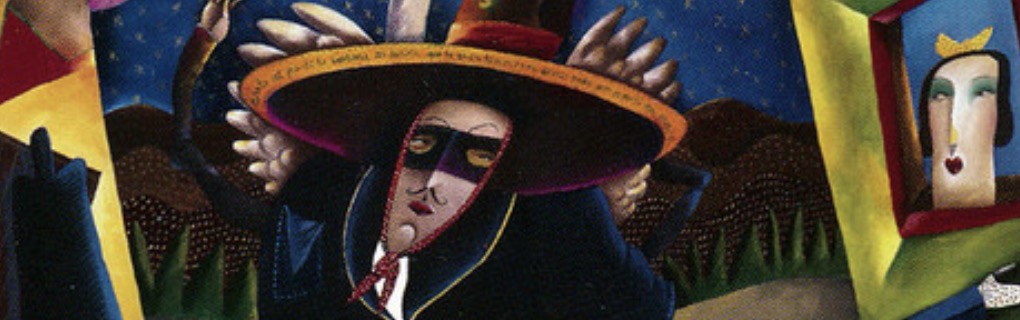
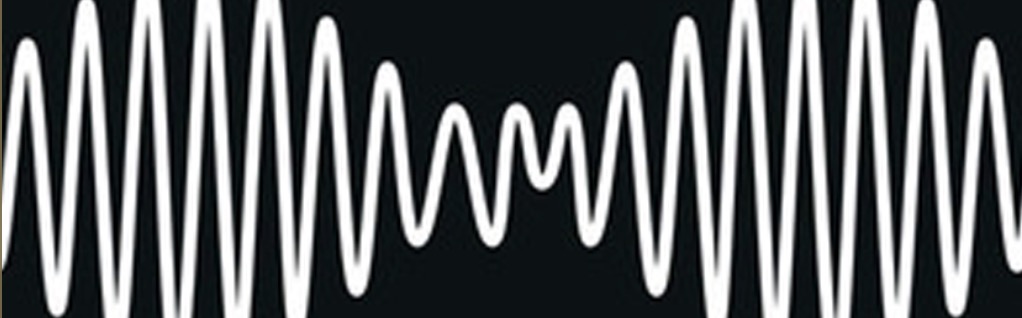
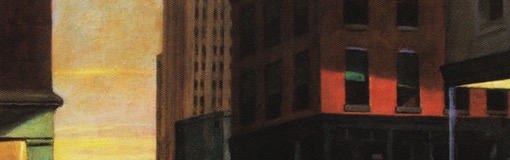
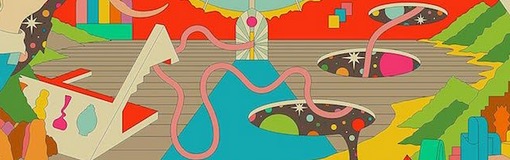
While I’m in new year introductory mode, I’ll offer another couple of tidbits that you may or may not have figured out on your own over time. First: the horizontal graphic you see at the top of any playlist post is excerpted each month from the cover of one of the albums featured (via one song) on each mix. Next: the playlist’s title likewise is a phrase from a lyric in one of the songs in the mix. Usually these two things do not derive from the same song but I think it’s happened once or twice (for those keeping score at home).

As always, the widget for listening is below the playlist. The extra curious can scroll further and find extra notes about some of what you’ll be hearing.

Lastly, regarding the Mixcloud situation: I am leaving everything available there, at least for the next month or so. Feel free to pipe up if you have any helpful input on the matter; for all I know nobody is going back to listen to the older lists in the first place. I do tend to be more of an archivist than is seemingly necessary in an online realm oriented towards what’s next rather than what was here last month (or last year, or last decade). And yet I remain hesitant to have only 10 mixes live at any one time. Still, to keep all the playlists online is going to be pricey moving forward, and Fingertips is–go figure–hardly a money machine. If I take them down it’ll render this page largely superfluous, but maybe that’s not a big deal.

On to the music:

1. “The Lunatics (Have Taken Over the Asylum)” – The Fun Boy Three (single, 1981)
2. “Collider Particles” – Madison Cunningham (Revealer, 2022)
3. “Say Something” – James (Laid, 1993)
4. “Zebra” – Beach House (Teen Dream, 2010)
5. “Somebody Who Loves You” – Joan Armatrading (Joan Armatrading, 1976)
6. “The Death of Magic Thinking” – Elvis Costello & The Imposters (The Boy Named If, 2022)
7. “Wish I Was” – Kim Deal (b-side, 2013)
8. “Perfume” – Sparks (Hello Young Lovers, 2006)
9. “(There’s) Always Something There to Remind Me” – Lou Johnson (single, 1964)
10. “West Gwillimbury” – Ron Sexsmith (The Last Rider, 2017)
11. “Giving It All to You” – Liz Phair (Somebody’s Miracle, 2006)
12. “She’s In Love With You” – Suzi Quatro (Suzi…And Other Four-Letter Words, 1979)
13. “The Ways of the Wind” – P.M. Dawn (The Bliss Album…?, 1993)
14. “Satellites” – Rickie Lee Jones (Flying Cowboys, 1989)
15. “Keep On Dreamin'” – The Arcs (single, 2022; album coming in 2023)
16. “Sophie” – Jeff Beck (Wired, 1976)
17. “Fat Man & Dancing Girl” – Suzanne Vega (99.9 F°, 1992)
18. “Long and Lonesome Road” – Shocking Blue (At Home, 1969)
19. “Reynardine” – Isobel Campbell (Milkwhite Sheets, 2006)
20. “Hope” – Bauhaus (Burning From the Inside, 1983)

The fine print:

* Two prominent but unrelated factors led to this month’s opening track. There was on the one hand the sad news of the death of the British singer/songwriter Terry Hall, best known here for his prominent role in the bands The Specials and The Fun Boy Three. And there was on the other hand the clown show that opened for business earlier this month in the U.S. House of Representatives. I’m not sure what they were specifically addressing in 1981–it sounds like they had an understandable beef with Ronald Reagan, among other things–but honestly, the lyrics to this debut single strike me as more on point than ever. (Note that the band over time lost the “The” in front of their name, but initial releases were in fact credited to “The Fun Boy Three.”)

* Speaking of newcomers to the EPS univertse: obviously one way to go is to select artists who are relatively new to the music scene. One of my favorites of this group is the singer/songwriter Madison Cunningham, whose songs can be knotty and catchy at the same time. As a bonus, she plays a mean, jazz-inflected guitar. The song “Hospital” was my introduction to her, and it’s a great one if you don’t know it, but it turns out the album, Revealer, is packed with goodies. Check it out if you get a chance.

* All the songs as he’s already written, all the musical paths he’s wandered down, and he still comes up with something like this? I’m talking Elvis Costello and this selection from his most recent LP, 2022’s A Boy Named If, which is as fresh and interesting as his best songs always are. And hey if you’re one of those people who has vaguely good feelings about EC but has maybe lost touch with his 21st-century output, have no fear: my “Elvis Costello: the 21st century” playlist is the thing for you. Twenty-one songs from his 21st-century oeuvre that range widely away from his “angry young man” phase and why shouldn’t they? He is no longer young and no longer angry, but he’s still as good a songwriter as rock’n’roll has ever produced.

* I am not a Pixies superfan and I don’t know a whole lot about Kim Deal and nothing about what prompted a series of five seven-inch singles she released, without an album, between 2012 and 2014. But I do know that the instrumental “Wish I Was” is weirdly magnetic to my ears, and I suspect that anyone fond of subtle droning guitar lines will feel similarly. The song establishes a deliciously laid-back groove and doesn’t deviate; the deep charm is in Deal’s ongoing choices in both the lead and rhythm parts (I assume she plays both). There are hesitations, minor atonalities, fuzzy patches, fitful melody lines, and an imprecise island vibe. Marvelous from beginning to end.

* “(There’s) Always Something There to Remind Me” is about as Burt Bacharach-y a song as there is (check out those modulation!; and that eccentric opening parentheses!), and later versions are better known, the Naked Eyes cover in 1983 most of all, it was first a modest hit for the singer Lou Johnson back in 1964. It became a big hit in the UK when covered by Sandie Shaw later that same year. Dionne Warwick is also associated with this song; she recorded a demo version in 1963 but didn’t put out a full recording of it until her 1967 album The Windows of the World. Everyone does a pretty good job with this song but I’m especially enjoying Johnson’s take, with its unburdened, almost offhanded arrangement and the singer’s nonchalant delivery.

* I am not aiming to turn these playlists into requiems–my goal is to be as outwardly appreciative as possible while some of these older musicians are still with us–but it seems only natural to mark notable passings from time to time. There was Christine McVie last month and now the news about the so-called “guitarist’s guitarist,” Jeff Beck. I’m not a big fusion fan but only a grump is going to resist the various memorable guitar riffs baked into the eight songs on his 1976 album Wired. “Sophie” is a bit on the long side but it earns the ear space for its engaging, split-personality unfoldings, and the undeniable appeal of Beck’s soaring lead lines, here playing off some extra show-off-y stuff from Jan Hammer.

* If known at all, the Dutch band Shocking Blue gets pigeonholed into the “one-hit wonder” category based on their indelible 1969 song “Venus,” as sneaky-great sounding today as ever. But there was a good deal more to the band than that, thanks in large part to front woman Mariska Veres’ effortless vocal charisma. With a bluesy-folksy psychedelic palette that places them squarely in their late-’60s/early-’70s time frame, Shocking Blue carved out something of their own sound, at least for a while–the later few of their nine studio albums, released between 1967 and 1974, veered often towards either a more generic sound, as if the band were simply running out of ideas, or songs too deliberately evocative of “Venus” (see “Eve and the Apple,” from 1972’s Attila)…as if the band were simply running out of ideas. Through it all, however, Shocking Blue maintained an appealing, home-baked charm that mixed menace and innocence in an especially ’70s sort of way.

* How can you not love “West Gwillimbury”? As noted at Ron Sexsmith’s last appearance here (EPS 9.08), his 2017 album The Last Rider is a keeper, and this song is too delightful for words, featuring the sort of laid-back but insistent melodicism that characterizes his finest efforts. Ongoingly prolific, Sexsmith has not only released two more albums since then, but has another one, entitled The Vivian Line, his eighteenth, coming out next month.

I don’t mind some slight disorder

Eclectic Playlist Series 9.11 – Dec. 2022

I’m going out on a limb here and posting a December playlist that is not a holiday playlist. I challenge you, in fact, to find anything here that says “holiday season” in any straightforward way. I’m not aiming to be a Grinch per se–I’m actually in a pretty good place of late all things considered–but the so-called “holiday spirit” isn’t doing it for me this year. The world is a lot; it’s all one can do to find a little clearing in it to stop and feel grateful for something or another. To crank all the way to deck the halls and ho ho ho is not in the cards for me this time around.

As for the rest of what’s in store, I sense an unconscious blending of the happy and the wary, the rousing and the wistful, a bit messy around the edges: life, in other words, via a 20-song playlist. Anticipate the possibility of a slightly jarring segue or two, which I will justify in two ways–first because sometimes songs that work well together as neighbors don’t abut each other comfortably, second because that’s life too.

As usual, the widget for listening is below the playlist. Faitihful listeners should note that Mixcloud, where the playlists live, has made a new corporate adjustment and as of December requires a paid membership, as a curator/creator, in order to keep more than 10 shows actively online at any given time. (It’s still free to listen to.) I decided to spring for the membership at least for the next few months, if only because I felt funny about abandoning eight-plus years of mixes quite so abruptly. I’m not sure it will be worth it in the long haul, given how, um, let’s say “specialized” the audience is. Still, I don’t love the idea of taking all the old playlists offline. We’ll see how it goes. Anyhow, here’s the latest, with some explanatory notes, as usual, below the widget:

1. “Queen Jane Approximately” – Emma Swift (Blonde on the Tracks, 2020)
2. “What You Said” – The Decks (Breath and Bone, 2009)
3. “The Walls Came Down” – The Call (Modern Romans, 1983)
4. “Baby, Don’t Cry” – Ray Charles (Sweet and Sour Tears, 1964)
5. “Time is a Healer” – Jesse Baylin (Jersey Girl, 2022)
6. “I’m Over You” – The Silos (The Silos, 1990)
7. “Now It’s On” – Granddaddy (Sumday, 2003)
8. “Memories of Madrid” – Herb Alpert & The Tijuana Brass (What Now My Love, 1966)
9. “Broken Circle” – Sam Phillips (Solid State: Songs From the Long Play, 2011)
10.”I Can’t Make It Alone” – Maria McKee (You Gotta Sin to Get Saved, 1993)
11. “Out Of My Head” – First Aid Kit (Palomino, 2022)
12. “When My Baby’s Beside Me” – Big Star (#1 Record, 1972)
13. “Un Poco Loco” – Bud Powell (The Amazing Bud Powell, 1952)
14. “Pull Up The Roots” – Talking Heads (Speaking in Tongues, 1965)
15. “Snap Out Of It” – Arctic Monkeys (AM, 2013)
16. “Skin, Bone & Silicone” – Susan Enan (Plainsong, 2009)
17. “Rain” – Bruce Ruffin (Rain, 1971)
18. “What Friends?” – Bettie Serveert (Dust Bunnies, 1997)
19. “The Challenge” – Christine McVie (Christine McVie, 1984)
20. “Pollen Seeking Bees” – Saadi (Bad City EP, 2009)

The fine print:

* Emma Swift’s album of Bob Dylan covers, from 2020, seemed like just the thing my ears have wanted to listen to these last few weeks. I guess it ties in my mind to the release of Dylan’s odd but captivating book, The Philosophy of Modern Song; something about going through a book where Dylan talks about other people’s songs steered me towards an album where someone else was singing his songs. Or some such thing. Swift has a lovely voice full of effortless shadings, and the arrangements are unfussy, with Swift’s partner Robyn Hitchcock doing all sorts of nice, restrained guitar work. Check it out if you’re curious.

* The sad news of the death of Christine McVie prompted all sorts of well-deserved online eulogies, most focusing, with good reason, on the pivotal if often understated role she played in Fleetwood Mac. I decided to pay tribute via her lesser-known solo work, opting for a characteristically upbeat/melancholy number called “The Challenge,” from her self-titled 1984 album. The challenge she refers to? Love, what else.

* Susan Enan is a British singer/songwriter with one album to her name, which was released back in 2009. I spent a little time digging and could find nothing that suggests she is still active as a musician. I heard this song two or three times a number of years back on Radio Paradise and it stuck with me. If Enan is no longer singer/songwriter-ing I hope she has found a gratifying path; it always pains me to imagine talented musicians having simply to give up based on how hard it can be to make a living this way.

* Originally presented, in 1966, as a melancholy but forceful ballad in a Phil Spector-ish soundscape by the histrionic American singer P.J. Proby, “I Can’t Make It Alone” is yet another indelible Gerry Goffin/Carole King composition. Dusty Springfield recorded what may be the most familiar version of this on her landmark Dusty in Memphis album in 1969. (Lou Rawls did a convincing cover that same year.) No offense to Dusty or Lou but to my ears, Maria McKee owns this song, via a 1993 recording that unearthed the song’s backbeat and didn’t let up.

* The music of Herb Alpert & The Tijuana Brass could not be made in this day and age, for any number of reasons. And while I am not at all insensitive to issues of appropriation, I have to give a pass to music this innocent and joyful and sonically respectful. If Alpert knew how to package and market this to middle-brow Americans in the mid- to late-’60s, more power to him. It was super appealing to me as a kid and I still have a big soft spot for those whirlwind banner TJB years of 1965 to 1967, with Alpert releasing an album every six or so months; four of the six records that came out during that three-year stretch went to #1 on the US chart, including What Now My Love.

* Another, entirely different musical soft spot for me is anything Sam Phillips puts out. Phillips is not only deeply thoughtful and creative as a songwriter, she has been creative with the business end of things as well. Back in 2009, she launched a fee-based subscription service called The Long Play, which offered members regular downloads of new songs, along with blog posts, interviews with her musical collaborators, and an array of other original content. All in all, she sent out 42 songs this way, distributed over five EPs and one LP, before shutting the service down in 2011. After the fact, she curated an album featuring 13 of those 42 songs, entitled Solid State: Songs From The Long Play. I never subscribed to the service but I bought the compilation album, from which “Broken Circle” is one of many highlights.

* The Arctic Monkeys have evolved into a somewhat different-sounding (but still great) band since the release of their widely-praised 2013 album AM. While the ubiquitous “Do I Wanna Know?” received the bulk of the attention (it’s got 1.5 billion streams on Spotify), the album is engaging throughout, and even included a few hints at where they would be heading, sonically, especially on the closing track “I Wanna Be Yours.” I’m still absorbing their new album, Car, but I think I like it a lot.

* One last soft spot in a mix overloaded with them, apparently: I love the vocal tone and texture of Carol van Dyk, front woman for the long-running Dutch band Bettie Serveert. There’s something at once friendly and imperious about her voice; match it with the band’s flair for crunchy guitar lines and punchy melodies and what’s not to love? “What Friends?” is a cleverly punctuated song from the band’s third album, 1997’s Dust Bunnies (the full lyric reads “You still don’t know what friends are for”). There have been eight albums released since then, most recently 2016’s Damaged Good, all worthy of a listen. The band has been featured three times to date on Fingertips, dating all the way back to 2003; this 2010 review gives you some more background on what they’re about.

You can’t escape the way it all shakes out

Eclectic Playlist Series 9.10 – October 2022

My passing reference, last month, to Billy Bragg’s “dedicated swallower of fascism” lyric put the song it comes from in my head firmly enough that I had to give it an outlet this month. The Kinks will have to wait, but not, probably, for long.

As for the rest of what’s in store, I sense an unconscious blending of the happy and the wary, the rousing and the wistful: life, in other words, filtered through a 20-song playlist.

There are eight decades on tap this time, ranging from a jaunty 1956 cover of the jazz standard “On Green Dolphin Street” to a couple of heartfelt singles from 2022. In between there’s a little of a lot of things, from Motown and classic rock to new wave, indie rock, folk, funk, and other things that don’t cleave neatly to a genre label. Is there a usefully identifiable genre for an overlooked McCartney song from 2001? For Icelandic singer/songwriter Emiliana Torrini’s 2022 work with an ensemble dedicated to “the unorthodox use of classical instruments”? For former supermodel Rosie Vela’s one-time collaboration with Donald Fagen and Walter Becker? If one might file both the Casket Girls and Jolie Holland under “indie rock,” how helpful a label can that actually be?

And hey I’m not trying to open up a relatively pointless can of worms–I’m certainly not going to argue away the concept of genres, which no doubt have their place. In our content-saturated world I end up feeling the need to entice, and talking up the variety via well-worn labels seems, perhaps, a serviceable selling point. But in the interest of full transparency, these playlists, while offering variety, do not range every which way. I don’t connect to music that’s harsh or strident, so I pretty much act like genres that lean in that direction don’t exist. (Kind of a “sorry not sorry” circumstance.) Because melody, chord progressions, and traditional songcraft are my things, I have trouble making qualitative judgments in the hip-hop arena, so you won’t hear much here, though there have been occasional exceptions. For similar reasons, I don’t have a useful feel for EDM. And hyperpop?: I fear I am way behind the curve in understanding what’s going on there, but will note that any music that strikes my ears as “over-processed” defeats my ability to enjoy it. I’m not averse to technology and/or studio trickery per se, but at the end of the day I prefer music that presents as being generated by human voices and, ideally, physical instruments. It’s my born-in-the-20th-century shortcoming but there you go.

Back to the matter at hand: the musical vibe and value of these playlists can’t be fully summarized or represented by the parade of generic labels I might necessarily use to give a preview, via written words, of what your ears are going to encounter. I know there’s a small but dedicated group of listeners who find these mixes enjoyable, which continues to motivate me to put them together.

Enough jabbering. As usual, the widget for listening is below the playlist. After that, for the fully committed, you’ll find some random information about a few of the key songs this month.

1. “Pharmacist” – Alvvays (Blue Rev, 2022)
2. “Accident Waiting to Happen” – Billy Bragg (Don’t Try This At Home, 1991)
3. “Back In My Arms Again” – The Supremes (single, 1965)
4. “Getting Ready to Get Down” – Josh Ritter (Sermon on the Rocks, 2015)
5. “Laugh and Walk Away” – The Shirts (Street Light Shine, 1979)
6. “The Belle of St. Mark” – Sheila E. (The Glamorous Life, 1984)
7. “I Was Neon” – Julia Jacklin (Pre Pleasure, 2022)
8. “On Green Dolphin Street” – Ahmad Jamal Trio (Count ‘Em 88, 1956)
9. “Lonely Road” – Paul McCartney (Driving Rain, 2001)
10.”Magic Smile” – Rosie Vela (Zasu, 1986)
11. “Old Friend” – Caveman (Coco Beware, 2011)
12. “My Man On Love” – Judee Sill (Judee Sill, 1971)
13. “Only Talking Sense” – The Finn Brothers (Finn, 1995)
14. “Let Him Run Wild” – The Beach Boys (Summer Days (And Summer Nights!!), 1965)
15. “Palmyra” – Jolie Holland (The Living and the Dead, 2008)
16. “So In Love” – Orchestral Manoeuvres in the Dark (Crush, 1985)
17. “Western World” – Casket Girls (What Keeps You Up At Night EP, 2015)
18. “People Say” – The Meters (Rejuvenation, 1974)
19. “Right Here” – Emiliana Torrini & The Colorist Orchestra (single, 2022)
20. “Save It For Someone Who Cares” – The Leisure Society (The Sleeper, 2009)

Odds and ends:

* All these years I didn’t realize that Neil and Tim Finn’s one and only album as a duo is called, simply, Finn as opposed to The Finn Brothers. For what it’s worth, iTunes never realized it either. As a longtime Neil Finn fan I always wanted to love this album more than I did at the time. But returning to it after a few decades I find it quite accomplished and charming in a low-key kind of way. And I realize that I never gave the years-later follow-up, 2004’s Everyone is Here much of a listen beyond the agreeable single, “Won’t Give In.” Going to do that right now. (By the way, you guys are all pretty clear on how great Neil Finn is, right? I’ll leave it to you to look up the history if you’re not familiar. He is an underrated rock’n’roll great, of the substantive/sensitive songwriter variety.)

* “I Was Neon” is the earwormy (in a good way) second single from Julia Jacklin’s impressive third album, Pre Pleasure. Jacklin has broken through more thoroughly so far in her native Australia but her time here in the U.S. may yet be coming.

* Paul McCartney released the album Driving Rain in 2001 to an unusual amount of commercial indifference (it was for instance his lowest-selling album to date in the UK)–a particular shame given the positive reviews and the general quality of the music. In retrospect the album represents a break in his sizable discography; recorded and released at age 59, it can be viewed as the last album he made before his age and experience themselves became subtle and often not-so-subtle themes. By the time of his next studio release, Chaos and Creation in the Backyard, in 2004, he was presenting himself more openly as an aging adult. A subtle but definitive shift, and I should note a healthy one. We all get older; rock’n’rollers can too easily get stuck in youthful posturing that just gets foolish after a while. That all said, “Lonely Road” is a terrific, underplayed song. (Those interested in such things might want to give a listen to my “Overlooked McCartney” playlist, where you’ll find this and 20 other terrific Macca tunes that are less well-known than they deserve to be.)

* Speaking of aging rockers, every generation of rock’n’roll musicians to date has had to deal with how to square this particular career choice with the idea of growing older, but indie rock musicians are the first generation to be growing older in a post-rock’n’roll environment. This gives the question of staying power a vexing new wrinkle. (Are rock’n’rollers merely “experts in a dying field,” to quote the Beths?) I am in any case delighted that the Canadian band Alvvays is back for another go. I’ve long since forgiven them for the gimmicky-looking band name (you’re just supposed to pronounce it “Always,” but the spelling makes the band easier to find online), and am eager to spend more time with their fuzzed-up new album, Blue Rev, which was named for a sweet alcoholic drink that was popular in Canada around the turn of the century. The band have been through some bumps in the road since their sophomore effort, Antisocialites (2017), including stolen demos, flood-damaged equipment, two new band members to break in, and oh by the way the pandemic. They seem to have landed in one piece.

* The endearing Icelandic singer/songwriter Emiliana Torrini hasn’t been too obviously active over the last decade or so; her most recent solo album was 2013’s Tookah. But in 2016 she made a collaborative live album with the Belgium collective known as the Colorist Orchestra, which specializes in rearranging songs of specific singer/songwriters, and making an album featuring the new arrangements. More recently Torrini and the ensemble reconnected for a studio recording; the album, Racing the Storm, featuring all original material, will be released next year. “Right Here” is the first song to emerge from this intriguing project. Very long-time Fingertips followers may recall Torrini from her memorable single, “Me and Armini,” featured here back in 2008.

* I always wanted the Brooklyn-based band The Shirts to be better than they actually were. Staples on the same early new wave scene in NYC that produced Blondie, Television, and the rest, the Shirts weren’t punk in the slightest but that was okay–the music on stage at CBGBs in those days was more eclectic than you might think. The problem with the Shirts was simply a lack of consistent material. Over the course of their three initial albums, there were a small handful of excellent songs and a lot more that was forgettable. “Laugh and Walk Away” is from the second of those albums, Street Light Shine (1979), which was also the last album for which they received any helpful record company support. Lead singer Annie Golden ended up abandoning rock’n’roll for an acting career, where you might still find her–she had a notable role on Orange is the New Black and was also recently on Broadway in the acclaimed Into the Woods revival. Sans Golden, the Shirts reunited in the 21st century to release albums in 2006 and 2010. I’m not sure I’m that interested but I’ll always have a soft spot for a few of their ’70s tunes.

* Rosie Vela is an interesting footnote in rock history. After years as a successful fashion model, Vela went all in on music, building a home studio and landing a major record-label deal. The album she ended up making was produced by Gary Katz, well-known for his work with Steely Dan, and actually featured both Donald Fagen and Walter Becker for what might have been their first recorded work on the same project since they had broken up their band in 1981. Vela’s Dan-adjacent album was called Zasu–one assumes after the silent movie star ZaSu Pitts–and was well-received by critics, but went nowhere in terms of sales. While she later appeared intermittently as a singer on other people’s albums, and dated Jeff Lynne for a while, Vela has yet to make another record.

Trouble acting normal

Eclectic Playlist Series 9.08 (August 2022)

Maybe it’s the heat, maybe it’s the hiatus, or maybe it’s the ever-unfolding perturbations of life in the 2020s, but I’m going to let the music do the talking this month. For a few enlightening details on a few of this month’s songs, scroll down past the playlist and the widget.

1. “Every One of Us” – Goldrush (The Heart is the Place, 2007)
2. “Dog & Butterfly” – Heart (Dog & Butterfly, 1978)
3. “Harps” – The Sea and Cake (Runner, 2012)
4. “Falling Down the Stairs” – Even As We Speak (Feral Pop Frenzy, 1993)
5. “Weird Fishes” – Lianne La Havas (Lianne La Havas, 2020)
6. “Reptile” – The Church (Starfish, 1988)
7. “The Planets” – The Clear (Patchwork, 2017)
8. “Pavement Cracks” – Annie Lennox (Bare, 2003)
9. “Bones” – Soccer Mommy (Sometimes, Forever, 2022)
10. “1,000,000” – R.E.M. (Chronic Town EP, 1982)
11. “She Loves the Way They Love Her” – Colin Blustone (One Year, 1971)
12. “Small Pony” – Dott (Swoon, 2013)
13. “Don’t You Even Care” – Leslie Uggams (single, 1965)
14. “What About Now” – Robbie Robertson (Storyville, 1991)
15. “Mirage” – Jean-Luc Ponty (Enigmatic Ocean, 1977)
16. “Dandelion Wine” – Ron Sexsmith (Retriever, 2004)
17. “Round Here” – Counting Crows (August and Everything After, 1993)
18. “Ese Chico” – Christina Rosenvinge (single, 2022)
19. “Bigmouth Strikes Again” – The Smiths (The Queen is Dead, 1986)
20. “Come All Ye” – Fairport Convention (Liege & Leaf, 1969)

Odds and ends:

* Sometimes Wikipedia is enlightening, sometimes it’s weirdly dense, and other times it’s just plain sad–and here I’m thinking about the way the information can just stop, page abandoned (but still online) because a band has ended its life without fanfare or notice. A page can go from being updated by various fans and observers to being deserted seemingly in midstream, with no one even bothering to change the present-tense intro (“XYZ are a band from…”) to past tense (“XYZ were a band…”). The Oxford, UK-based band Goldrush seems to have suffered this fate, despite being a band with a certain amount of notice and success in indie rock’s early-21st-century halcyon years. I don’t claim for Goldrush an undue amount of praise but I did feature them twice in the ’00s, and in particular loved “Every One of Us,” which I still find deep and affecting.

* With its bedroom rock ambiance, hazy vocals, and midtempo stasis, Soccer Mommy’s song “Bones” could’ve veered into a faceless mush but instead elevates to fabulous via the anchor of a terrific, poignant chorus melody. And don’t miss the increasingly frantic guitar work that dominates the last third of the song. Soccer Mommy is the Nashville-based singer/songwriter Sophie Allison; “Bones” is the opening track on Sometimes, Forever, her excellent third album, which was released in June.

* For a minute there in the 1970s, Jean-Luc Ponty was the planet’s most famous electric violinist. After working with Frank Zappa, Elton John, and the Mahavishnu Orchestra, among other notables, he recorded a string of solo albums that collectively sold in the millions. His most recent project seems to have been 2015’s collaboration with Jon Anderson, the Yes front man, on an album called Better Late Than Never. Ponty will turn 80 next month. The track featured here comes from his mainstream heyday, 1977’s Enigmatic Ocean.

* I find it delightful that Lianne La Havas would even think of covering Radiohead’s “Weird Fishes,” independent of what the finished product sounds like. Watching talent seek talent is invigorating. And yet, not surprisingly, the end result is a marvel–an unexpected showcase for La Havas’s uncanny vocal prowess on the one hand, and for the emotional resonance, on the other, of a song that always intrigued but seemed, previously, a bit too abstract for its own good. It’s a surprising and satisfying winner from La Havas’s 2020 self-titled album.

* I programmed the old-school R.E.M. song “1,000,000” into this mix just because it seemed like a good idea, which is pretty much how I put these together in general. Only after I slotted it in did I find out that the band’s debut EP Chronic Town, where it comes from, which is 40 years old this year, was being released–last week–for the first time as a standalone CD, with a bunch of new liner notes from Mitch Easter, who produced it. I enjoy a good synchronicity whenever I encounter one.

* In our current pop cultural moment, Leslie Uggams is known, if at all, for roles in the Deadpool movies and in the television series Empire. But the 79-year-old actress/singer has been in show business and recording singles since she was a child in the 1950s. As a teenager, she was a regular on NBC’s popular Sing Along With Mitch series, a show that seems preposterous now but was a thing for a few strange early-’60s years. Then there was the probably inevitable effort to establish her as an R&B singer, which to these ears sounded pretty promising, if 1965’s “Don’t You Even Care,” on Atlantic Records, is any indication. But she soon found her niche in more pop- and/or musical-theater-oriented material, and landed in 1969 as the host of The Leslie Uggams Show on ABC, which was the first network variety show hosted by a Black woman. Since then she’s had a multi-faceted career including a star turn on the original Roots mini-series and a lot of varied stage work. MCUers can expect her back as Blind Al when Dead Pool 3 eventually emerges.

* I have long-standing admiration for the Spanish singer Christina Rosenvinge, who ditched a successful pop career as half of the duo Alex y Christina in the late ’80s for a more offbeat, soul-searching, and substantive solo career; she’s worked off and on as an actress as well. Openly critical of the misogyny she has encountered over the years in the music industry, she is likewise vocal in her support of the LGBTQ community, as this new single of hers demonstrates. I stumbled on it in Spotify but haven’t seen it talked about in any English-speaking media, so you can be the first on your block to check it out.

* And then there’s Ron Sexsmith, the Canadian troubadour with a extraordinarily consistent–and consistently overlooked–catalog of recorded music, with 14 quality studio albums now to his credit, dating back to his self-titled debut in 1995. What he does is neither ever in fashion nor quite out of fashion but boy does he do it well. Every album of his contains hidden gems, perhaps none gemmier and more hidden than “Dandelion Wine,” from his fine 2004 effort, Retriever. (The album received stellar reviews on both Pitchfork and AllMusic, with neither mentioning this song among the highlights.) His most recent release is 2020’s Hermitage, which I still haven’t caught up with, but I will note that his previous album, 2017’s The Last Rider, ranks up there with his best.

* There’s no standout segue this month but the best one may be “Round Here” into “Ese Chico”; I can definitely nominate a worst segue, which would be “1,000,000” into “She Loves the Way They Love Her”–it was one of those that was almost brilliant but in missing by a little it’s kind of a clunker. Apologies to the deep listeners among you.

Even though I might

Eclectic Playlist Series 9.07 – July 2022

I’m thrilled that Kate Bush is having a moment; I’ve been a fan for decades, and, 37 years later, I still place Hounds of Love at the top of my Favorite Albums of All Time list. Bush is an artist with an exceptional individual vision and the fortitude to remain her own person throughout her career–an unusual combination in this profit-fixated world of ours.

That said, I’ll admit there is likewise something discomfiting about this abrupt burst of Bushmania. While I am happy for the well-deserved exposure, in the U.S. in particular (“Running Up That Hill,” here in 2022, has become her first top five U.S. hit ever), the fact that it’s been generated so randomly, based on some music supervisor’s suggestion for a so-called “sync,” leaves me a bit unsettled. How randomly are the fruits of capitalism distributed to creative people! Kate Bush is just as brilliant and singular an artist now as she was before her song was featured in Stranger Things. The fact that the wide world is now paying attention to her is terrific on the one hand but highlights on the other the fact that our most deserving artists often lack the rewards they ideally merit. Our culture has brainwashed itself, through the ascendancy of “poptimism” in the 21st century, to treat our most popular artists as the most artistically deserving of their popularity but that’s a lie we tell ourselves to avoid having to operate in the slippery land of quality versus the concrete territory of quantity.

Even so, I’m trying not to be too much of a grump about it. Kate Bush will always be one of my favorite artists (she’s now been featured here 8 times, tied at the top with David Bowie and Radiohead) and I should only be happy that more of the world now knows about her. (Note that she has rarely allowed her music to be licensed in this way in the past; she only agreed this time because she was already a fan of the show.) My disgruntlements, such as they are, have to do with the capitalist-driven materialism that overwhelms the Western world, about which, alas, there seems little right now to be done.

In any case, here we are again. Even as Fingertips remains on a summer hiatus with respect to individual song reviews, the Eclectic Playlist Series carries on. Enjoy the mix, which this month features 14 artists not previously heard here. Oh, and that Kate Bush song? Watch the 1986 video and see how naturally it aligns with the Stranger Things vibe, so much so that it makes me wonder if the Duffers had her in mind all along.

Bonus commentary below the playlist and the widget:

1. “Nowhere Girl” – B-Movie (single, 1980/1982)
2. “Saddest Day” – Ephemera (Sun, 2000)
3. “Don’t Forget” – Sky Ferreira (single, 2022)
4. “I’ve Seen the Saucers” – Elton John (Caribou, 1974)
5. “’74-’75” – The Connells (Ring, 1993)
6. “Our Life is Not a Movie or Maybe” – Okkervil River (The Stage Names, 2007)
7. “Face of the Sun” – Shana Cleveland (Night of the Worm Moon, 2019)
8. “Children’s Songs: No. 6” – Chick Corea (Children’s Songs, 1984)
9. “Play Me” – Marcia Griffiths (Sweet & Nice, 1974)
10. “Down on the Corner” – Creedence Clearwater Revival (Willy and the Poor Boys, 1969)
11. “The Spur” – Joan Shelley (The Spur, 2022)
12. “I Lost the Monkey” – The Wedding Present (El Rey, 2008)
13. “Experiment IV” – Kate Bush (single, 1986)
14. “900 Hands” – Elskling (single, 2014)
15. “Don’t Change Your Love” – The Five Stairsteps (single, 1968)
16. “I Can’t” – Radiohead (Pablo Honey, 1993)
17. “Liquid Numbing Pain” – Lucy Francesca Dron (Leftovers, 2021)
18. “Only Skin” – The Spring Standards (Yellow/Gold, 2012)
19. “You Got It (Release It)” – Pearl Harbor & The Explosions (Pearl Harbor & The Explosions, 1979)
20. “Glory Box” – John Martyn (The Church With One Bell, 1998)


* Radiohead, like Kate Bush, is here for the eighth time this month, and this time I dip all the way back to their typically overlooked if not disparaged debut. I think it’s unfortunate that this album doesn’t get more respect–sure, the band will grow a lot from here onward (understatement) but it’s still an admirable slice of ’90s guitar rock. Song quality is a notch down from their follow-up but The Bends is about the highest bar possible. Trust me, there’s more to Pablo Honey than “Creep”; start with “I Can’t” and explore from there. Among other things it’s interesting to be reminded of quite how much they were influenced at the outset by U2.

* Texas-based Okkervil River was a semi-regular presence here on Fingertips during the indie rock glory days of the middle ’00s. Featured four times between 2004 and 2008, and once more in 2011, they rightly or wrongly faded away from my awareness through the rest of the 2010s, even as they remained and still remain an active–if shape-shifting–ensemble; front man Will Sheff is the only one left from Okkervil River’s ’00s incarnations. “Our Life is Not a Movie or Maybe” comes from the record that represents their commercial, and possibly their critical, high water mark, 2007’s The Stage Names. The band’s most recent album is In the Rainbow Rain, released in 2018.

* Is there a reason, I wonder, that Neil Diamond songs have been so gracefully transmuted into reggae songs? There’s “Red Red Wine,” of course, which UB40 made so much their own that few knew that Neil Diamond was the original songwriter. John Holt’s cover of “Holly Holy” is considered a classic by aficionados. And then there’s Marcia Griffiths and her marvelous cover of “Play Me,” which manages to convert a slightly cheesy tune into something welcoming and delightful. Might it possibly have to do with Diamond’s song “Reggae Strut,” which appeared on his 1974 album Serenade (and on the B-side of the single “Longfellow Serenade,” a pleasingly bombastic song which I’d entirely forgotten about until right now)? To our contemporary ears, “Reggae Strut” may sound, um, a little colonial. But for better or worse it’s possible the attention worked both ways? After all, 1974 was still pretty early for Diamond, a huge mainstream success at that point, to be tuned into reggae enough to write a song about it. Maybe the reggae community decided to check him out, if they hadn’t previously? Lord knows that by now there are more reggae versions of “Sweet Caroline” than you probably care to know about.

* I am not much of a jazz guy or a classical guy, although I dabble in both as the mood strikes. The 1984 LP Children’s Songs, by the late Chick Corea, is an album that shows how blurry, sometimes, the line between these two ostensibly separate genres can be. Featuring 20 original piano compositions–most shorter than two minutes–the album was inspired by one of Corea’s musical heroes, Béla Bartók, combining an unadorned simplicity of feel with a gratifying melodic and harmonic complexity. I stumbled on it a few months ago and found myself struck in particular by the playful movement and tension embodied by “No. 6.” I hope it works as a friendly interstitial within this wide-ranging mix.

* I was speaking earlier of the random nature of what draws our cultural attention to some artists and not to others; with the advent of social media over the last 10 years or so the situation has become something of a travesty, as the endless jockeying for clicks and followers has debased our collective interactions greviously. This is obvious at a political level but applies in the arts as well. With everyone seemingly seeking popularity at all costs, what cultural room is left for the acquired tastes, for quality that whispers as opposed to quantity that overwhelms? I listen to Brisbane-based Lucy Francesca Dron and am saddened by how much less attention a musician of her quality and taste seems at this point to be receiving versus all the shiny, interchangeable popsters dominating the charts and feeds. I featured Dron’s song “What Is Next?” last year here, and later in the year was taken as well by a follow-up single, “Liquid Numbing Pain.” I make it a policy not to review two songs by the same artist within one calendar year but am happy to present that second single here within a 2022 playlist. The song can be found on her 2021 EP, Leftovers.

* Sky Ferreira has had a troubled go of it from the outset of her intermittent career. While pretty astonishing at the time, her 2013 debut album Night Time, My Time if anything sounds even better in retrospect for its adroit blending of processed pop with grungier edges not usually heard on the charts at that point. Her very long-awaited second album is due–supposedly–later this year. “Don’t Forget” is the second single now available from the upcoming LP. Don’t believe Pitchfork’s sniffing dismissal; to my ears, the track rewards far more listens than this particular reviewer seems to have given it.

* When I first heard John Martyn’s version of “Glory Box” I thought hm, how clever of the Bristol-based trio to have found a song from that veteran blues-folk pioneer and given it the Portishead treatment. I was properly abashed to find out at some point that it was Martyn who grabbed the tune from Dummy. Without actually changing it all that much, Martyn excavates the blues swing hiding in plain sight in the original. Some covers succeed by thoroughly re-interpreting the first version, some work by hewing close to the original in a act of homage; a rare few manage somehow to do both at the same time.

* Formed in 1978, Pearl Harbor & The Explosions were one of the first new wave bands in the U.S., and scored a minor indie hit with the song “Drivin'” in 1979. Warner Brothers scooped them up for a major label deal, but, despite the listener-friendly hooks of “You Got It (Release It),” the album sunk and nothing much stuck after that. (Note that lead singer Pearl E. Gates, born Patricia Gilbert, named the band as she did because her parents were married on Dec. 7, 1941.) Relocating to the U.K. after the band broke up, she there adopted the British spelling (Harbour) because that’s how her name kept appearing in the press. In 1982, she married Clash bassist Paul Simonon, who played without credit (along with Mick Jones and Topper Headon and other notable British musicians) on Pearl’s debut solo album, the rockabilly-infused Don’t Follow Me, I’m Lost Too. She and Simonon divorced in 1989, at which point she moved back to California, where she’s been ever since. Pearl is still active online (see IG:@pearlharbourmusic) but doesn’t seem to have released any music since 1995. (Thanks to The Forty-Five for some of the background information here.)

Maybe I’m just a fool

Eclectic Playlist Series 9.06 – June 2022

I recently read and was disheartened by a Pitchfork article from last month about how AI is on the verge of turning the music industry and music production upside down. As usual with such articles, there was much to read about the various gee-whizzy things technologists have done and are yet dreaming of doing by applying AI tools to artistic endeavors. Also as usual there was no discussion of the perpetually overlooked fact that art is ever and always about one human consciousness communicating with another. Whatever a computer can produce, it’s still and forever doing so minus the depth of a human consciousness. Sure, a machine may one day (soon?) become self-aware at some level, but no matter what it will never be an organic being that is born, that is aware that it will die, that exists with all the flesh-and-blood peril and pleasure and connections we humans live our lives with and among. Accordingly, everyone relatedly misses the fact that regardless of what a computer produces, it is not the same as the product of a human consciousness, even if it looks the same or sounds the same.

As a convenient example, take the exceptional guitar work in Luka Bloom’s “Delirious,” down there in the second half of this month’s mix. I’m sure someone could program a computer to create a similar if not the exact same sound, and someone is also probably working feverishly as we speak on creating software that can generate on its own the music the guitar is playing. And in so doing would take all the visceral thrill out of the music, which as far as I’m concerned depends upon the knowledge that a human being conceived of and performed what I’m hearing. I wrote about this in more detail here if you’re interested. I may be intellectually curious–mildly–about what a machine may produce, but deep in my heart and soul I don’t give a shit about what a machine “thinks” or “feels” and accordingly have no interest in music that might be entirely composed by a computer no matter what it sounds like. If it turns out at some point there are no humans left who are interested in playing their own music–something the article appears to imply–then I guess I’ll stick with what we humans have already created. There’s a fair amount of it.

Meanwhile, hello. Welcome back to the latest incarnation of the Eclectic Playlist Series, which turns out to be especially eclectic this month, with everything from indie rock, classic rock, and Motown to French movie-star pop, weird new wave, and Swedish jazz. There are a smattering of familiar names but fully 15 of the 20 songs this month come to us from artists who have not previously been featured on an EPS mix, going back some eight-plus years at this point.

Oh and everything you’ll hear here was written and performed by humans, for humans.

Commentary about some of the specific songs can be found below the playlist and the widget:

1. “Love and Mercy” – Brian Wilson (Brian Wilson, 1988)
2. “When the Lights Go Out” – Crybaby (Crybaby, 2012)
3. “Sure Enough” – Angela Desveaux (The Mighty Ship, 2008)
4. “Hold On” – Sharon Tandy (single, 1968)
5. “San Diego Zoo” – The 6ths (Wasps’ Nest, 1995)
6. “The Tunnel of Love” – Fun Boy Three (Waiting, 1983)
7. “Believe in Me” – Sally Shapiro (Sad Cities, 2022)
8. “Señor (Tales of Yankee Power)” – Bob Dylan (Street-Legal, 1978)
9. “La Madrague” – Brigitte Bardot (Brigitte, 1963)
10. “Girlfriend” – Phoenix (Wolfgang Amadeus Phoenix, 2009)
11. “Mama’s Pearl” – The Jackson 5 (Third Album, 1971)
12. “Only Lonely Lovers” – Pure Bathing Culture (Moon Tides, 2013)
13. “Delirious” – Luka Bloom (Riverside, 1990)
14. “Fox on the Run” – Sweet (Desolation Boulevard, 1974)
15. “I Know There’s Something Going On” – Frida (Something Going On, 1982)
16. “Talk” – beabadoobee (Beatopia, 2022)
17. “Visa från Utanmyra” – Jan Johansson (Jazz på svenska, 1964)
18. “Hippychick” – Soho (Goddess, 1991)
19. “Slip” – Motorcade (See You in the Nothing, 2022)
20. “Jerusalem” – Steve Earle (Jerusalem, 2002)

* A couple of the big names here are especially notable for having recently celebrated 80-something birthdays–namely Mr. Bob Dylan (81) and Mr. Brian Wilson (80). While Wilson has had a wild and woolly go of it over the past half century, with erratic output at best, Dylan remains by all accounts at the top of his game–however much his game, as it were, has altered with the passing decades. While many fans still idolize his run in the mid-’60s, with all that surreal electric output of his, I find his mid-’70s material to landing most solidly in my sweet spot: namely, the albums from Planet Waves through Street-Legal, with those two in between–Blood on the Tracks and Desire–at the top of my all-time favorite Dylan efforts. (And were it not for the unfortunate “Joey” I’d actually put Desire on top.) Street-Legal, meanwhile, puzzled everyone at the time, if it didn’t outright exasperate them. But me I always kind of liked its obscure charms, and there’s no doubting the classic status of a few of its offerings, most particularly “Changing of the Guards” and track 8 here.

* Sharon Tandy was a South African singer who came to the UK in the 1960s without ever hitting it very big at the time; she recorded a number of 45s in the process. “Hold On” seems to have been the strongest cut, and certainly has the feel of something that could have been a major hit. She did make it to British TV (https://www.youtube.com/watch?v=c4O-gKNiDXA) so she maybe had at least a bit of a moment. In a few years she returned to South Africa and recorded through the ’70s. In 2016, the year after she died, Rhino Records saw fit to release a compilation entitled Playlist: The Best of Sharon Tandy, and “Hold On” is the lead track. Oh and speaking as I was about guitar work, don’t miss the long and wild guitar solo about halfway through this one. Crazy stuff.

* Turns out it’s Sweden month here for no particular reason. If you make it most of the way through you’ll be treated to a song that is far more well known there than here–“Visa från Utanmyra,” from the jazz pianist Jan Johansson. The song is a jazz arrangement of a traditional Swedish folk song, as in fact are all the songs on the 1964 album Jazz på svenska (“Jazz in Swedish”), which remains, according to Wikipedia, the top-selling Swedish jazz album of all time. Johansson, sadly, died in a car crash in 1968 at age 37. On a happier note, we also hear this month from long-time Fingertips favorite Sally Shapiro, which is both the name of the band and the pseudonym used by its anonymous lead singer. After announcing their retirement in 2013, the band–which is really just “Shapiro” and the producer/writer/arranger Johan Agebjörn–re-emerged out of the blue last year with a new single, and then released an entire new album of material earlier this year entitled Sad Cities. Its sparkling neo-italo-disco/synth pop is as enticing as ever. And then there’s Frida. Remember Frida? Born Anni-Frid Synni Lyngstad, formally (since 1992) called Princess Anni-Frid Reuss, Dowager Countess of Plauen, she is by far best known as one of the four founding members of ABBA (one of the As there is for Anni-Frid). The album Something Going On was Frida’s first album in English, and her first post-ABBA solo release. After being obsessed with Phil Collins’ super-popular 1981 album Face Value, Frida enlisted Collins both to produce and do his magic at the drum kit, and the collaboration paid off. The single “I Know There’s Something Going On” was a decent-sized hit for her and still sounds pretty darned good to these ears.

* The 6ths were a short-lived side project masterminded by Stephin Merritt of the Magnetic Fields. While Merritt wrote and produced all the music, and played most of it too, he sung lead vocal on only one of the final product’s fifteen songs. “San Diego Zoo” was the opening track and it was sung by San Diego-born Barbara Manning, something of an indie/alternative rock legend herself. Manning has a long, interesting, and complicated career, dating back to the 1980s, but does not appear to have recorded anything new since the first decade of the current century. In her daily life she is a middle school science teacher.

* My old-school tendencies leave me skeptical of sampling but boy oh boy does the Smiths sample anchoring Soho’s “Hippychick” sound fresh and glorious to this day. Based in the UK and fronted by twin sisters Jacqui and Pauline Cuff, Soho released six more albums through the ’90s but never gained traction again commercially or culturally. Their 1991 album Goddess, where you’ll find “Hippychick,” seems to be the only one reasonably easy to find digitally these days.

* Angela Desveaux’s “Sure Enough” is the sole song this month that was previously featured on Fingertips. That was back in 2008. But two other artists in this mix have also been reviewed here in the past, for different tracks–the aforementioned Sally Shapiro (twice), and, as it turns out, another duo: the Portland, Ore.-based Pure Bathing Culture. PBC have had three features here to date, most recently in 2019, and are still active; I should go investigate what they’ve been up to, as I haven’t in a while. Angela Desveaux on the other hand seems to have slipped off the internet entirely; 2008’s The Mighty Ship was her last release. I hope this was a proactive decision and if so more power to her.

* I don’t know much about the Dallas band Motorcade but I sure like this song, from their recently released second album. The rest of it seems worth exploring; the band sounds especially adept at taking its post-punk influences into something that feels more like an evolution than an homage.

* “I don’t remember learning how to hate in Sunday School.” Someone should tell that to the GOP, as well as their puppet-filled Supreme Court, as they hide behind a warped view of “faith” that not only flouts Constitutional guarantees but contradicts every bit of spiritual wisdom espoused by the very guy they claim to believe in–the same guy who said absolutely nothing, zero, about abortion.

No matter who you are (Eclectic Playlist Series 9.05)

Along with this playlist comes a larger announcement: Fingertips will be taking a summer hiatus starting with the unofficial start of the our American summer this coming weekend. I’m not sure whether the MP3s are drying up or whether it’s just me in need of a break but I know that as I tried over the last couple of weeks to work on the regular update I just wasn’t feeling it. I’m taking that as a sign that I can use a few months away from the MP3 review side of Fingertips. The plan is to keep the playlists going in the interim but we’ll see how that goes. I’m assuming I’ll be back with reviews at the end of the summer but we’ll see how that goes too.

In the meantime, here’s another idiosyncratic compilation, iteration 9.05, spanning the decades and the genres as usual. Don’t forget this means that there are more than nine years of playlists already stored and ready to listen to–you can go straight to the widgets on Mixcloud, or access them via the commentary about each mix on the Fingertips web site. Or, for a different and longer-lasting experience, there’s the Eclectic Playlist Series Master Mix on Spotify. It doesn’t have every last song ever featured on an EPS mix because Spotify doesn’t have every song but there are about 1,500 songs in the mix at this point; shuffle it and you’ve got an instant and pretty damn interesting radio station.

As usual, I’ll have a few stray observations about some of the song’s on this month’s offerings below the playlist and the widget:

1. “A to Z” – Alice Russell (To Dust, 2013)
2. “Peaches en Regalia” – Frank Zappa (Hot Rats, 1968)
3. “Speed of Sound” – Coldplay (X&Y, 2005)
4. “Madness” – Carlene Carter (Musical Shapes, 1980)
5. “I’ll Try” – Sharon Van Etten (We’ve Been Going About This All Wrong, 2022)
6. “The Only One I Know” – The Charlatans (Some Friendly, 1990)
7. “Help Me Make Up My Mind” – Joyce Jones (single, 1969)
8. “Release, Release” – Yes (Tormato, 1978)
9. “Ablaze” – Liz Durrett (Husk, 2005)
10. “Cry” – Godley & Creme (The History Mix Vol. 1, 1984)
11. “She Loves Everybody” – Chester French (Love the Future, 2009)
12. “Sunday Morning” – Margo Guryan (Take a Picture, 1968)
13. “Every 1’s a Winner” – Hot Chocolate (Every 1’s a Winner, 1978)
14. “The Unheard” – Fabryka (Sparkles EP, 2015)
15. “Airstream” – Low-Beam (Every Other Moment EP, 2004)
16. “We’re Not Deep” – The Housemartins (London 0 Hull 4, 1986)
17. “Everybody Needs a Hammer” – Willie Nile (Places I Have Never Been, 1991)
18. “Asking for a Friend” – CHVRCHES (Screen Violence, 2021)
19. “Brother” – Color of Clouds (Satellite of Love, 2010)
20. “The Hurt” – Cat Stevens (Foreigner, 1975)

Random notes:

* Last month I featured the Canadian singer/songwriter Allison Russell near the top of the mix; this month I’m starting with a song from the British soul singer Alice Russell–two quite different but equally wonderful performers. Alice Russell has been recording since 2004, but only recently came to my attention. (So much music, so little time…) A powerhouse singer inspired by classic soul recordings while committed to contemporary ideas and sounds, Russell has somehow never gained the widespread recognition that Amy Winehouse did mining similar territory. “A to Z” is the lead track from To Dust, a 2013 release that remains her most recent album.

* Sharon Van Etten slays it yet again with her new album, We’ve Been Going About This All Wrong. You kind of have to sink into her vibe when listening to an album of hers–she tends towards similarly-paced songs, somewhere on the slower side of midtempo. But there’s always something intense and gorgeous going on with her music, and when she does allow a song to pick up the pace a bit, it seems effortlessly brilliant, as with “I’ll Try.” And while I’m fanboy-ing SVE: if you’ve never seen her covering “Stop Draggin’ My Heart Around” with the band Shearwater you are in for a treat if you go there right now. Mysterious feelings arise for me as this video unfolds. And don’t miss the face she makes at the very end. Melts my heart every time.

* I am neither much of a Yes fan nor a prog rock fan but the occasional song of theirs appeals to me for inscrutable reasons. These seem always to be songs that were recorded past their first few extra-proggy albums, which means that the Yes music I like is probably all the stuff that their “real” fans disparage. “Release Release” is something of a lost track from something of a lost album, 1978’s Tormato. It’s kind of a lovable mess, with energy and hooks to spare. Bonus points for that short section when Anderson isn’t singing in his screechiest register. Not sure what the crowd noise is doing there in the middle of the instrumental break, but when it turns off we get one of the song’s best if subtlest moments.

* “Airstream” was originally featured here back in 2004 and it still sounds elusively original to me; you can read my original review here. All these years later it’s hard to track the New London band Low-Beam, which had its regional heyday long before social media took hold–their original releases, three EPs and a single, happened between 2002 and 2007. According to one online account, the band began work on a full-length as early as 2004, but there were a variety of unspecified difficulties. The album did eventually come out; on Bandcamp the release date is listed as 2011, but the dates listed on Bandcamp are not necessarily the dates of an album’s original release but when an album was uploaded to the site. There are also two double-sided singles up on Bandcamp with release dates of 2010 and 2011. The only thing that seems clear is that the band is no longer around, although the Bandcamp page as noted is available and worth exploring.

* I am impressed by how much staying power the best songs by the artist formerly known as Cat Stevens still have, some 50 years or so after the fact. To my ears his biggest hits (“Wild World,” “Peace Train,” et al.), while worthy and ear-wormy, are a notch below a healthy handful of other songs that had their moments on the FM dial back in the day but are less widely remembered today–“Sitting,” “On the Road to Find Out,” and “Sun/C79,” among others, including this month’s closing number, “The Hurt.” “The Hurt” did get its share of radio play when it was released, but it was a track off an album, Foreigner (1973), that marked a commercial dropoff from his super-popular LPs from a few years earlier, Tea for the Tillerman(1970) and Teaser and the Firecat (1971). Foreigner was complicated by the fact that side one was taken up with one long track–not an uncommon move for a rock act in 1973 but maybe nothing Cat Stevens’ fans were hoping for. He had one more big album in him, 1974’s Buddha and the Chocolate Box, before his music began losing its strange but compelling spark, as his long-standing mixed feelings about rock’n’roll stardom culminated in his forsaking not only the career and lifestyle but his very name, converting to Islam late in 1977, and abandoning his musical career for two decades. In recent years Yusuf Islam has re-embraced his Cat Stevens side–he is identified now as Yusuf/Cat Stevens–and has released a few albums that bring his classic sound to mind. Check out 2017’s The Laughing Apple as an example if you are at all curious. To my ears the new stuff is missing the deep melodic magic of his prime ’70s work but his voice remains a wonderful instrument indeed.

* If you manage to listen through to the end you’ll be rewarded with one my best accidental segues to date, as “Brother” glides into “The Hurt.”

* Four other songs on this playlist, beyond “Airstream,” were originally reviewed as MP3s here on Fingertips: “Ablaze,” “She Loves Everybody,” “The Unheard,” and “Brother.”

The lessons of patience

Eclectic Playlist Series 9.04 – April 2022

If you are reading this you are here not because an algorithm directed you but because you found your way via your own human volition. Existing below the recognition level of the algorithms helps keep an enterprise such as this supremely unpopular–“unpopular” as in “infrequently visited” versus “actively disliked”; funny how the two meanings are often co-mingled. But it also, to my mind, ongoingly highlights the failings of a culture that has allowed itself to be hijacked by metrics; steering people relentlessly to things that are already high-profile enough to be steered to is a kind of feedback loop that feels stifling and sad to anyone with a functioning human heart. Or should feel that way, if people weren’t by now trained to be brisk and mindless online; stopping to contemplate and consider is sort of the opposite of the behavior the tech companies require to feed the beast of clicks and page views. If you are fully engaged by said feedback loop there’s little beyond it you are ever going to notice, and will never be encouraged to wonder why.

I recently posted an essay that discusses the fate of quality in a quantity-obsessed world, and it’s a subject that deserves ongoing attention. Where would we be as a culture, historically, if we only paid attention to the most popular and/or easy-to-locate things? Yes, the internet’s algorithmic tools are sophisticated to the extent that they don’t point everyone towards the exact same pieces of content; but the silos they create of differently interested audiences–the famous “people who like X also like Y” directive–are still based on quantity rather than quality.

So if you are here you have decided on your own to be here and I thank you for that. Your reward, such as it is, is another thing beyond the capacity of our algorithmic tools: a playlist drawing upon a wide variety of musical styles and eras. It is a playlist that inherently defies the sorts of sortings that the robots rely upon (genre, decade, mood, etc.) to do their relentless recommending. All I’m ever trying to do is to carry on a tradition founded in the freewheeling era of so-called “progressive” radio–radio found on the FM dial in the mid- to late-’70s. This was before anyone realized there was very much money to be generated from programming in the land of frequency modulation, which is why everything felt loose and unpredictable and ongoingly engaging. The robots keep offering you things that sound like things you’re already listening to. It’s kind of like being surrounded by yes men; it props up the ego but not the soul. Enjoy, if you dare, and we’ll do it again next time, if you find your way back.

More on this month’s offerings below the playlist and the widget:

1. “Ship of Fools” – World Party (Private Revolution, 1987)
2. “Persephone” – Allison Russell (Outside Child, 2021)
3. “Sometime in the Morning” – the Monkees (More of the Monkees, 1967)
4. “Wonder” – San Mei (Heaven EP, 2018)
5. “High Ground” – Orenda Fink (Ask the Night, 2009)
6. “Drowning in the Sea of Love” – Joe Simon (Drowning in the Sea of Love, 1972)
7. “Tuesday Morning” – The Pogues (Waiting for Herb, 1993)
8. “Love Will be Reborn” – Martha Wainwright (Love Will Be Reborn, 2021)
9. “Beck’s Bolero” – Jeff Beck (Truth, 1969)
10. “As Far As I Know” – Paul Westerberg (Folker, 2004)
11. “Straight to My Heart” – Sting (Nothing Like the Sun, 1987)
12. “One of These Things First” – Nick Drake (Bryter Layter, 1970)
13. “Still Thrives This Love” – k.d. lang (Ingenue, 1992)
14. “Peripheral Visionaries” – Young Galaxy (Shapeshifting, 2011)
15. “Tell Me” – Groove Theory (Groove Theory, 1995)
16. “The Only One” – Stiff Little Fingers (Go For It, 1981)
17. “Who By Fire” – Leonard Cohen (New Skin for the Old Ceremony, 1974)
18. “All the Time in the World” – Maybe Baby (What Matters, 2003)
19. “Other Lover” – Mikaela Davis (Discovery, 2018)
20. “It’s All Too Much” – The Beatles (Yellow Submarine, 1969)

Random notes:

* “Sometime in the Morning” was one of my favorite Monkees songs when I was 10 years old and it still is. I applaud my aesthetic acumen as a youngster; I didn’t know back then that Carole King and Gerry Goffin wrote the song, or even who they were, but I did know a lovely series of melodies when I heard them, not to mention a satisfying song structure. The song, puzzlingly, hasn’t been covered very often, and of course there are internet people claiming that one or another alternative version to this one is actually better, because they are internet people. No one beats Micky Dolenz here as far as I’m concerned.

* I happened this year to catch some of the pre-Grammy webcast–where they handed out the bulk of the awards, and where some of the performances veered away from the mainstream pop that dominates the evening telecast. A highlight for me was the Canadian singer/songwriter Allison Russell performing “Nightflyer,” from her album Outside Child. I’d heard the song many times before on WXPN but the energy she brought to it in live performance was transformative (not to mention instructive: I hadn’t realized she played the clarinet), and sent me quickly to Bandcamp to buy the album, which I recommend; consider “Persephone” a preview of the goodness to be found there.

* I know, I know: the Pogues weren’t really the Pogues anymore after Shane MacGowan got the boot. And yet: would the album Waiting For Herb, the first of two post-MacGowan efforts, have been better-received had it emerged from an entirely unknown band, with a different name? It seems likely. In any case, “Tuesday Morning” is pretty great, to my ears. For what it’s worth, it happened to be the best-selling single, internationally, the band ever released. And yes I am now holding popular acclaim out as a certain measure of success. Do I contradict myself? Very well then.

* Did you watch The Beatles: Get Back, the documentary that Peter Jackson directed and produced? What an experience. I’ve had one or two people tell me it was too long, and such people immediately went down ever so slightly in my estimation of them. To call any part of it “boring” is missing the bigger picture, it seems to me; even when it was ostensibly “boring” it was incredibly compelling to be there with it. The Beatles were lightning in a bottle; the movie gives us a glimpse of the bottle. Strip away all the cultural hullabaloo and focus on the music, which was and remains unprecedented in rock history for its unflagging quality and creativity. While they always sound like the Beatles, they managed to write and record a catalog of music in which no two songs sounded the same; at some intrinsic level of inventiveness and integrity they refused to revisit melodies and chord progressions. Paul McCartney has said, in retrospect, something to the effect of “What would be the point of that?”

* Karl Wallinger thought we were on a ship of fools back in 1987. Little did he know.

* While Jonatha Brooke’s career after the duo The Story gained traction and resulted in a number of reasonably high-profile album releases and other projects, her partner in The Story, Jennifer Kimball, receded into the background in the years following their partnership. I hope this was by design as opposed to being the results of the vagaries of the music industry. While Brooke’s singing voice may be the more immediately distinctive, I find Kimball’s tone equally compelling, and have always in particular loved this one track I stumbled on back in the early years of Fingertips from a band Kimball had formed in the early ’00s called Maybe Baby, with guitarist Ry Cavanaugh. He also happens to be her husband. I see from the internet that Kimball went on from there to study landscape design and start her own business. But she did release an album as recently as 2017, called Avocet, which you can listen to and purchase on Bandcamp. It’s really nice to hear her voice again. As for Maybe Baby, I don’t see it on Bandcamp, but it is available to listen to on Spotify, which tells me as I’m now looking that two other people have listened to it this month. Quantity never tells the whole story; why do we so often let it?

* It seems almost unfathomable that Nick Drake was so generally unrecognized in his day; the music sounds so incisive and remarkable now. It’s also pretty crazy that it took a Volkswagen commercial to bring him into the cultural mainstream in 2000, some 25 years after his death at age 26. You can read more about that in this 2016 article from Boston.com.