“Victoria” – Unproductive

Rough-edged and melodic and maybe slightly unhinged

“Victoria” – Unproductive

A rough-edged stomper with appealing personality, “Victoria” carries on with a bit of a screw loose. The song’s simple, head-banging backbeat thuds out an intro that belies the playful nature of the melody and lyrics to follow. It’s a tale of woe, but an off-kilter one, which lead vocalist Declan Hills splutters out sounding only intermittently unhinged (in a good way). Pay attention to the words, which alternate between the bleak and the cheeky. At one point he sings–

Oh Victoria take your hand in mine
And we won’t let those white collar criminals
Make off with those reduced mortgage primes

–which is one of the more unorthodox ways to say “We’ll be great together” that I can think of. But the aforementioned Victoria is neither an easy catch nor necessarily a healthy one for our narrator, who, later, sings: Don’t make me compromise/My morality for hydrated skin. It’s that kind of relationship.

The lyrics call for and reward attention due to the song’s unconfined melodicism, featuring leaping and descending intervals, and spurts of (at least) double-timed lines to accommodate the garrulous declarations of the song’s narrator. And despite its vaguely manic ambiance, the song’s structure is rock solid, with verses that lead logically into the distinct but complementary chorus, and a chorus that both frays at the edges and resolves with clarity. Oh and be sure to tune into the squalling guitar break, starting at 1:51, which epitomizes the song’s half-crazed gusto.

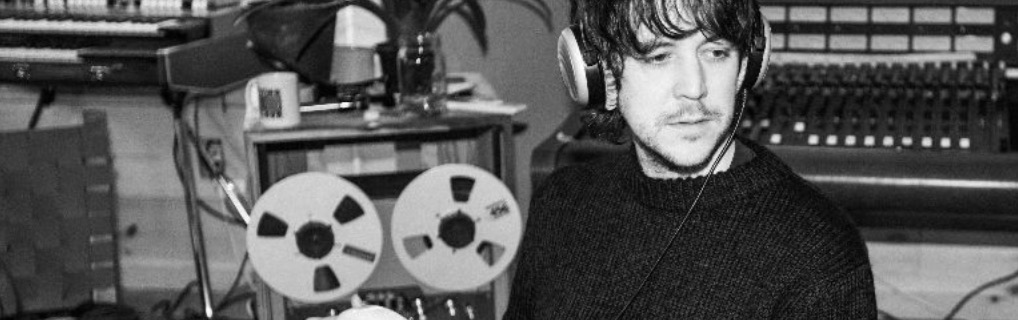
Unproductive is a quartet based in Saskatoon, comprised of Hills singing and playing guitar, Nathan Henry on percussion, Steven Adams on bass, keyboards, and backing vocals, and the surname-free Zoë on keyboards. “Victoria” is the lead track off the band’s debut EP, released this month, which is, according to Hills, either actually untitled or titled Untitled; they’ve been leaving it open to discussion. You can check it out, and buy it for any price you’d like, over on Bandcamp. Thanks to the band for the MP3.

“Anna Madonna” – Max Blansjaar

Perky yet melancholy

“Anna Madonna” – Max Blansjaar

Crisply mixed and brightly melodic, “Anna Madonna” offers just enough major- to minor-key transitions to read as bittersweet, despite its foot-tapping vibe. Blansjaar’s voice is particularly clear in the mix, which steadily acquires layers of sound–first just a muted guitar, then some snappy drum (machine) beats, later a glistening keyboard, all leading into a kazoo-like synthesizer solo halfway through this perky yet melancholy composition.

“Anna Madonna” turns out to be coincidentally related to the Waxahatchee song likewise featured this month, being another tune about the value of holding onto a long-term relationship. Mature thinking for a 21-year-old, but singer/songwriter/multi-instrumentalist Blansjaar is nothing if not precocious, having begun performing and recording at 15.

Born in Amsterdam and raised in Oxford in the UK, he released two self-recorded and self-performed EPs of lo-fi indie pop in the late 2010s. For his first full-length album, he worked with Katie Von Schleicher, a singer/songwriter/producer with her own recording studio in Brooklyn, along with her frequent producing partner Nate Mendelsohn. The producers have done a spiffy job maintaining Blansjaar’s quirky energy while adding some shrewd dynamics to his repertoire, such as the stripped-down moment we get at 1:42. (Von Schleicher by the way was featured on Fingertips back in 2013.)

“Anna Madonna” is a track from the forthcoming album False Comforts, due out in June.

You might not recognize me tomorrow

Eclectic Playlist Series 11.02 – February 2024

The extra day this month allows me to sneak February’s playlist in under the wire, if just barely. Running out of time here, I’ll keep the introduction to a minimum. Here’s what you’re in for this month:

1. “Sometimes, I Swear” – The Vaccines (Pick-Up Full of Pink Carnations, 2024)
2. “Love is Gone” – Carlene Carter (Carlene Carter, 1978)
3. “Alpha Shallows” – Laura Marling (I Speak Because I Can, 2010)
4. “Miami” – Randy Newman (Trouble in Paradise, 1983)
5. “I Don’t Know What to Do” – Richard Anthony (single, 1965)
6. “The Turning Ground” – Tara Clerkin Trio (On the Turning Ground, 2023)
7. “Holland, 1945” – Neutral Milk Hotel (In the Aeroplane, Over the Sea, 1998)
8. “Firewalker” – Liz Phair (Liz Phair, 2003)
9. “Anna (Go To Him)” – Arthur Alexander (single, 1962)
10. “Greatest Dancer” – Nadine Shah (Filthy Underneath, 2024)
11. “Strange Angels” – Laurie Anderson (Strange Angels, 1989)
12. “Rod’s Song” – Shelagh McDonald (Stargazer, 1971)
13. “I Don’t Want to Let You Down” – Sharon Van Etten (single, 2015)
14. “Walk a Straight Line” – Squeeze (Play, 1991)
15. “Someone Great” – LCD Soundsystem (Sound of Silver, 2007)
16. “Goodbye” – Dusty Springfield (originally unreleased, 1970; much later available as a bonus track on Dusty in Memphis)
17. “Charlotte Anne” – Julian Cope (My Nation Underground, 1988)
18. “Poem for Eva” – Bill Frisell (Good Dog, Happy Man, 1999)
19. “Our Time” – Dear Euphoria (single, 2019)
20. “Carpet Crawlers” – Genesis (The Lamb Lies Down on Broadway, 1974)

Random notes:

* Short anthemic rock’n’roll is still occasionally being delivered here in the 2020s, and few late-stage rock bands are as adept at it as the London-based Vaccines. Their new album, Pick-Up Full of Pink Carnations, released last month, is a candy box full of reverby nuggets of succinct catchiness (longest track time here is 3:49). Check the whole thing out, and buy it if you like it, at Bandcamp. I particularly like “Sunkissed” and “Another Nightmare” as well.

* I’ve said it before but it always bears repeating: no one in rock history has written songs like Randy Newman. Above and beyond a fluky hit single or two, his albums over the years are sprinkled with offbeat musical treasures that have been largely forgotten by now, including “Miami,” from the 1983 album Trouble in Paradise. “I Love L.A.” was that album’s big hit, and is surely fun, but “Miami” is the real pièce de résistance. The arrangement alone is stunning, a wonderful match for a song that masks its complexity via effortless melodicism. The structure eludes easy explication–there’s a verse, and a sort of secondary verse, and then also maybe a pre-chorus, leading to a chorus that cuts the rhythm abruptly in half and offers one of Newman’s great instrumental countermelodies–a musical gift that no one in the non-classical world would even think to do, never mind have the arrangement chops to pull off. He’s so good at it that he even uses this instrumental refrain as the basis for musical joke later in the song, when the motif delivers a false entry into the chorus at 3:00.

* A somewhat indescribable ensemble from Bristol, the Tara Clerkin Trio traffics in atmospheric jazzy folk, or maybe folky jazz, with elements of electronic music and, even, classical music thrown in for good measure. “The Turning Ground,” hypnotic and captivating, is from their five-song EP On The Turning Ground, released last year. I found this one via Said the Gramophone’s annual list of favorite songs, always an enlightening read.

* Liz Phair has I think (I hope) had the last laugh regarding her self-titled 2003 album. Lambasted by hipsters at the time for how it supposedly abandoned her lo-fi roots, the album 20 years later sounds like a pretty wonderful batch of well-produced songs. And, sheesh, doesn’t anything she sings sound great? That voice. The one thing that stands out in retrospect about the haters is that the idea of “selling out” was apparently still something you weren’t supposed to do back in 2003. Times have surely changed.

* The young Shelagh McDonald was either an early fan of the young Joni Mitchell or was tuned into a similar wavelength over there in Scotland; in any case, “Rod’s Song” is a wonderful, energetic, Joni-like creation (think “Chelsea Morning”). McDonald’s is an odd story: she released two albums in the early ’70s, when she was in her early 20s, and seemingly a rising star on the British folk-rock scene. In the middle of recording her third album, in 1971, she disappeared. As in left the business, no contact info, whereabouts unknown. Fast forward forty-some years, to 2005, when a reissue of her first two albums prompted some newspaper coverage, which she eventually saw. She decided to tell her story to a Scottish newspaper, revealing that her departure from the music scene was due to the after-effects of a bad LSD trip. It wasn’t until 2013 that she at long last released a new album, but it was sold only at her concerts, and isn’t available digitally. Another album was reported to be in the works around 2017, but has yet to see the light of day.

* I used to think I didn’t like LCD Soundsystem’s music, but I finally realized I mostly just haven’t connected to how unnecessarily long James Murphy’s songs tend to be, at least to my ears. I just don’t think one needs quite so much repetition if you’re not on MDMA in a club at three in the morning. So when I stumbled on a sub-four-minute version of the song “Someone Great,” I could enjoy it without getting to where I’m just waiting for it to end. An excellent song, when properly lengthed.

* As a FYI, the well-known Genesis song that closes out the mix here has been alternately titled “Carpet Crawlers” and “The Carpet Crawlers,” at various points of release, re-release, and re-recording. There was, among other things, a new version recorded in 1999 as “The Carpet Crawlers 1999.” And while it was (sort of) fun to hear Peter Gabriel reuniting with Genesis, and sharing lead vocals this time with Phil Collins, the cover, with its series of small but annoying changes, was entirely unnecessary, to my ears. Stick with the awesome original, which appeared without the “The” on the 1974 double LP.

“Mirrors” – Babel

MInimalist synth pop

“Mirrors” – Babel

Introduced over a series of delicately fingered piano chords, “Mirrors” begins as a minimalist, moody ballad before refashioning into a sprightly piece of (still) minimalist synth-pop. It’s a lucid, appealing song start to finish, with slowly accumulating parts and no sound wasted or out of place. What holds everything together, to my ears, is the recurring sidestep the melody takes, a motif first heard at 1:00 when vocalist Karin Mäkiranta sings the phrase “where nothing goes wrong.” This quiet but potent musical moment seems both to resolve and not resolve at the same time, and weaves through the piece like a shy friend.

While the piano continues underneath, the synthesizers move to the center of the song beginning at 1:23, when an electronic tone with the feel of a plucked string provides a syncopated pulse that picks up the pace. At 2:00 a synth wash begins to fill the back of the mix, while at 2:24 we get a descending synthesizer countermelody; both are elements that keep the vibe electronic but also light-footed. An extra payoff arrives at 2:55, when Mäkiranta begins cooing a wordless vocal line, which continues underneath the song’s coda-like final verses.

Babel is the duo of Mäkiranta and Mikko Pykäri, who are based in Helsinki. Each of them have been involved with other musical projects; this is their second release as a twosome. “Mirrors” is the title track to an EP that came out back in August. You can check it out, and buy it, over on Bandcamp.

“Monts et merveilles” – Le collage de France

Easy-going, wistful, French

“Monts et merveilles” – Le Collage de France

“Monts et merveilles” is an easy-going French-language head-bopper with an unhurried backbeat and a wistful undercurrent. While acoustic at its core, the song is enhanced by soft and knowing electric touches–a plucked guitar here, a chiming synthesizer chord there. The title is part of the French idiom promettre monts et merveilles, which literally means to promise mountains and marvels–in other words, to declare that you’re going to deliver something especially awesome to someone. If this is akin to the English expression about promising the moon, the phrase likely has a baked-in sense of disappointment about it: no one who promises the moon, after all, ever delivers the actual moon. In translation the song’s lyrics evade close explication, offering instead a general sense of resignation at the whims of the universe and the injustice of so-called civilized society. Front man and songwriter Rémi Nation tells me the song has to do with the failure of trickle-down economics as well as the more general failing of Western society in its relentless equation of success with wealth. Still, the more I listen to the music, the more I sense, maybe, an insouciant sort of fortitude in the overall vibe.

A highlight among the song’s charms is the sing-song-y chorus, which finds Nation backed by Marie Pierre singing in unison rather than harmony, an effect one doesn’t often hear, especially with a male-female combination. I also really like the guitar break (2:21 to 2:41), in particular the low-register solo that begins at 2:32. It’s from the “less is more” school to be sure, but the tone and character is precise and, in this day and age, quite refreshing.

Le collage de France is the latest musical project helmed by Nation, who delighted us here while leading the band Orouni, featured on Fingertips in January 2017. Le collage de France’s bio reveals love and politics and language, and the ambiguities inherent in all three intertwining arenas, as areas of focus for this intriguing endeavor. “Monts et marveilles” is a track from Le collage de France’s debut LP, Langage Ment (“Language lies”), which was released late last month. Check it out, and buy it in various formats, on Bandcamp.

“Beside You” – Magana

MIdtempo rocker w/ distortion & heart

“Beside You” – Magana

A bashy midtempo rocker with instant character, “Beside You” has a circular melody, a distorted wall of background sound, and the compelling voice of Jeni Magaña leading us through a very ’20s narrative of personal and cultural uncertainty. And while these are themes that could strike a listener as over-familiar, there is something about Magaña’s tone and resolve that grabs at the soul here. Give it a few listens and see if you don’t feel it too.

A central, potent feature is the juxtaposition of a double-time verse with a half-time chorus, the latter of which gives the song a recurring place of aural (and lyrical) solace to land. And take a listen to the variegated guitar work. First, there’s the ringing guitar line that provides the instrumental hook in the introduction; next we get some blurry guitar noise in the second half of the verse, contributing to the aforementioned wall of sound; we also get some high squawky notes livening the verses starting around 0:58, sounding nearly (but not nearly) like mistakes, and then, not to be outdone, some low buzzy accents rising up around 1:48.

Another of the song’s primary characteristics is its outpouring of lyrics in the double-time verse, which seems an of-the-moment singer/songwriter technique (an excellent model here is “Kyoto” by Phoebe Bridgers). Magaña puts such tender heart into both the words and the performance that she finds the authentic core in a songwriting mode that can veer towards the stale or robotic in the wrong hands.

Jeni loses her first name, and her tilde, to perform as Magana. Originally from Bakersfield, and now in Los Angeles, via Brooklyn, she has most recently been on stage as the touring bassist with Mitski. She is also part of the intermittent duo pen pin, with Emily Moore. As a solo artist, she was previously featured on Fingertips in October 2016. “Beside You” is the lead track from her new album, Teeth, which comes out in a month on the Audio Antihero label (whose tagline, for the record, is “Specialists in Commercial Suicide”). You can check more of it out, and pre-order it, on Bandcamp.

I’ll try not to think

Eclectic Playlist Series 11.01 – January 2024

The year 2023 didn’t come and go with much that resembled joy but let’s at least recognize that it was a pretty darned good year for music. Then again, independent of the dreadful news that afflicts our global community month after month, one year to the next, music seems always to deliver–which is to say, every year turns out to be a pretty darned good year for music. (We receive at least that consolation, and it’s no small one.) Note that I am speaking from neither the thoroughly mainstream nor the rigorously avant garde; I’m talking about quality music that rises up somewhat but not entirely left of center. Music that’s accessible but thoughtful, engaging but interesting, music that hasn’t given up on the organic involvement of human bodies and human consciousness. That kind of music. You may not see in the “What’s Hot” playlists but it’s out there, thriving artistically (if not financially).

All of which is a roundabout way of acknowledging the presence of four 2023 songs in this first playlist of 2024. Typically, in seeking balanced chronological distribution among the 20 songs, I aim not to have more than three songs from any given decade in each playlist. So much, this month, for that rule. In and around the new-ish music you’ll encounter the usual admixture of decades and styles, a 20-song journey that hangs together, however elusively, from start to finish.

As discussed last month, the artist roster resets in January–any artist featured in 2023 (or before) is free again to populate a playlist in 2024. Even so, for what it’s worth, this month’s mix hosts 12 artists who never previously had a song featured in an EPS playlist dating all the way back to 2014. Here is what’s in store to start the new year; extra notes as usual below the widget:

1. “She Moves On” – Paul Simon (The Rhythm of the Saints, 1990)
2. “All Night Long” – Peter Murphy (Love Hysteria, 1988)
3. “Cars and Parties” – Edith Frost (Wonder Wonder, 2001)
4. “Monticello” – The Monty Alexander Trio (We’ve Only Just Begun, 1972)
5. “XO Skeleton” – La Force (XO Skeleton, 2023)
6. “Talking Backwards” – Real Estate (Atlas, 2014)
7. “You’re Gonna Make Me Love You” – Sandi Sheldon (single, 1967)
8. “I Love You Honey, Give Me a Beer” – Blondie (demo, 1980)
9. “Hudson” – Allison Miller (Rivers in our Veins, 2023)
10. “Make You Better” – The Decemberists (What a Terrible World, What a Beautiful World, 2015)
11. “Nearer Than Heaven” – Delays (Faded Seaside Glamour, 2004)
12. “To Cry You a Song” – Jethro Tull (Benefit, 1970)
13. “Sasha, Sissi y el Círculo de Baba ” – Fito Páez feat. Mon Laferte (EADDA9223, 2023)
14. “6 Underground” – Sneaker Pimps (Becoming X, 1996)
15. “My World is Empty Without You” – The Supremes (single, 1965)
16. “Hard to Explain” – The Strokes (Is This It?, 2001)
17. “Someone to Talk To” – The Police (B-side, 1983)
18. “Our Town” – Iris DeMent (Infamous Angel, 1992)
19. “Spanish Dancers” – Bob Welch (Rebel Rouser, 1979)
20. “Requiem” – Allison Russell (The Returner, 2023)

Random notes:

* The above-mentioned artist reset gave me the opportunity to find a slot for a great, lesser-known Blondie song just a couple of months after the band’s last appearance here. I have a giant soft spot for Blondie, a band that seems to me underrated despite the mass popularity of a few of their biggest hits. The song here is a demo version of something that was re-envisioned and re-titled before making it to an album–as “Go Through It,” it landed on 1980’s Autoamerican. The lyrics were fiddled with and a semi-gratuitous, Mexican-style horn section was added on the LP version; the demo version is punchier, looser, and happily reminiscent of some of the band’s earlier recordings. I have nothing against trying new styles and directions, but was happy to discover how Blondie could sound like a classic version of themselves even in a time frame in which they were beginning to re-imagine themselves into nonexistence.

* While the unusually literate music blog Said the Gramophone has gone dormant as a regular source of posts for a number of years now, the site’s founder, novelist Sean Michaels, still assembles at year-end his annual list of favorite songs. Each year there are 100 of them, and they veer towards the 21st-century hipster’s characteristic mix of the blatantly popular and the inscrutably offbeat. The descriptions are singular, worth the trip alone, and even as most of the songs listed edge beyond the range of my own peculiar musical taste, I always locate 10 or 15 among them that transform into favorites of mine as well. One of which, now, is “XO Skeleton,” from the Canadian singer/songwriter Ariel Engle, who does musical business as La Force. Michaels calls it “a tune about mortality and care that flexes, shimmers, iridescent as a beetle.” Engle is also a current member of the Canadian collective Broken Social Scene. Note that only one song featured on Fingertips in 2023 made the STG list, but it was up there at number seven: Debby Friday’s “So Hard to Tell.”

* Fito Páez is an acclaimed and popular Argentinian musician; his profile here in the U.S. is decidedly lower. He peaked commercially with his 1992 album El Amor Después del Amor (“Love After Love”), which sold some 750,000 albums in Argentina, but he has nevertheless had a long and busy career since then, with more than two dozen studio albums to his name to date. He’s won a number of Latin Grammy Awards over the course of his career, and in 2021 was given a Latin Grammy Lifetime Achievement Award. In 2023, he released the album EADDA9223, which is a song by song re-recording and re-vamping of his previously mentioned hit 1992 LP. Paéz has been quoted as saying that this project aimed to prove “that there are no sacred, untouchable albums.” The new version of the album features a variety of Spanish-speaking guest musicians, among them Ángela Aguilar and Andrés Calamaro, and also Elvis Costello. (Costello had previously worked with Paéz on Spanish Model, Costello’s 2021 Spanish-language version of This Year’s Model. That album features all the original Attractions backing tracks, topped by new vocals sung in Spanish by Spanish-speaking artists. Paéz sings “Radio, Radio.”) The vocalist sharing the spotlight with Paéz on the single “Sasha, Sissí y el Círculo de Baba” is the Chilean-born, Mexico-based singer/songwriter Mon Laferte, a musical star in her own right.

* Andy Summers sang only four or five lead vocals while with the Police; “Someone To Talk To” was one of them, and it was only a B-side to the 1983 single “Wrapped Around Your Finger.” (The piquant and more outre “Mother,” another Summers composition and lead vocal, did make it onto the Synchronicity album that year.) A skilled and inventive guitarist, he had had a busy career, largely as a session player, before joining the Police in 1977, replacing the band’s original guitarist, Henry Padovani. Since the Police’s hiatus in 1984 and effective dissolution by 1986, Summers has released 13 solo albums (all instrumental except for the first), along with eight albums in collaboration with other musicians. His most recent is 2021’s Harmonics of the Night.

* There is a music industry cliché about the so-called sophomore slump; the often expressed idea is that a musician has 20-odd years to make their first album, and six months or so to make their second. Thus, in theory, the lesser quality. Whether generally true or not, Allison Russell has easily escaped the trap, following her sparkling 2021 debut, Outside Child, with an equally impressive second album in 2023, The Returner. Spanning the emotions from the mournful to the jubilant, the album features a good number of songs that sound like instant classics, so sturdy are the melodies and arrangements. The timeless and uplifting title track is a particular triumph, but I’m also partial to the closing track, “Requiem,” which I’ve likewise employed as a closer this month. And by the way if you happened to miss Outside Child, you might want to correct that oversight.

* A reminder that you can have this delivered to your inbox every month if you sign up for the newsletter–details to the right in the sidebar. The email version features a couple of bonus notes each month, for the information hungry.

“Bone Dry” – Blood

Short and craggy

“Bone Dry” – Blood

Chunky. guitar-driven, and intriguing, “Bone Dry”–song length, 1:44–ends before you can get your arms around its off-center rhythms and elusive declarations. Despite–or perhaps because of–the song’s evanescent idiosyncrasies, the thing is thoroughly appealing, to my ears.

As a composition at once short and knotty, “Bone Dry” may be similar in length to a certain amount of current pop, but is dissimilar in vibe and resolve. Short songs have become more common in the TikTok era, in which exposure to music often comes in sub-1:00 fragments; many pop hits of the current day clock in not only under three minutes but under 2:30, and some even under 2:00. The first thing jettisoned in these pithy songs is any sense of a bridge; another short-song strategy is to offer just one verse and then a short, repeated chorus. There’s nothing inherently wrong with this, if artistic considerations drive the decisions. I suspect, however, that the shortening of songs is, mostly, happening via a death-circle feedback loop of streaming stats generated by our collective, information-overload-driven short attention spans.

But I digress. “Bone Dry” is in any case an example of a creatively satisfying short song: rather than present itself as a beat-forward, bridge-less, chorus-heavy earworm-wannabe, here’s a song that revels in its craggy folds and discrepancies. One consistent feature is a relentless avoidance of the first beat of a measure: neither the recurring guitar lick nor any of the lyrical lines start on the downbeat, which is traditionally the strongest beat of the measure and the foundation of a song’s rhythm and melody. That’s out the window here, which is what creates an ongoing sense of things being off-kilter, to the point where the time signature, while (I think) mostly a standard 4/4, feels ambiguous. Another way “Bone Dry” achieves its shortness without oversimplification is its elimination of anything resembling a coda; the ending is sudden, all but in mid-sentence.

Blood is a four-piece band based in Philadelphia that used to be a six-piece band based in Austin. “Bone Dry” is the latest of a handful of singles the group has released since 2019. You can check them all out on Bandcamp.

“When I’m Alone” – Rosa Mack

Appealing, slow-building scorcher

“When I’m Alone” – Rosa Mack

Slow-burning, slowly-swinging “When I’m Alone” is both a paragon of restraint and (if you wait for it) a let-it-all-hang-out scorcher. The song is steady and magnetic out of the gate, with its deliberate guitar lines and Rosa Mack’s beguiling tone and phrasing. Listen to how she sings “Well I can get used to just about anything” (0:29) as an elusive blend of singing and speaking, redolent of the implied physicality of lips and tongue and breath.

The accompanying instrumentation is precise and crafty, especially when it comes to the horns; check out, as an example, the way they start in one place (1:15) and head in unexpected directions (by 1:21). Then there’s the delicious, slowed-down punctuation these same horns provide at 2:04, a characteristic example here of less is more. The first guitar solo (2:13, with an immediate eight-second pause) presents another dose of fiery restraint.

But the star of the show is surely Mack herself, whose mighty presence is intimated in the song’s somewhat whispery beginnings and revealed increasingly as the song unfolds–first via Mack’s ongoingly deft singing and at last by way of unleashing her pent-up vocal power (from about 3:20 on). That upward glide her voice takes from 3:39 to 3:41 introduces a final climactic section of squalling guitars, foundational horn charts, and potent mostly wordless vocalizing.

“When I’m Alone” is the formidable debut single from the Brisbane-based singer/songwriter, released in November. I’ll be eager to hear more from her when she’s ready.

“Drum Machine” – Roman Ruins

Drummer singing about drumming

“Drum Machine” – Roman Ruins

The lifespan of a rock band in the 21st-century has grown stretchy and indistinct, given the long periods of recording inactivity that often characterizes life as an indie rocker. The band Death Cab for Cutie, now in their 28th year, have released but 10 albums; the Decemberists, 25 years in the game, have released just eight albums. The Kinks, by contrast, put out their 10th album in year eight of their existence. The music industry is obviously a very different animal in 2024 than it was in 1964, but the upshot is an ongoing sense of a time warp. For instance, here now is the New Orleans-based musician Graham LeDoux Hill, who does musical business as Roman Ruins, with a new single from a forthcoming album, and you turn around and see that his last album came out in 2014, while his previous visit to Fingertips was back in 2010. I can’t tell if this seems like ancient history or only yesterday. In any case, a simpler observation is that one can never be sure one has heard the last of any given indie enterprise at any given moment in time.

As for the latest from Roman Ruins, “Drum Machine” may seem a comfortable fit here in the 2020s, with its tight beat, carefully processed effects, and constrained but effective melody, but it also arrives as an homage of sorts to bygone music (and instrumentalists). There’s something warm and familiar about “Drum Machine”‘s laconic melodicism, and a ’70s-art-rock tinge to Hill’s blurry vocals (Eno in particular comes to mind). Meanwhile, you might catch the immediate lyrical reference to Mitch Mitchell, Charlie Watts, and Levon Helm, three classic rock drummers of high standing. And yet right away the contradiction: the song, after all, is called “Drum Machine” and the beat underlying the proceedings does initially sound automated. I am no percussion expert but my guess is that the drumming is actually unautomated, that Hill was initially imitating a drum machine; if I’m not imagining it there’s a subtle shift around 0:30 that suggests this.

The song, it turns out, reads in part as autobiographical; Hill is in fact a drummer, and has notably performed as the touring drummer for the bands Beach House and Papercuts–he even references the Papercuts song “Future Primitive” in the lyrics, which seem replete with elusive references and inside jokes. Hill sings with a lax authority, often behind the beat, which becomes its own sort of inside joke based on the song’s recurring refrain that “timing is everything.” The point he is making by the repeated phrase “I’ll be the drum machine”? Not sure. Perhaps it has to do with his experience drumming on tour for bands that are normally not full bands (Beach House: a duo; Papercuts: a solo project); on their records they likely use drum machines, but on stage they present a human drummer. “I’ll be the drum machine” may be Hill’s ongoing quip. And whether this is the story behind the song or not, there may well also be some metaphorical resonance to the concept. The all-too-human desire to achieve impossible perfection? Our impending status as second-class citizens to the robots? There’s probably also a story behind the song’s prominent, human-generated bass line, the playing of which is credited to Paul Provosty. But, like much about this agreeable song, this remains unrevealed.

“Drum Machine” is an initial release from the Roman Ruins album Isotropes, coming out next month. You can read more about it, and listen to one other song, over on Bandcamp.