
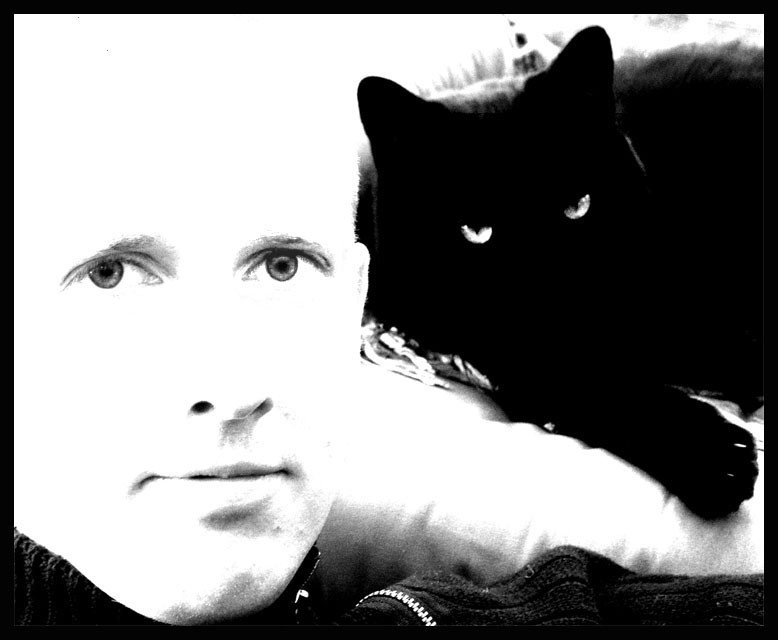
 The latest installment of the Fingertips Q&A is now online, this one featuring British composer/arranger/pianist and sometime vocalist Mark Northfield. Northfield’s haunting song “Zero” (he did in fact sing on it) was featured on Fingertips back in July, and I must say the gent has more going for him than one spiffy song. His startlingly thoughtful responses to five questions about the current and future state of the music industry are well worth checking out if you’re interested in such things, or might be someday. Read the Q&A here, and find out more about Mark Northfield on his web site. The cat has no web site, to the best of my knowledge.
Month: December 2008
Free and legal MP3 from Amanda Palmer (Dresden Dolls’ singer goes solo, produced by Ben Folds)
“Astronaut” – Amanda Palmer
The smoky alto is back, likewise the melodramatic delivery and foreboding lyrics, but Amanda Palmer arrives this time without the Dresden Dolls, the self-proclaimed “Brechtian punk cabaret” duo of which she is half. The Dolls have a compelling sound, to be sure, but perhaps it was time to see what Palmer could do when freed of the band’s intriguing but restricted soundscape–an idea that so delighted Dresden Dolls’ fan Ben Folds that he actively sought the job of being Palmer’s producer for her solo debut.
And so the Foldsian piano pounding (by Palmer) that opens this, the album’s lead track, seems no accident, but neither does the Palmerian left turn the song takes after 20 seconds of it—with the strings still echoing off the soundboard, we dive into 40 seconds of brooding quiet, which announces that Palmer has not left her bravado in her “punk cabaret” kit bag. We lean in, we wonder exactly what she’s talking about (“Is it enough to have some love/Small enough to slip inside a book”), we get closer still and then bam, we get whacked on the head a second time, when the volume and beat return, at 1:02. “I am still not getting what I want,” she sings, a thematically charged line in Palmer’s oeuvre if ever there was one, as the song leaps back to life and soon picks up an unexpectedly welcoming bounce. When Palmer belts, her voice has this commanding way of sounding off-key and on the right note at the same time. She is in fact a very precise singer and writer; whether or not I get their meaning, her words are a rhythmic pleasure, scanning with a finesse not typically found in indie rock. And she even effects a musical climax based largely on the metric foot she employs, in the bridge that starts at 2:53, which sticks with a rat-a-tat trochaic meter (ONE-two, ONE-two, ONE-two etc.) until we are pretty much beaten into submission. It’s both an impressive display of lyrical discipline and a way of adding a driving anguish to the song below the level of consciousness.
The CD Who Killed Amanda Palmer was released earlier this fall on Roadrunner Records.
Free and legal MP3: Gramercy Arms (short, crisp, and anthemic)
“Automatic” – Gramercy Arms
Crisp and crunchy speak-singing verses alternate with a short, anthemic chorus with one word–“automatic”–sung in the background, while “It’s automatic” is spoken/sung in the foreground. Very very simple, but oddly compelling. How can some songs be annoyingly simple and other songs be compellingly simple? Let’s try to figure it out.
“Automatic” is short, to begin with (2:21). This is good either way—if a song is simply simple, there’s no reason to belabor the point; if the song is not as simple as it seems, working quickly will increase the complexity (less time spent repeating anything). “Automatic” has no introduction, which is generally good in a simple song, as introductions often tread water anyway. The speak-singing style used here by front man (and ex-Dambuilder) Dave Derby adds subtle complexity, since it registers as talking but he is in fact hitting specific notes. The first verse is eight measures, then we get the partially sung chorus, also eight measures, but it’s interestingly inside out, with the background singers singing first, before the lead singer speak/sings. Plus, the singing section is sing-along wonderful, like a tiny piece of power pop packed into another song altogether (note too that the word “automatic” turns out to be the completion of the last lyrical line in the verse; more hidden complexity). The second verse is six measures, a change that cannily jars the listener ever so slightly. Two more things nail this down for me: the instrumental break (starting at 0:54), which concisely fleshes out the two-chord riff of the verse in a sharp, yet multilayered way; and then, best of all, the bridge (1:19), eight measures of fuzzed-up melodic sweetness, capped by a burst of harmony that sounds like the Move just as they were turning into ELO, for you old-timers out there. Or Cheap Trick, for you not-quite-as-old-timers.
So this one, yeah, it works for me. “Automatic” is a song from the debut Gramercy Arms CD (and they don’t fool around; the whole thing is only 30 minutes long); it’s self-titled and was released on Cheap Lullaby Records in mid-November. Among the indie rock semi-celebrities helping on on the album were Matthew Caws from Nada Surf, Joan Wasser of Joan As Police Woman (who sings back-up on this song), and members of the Pernice Brothers and Guided By Voices, among others. And comedienne Sarah Silverman too, who apparently sings in addition to kvetches.
Free and legal MP3 from Matt Pond PA (beautifully written, guitar-driven indie pop)
“Our Braided Lives” – Matt Pond PA
It’s been a long time since we’ve heard from Matt Pond and company here on Fingertips. His band, purveyors of thoughtful, string-supported pop, was one of the site’s early stars; they were also one of the first 21st-century indie bands to find themselves playing for a mainstream TV audience, via placement on The O.C.. The band was actually formed back in the 20th century (1998), in Philadelphia; they have operated from Brooklyn since 2003, and have undergone a variety of lineup changes over the years.
“Our Braided Lives” is vintage MPPA—sweet but firm, wistful but forward-moving, with a deep-seated melodicism and nicely intertwining guitars. The two main melodies on display—one from the verse, one from the chorus–balance each other brilliantly: the melody in the verse feels like a thoughtful journey, hinging upon an unresolved moment (the line ending at 0:46, for the first example of it); the chorus melody, more focused, is one of those glorious, slightly melancholy descending lines, neatly balanced by a warm, ascending guitar. And check out this masterly bit of songwriting: both the verse and the chorus conclude with the same line, both melodically and lyrically, which surely contributes to the this solid sense of arrival the song evokes.
“Our Braided Lives” comes from the band’s new free EP, which is being called, plainly enough, The Freeep. The EP was self-released last week.
 Fingertips